
Tens of Thousands of American Horses Are Shipped to Slaughter Every Year
Matthew Russell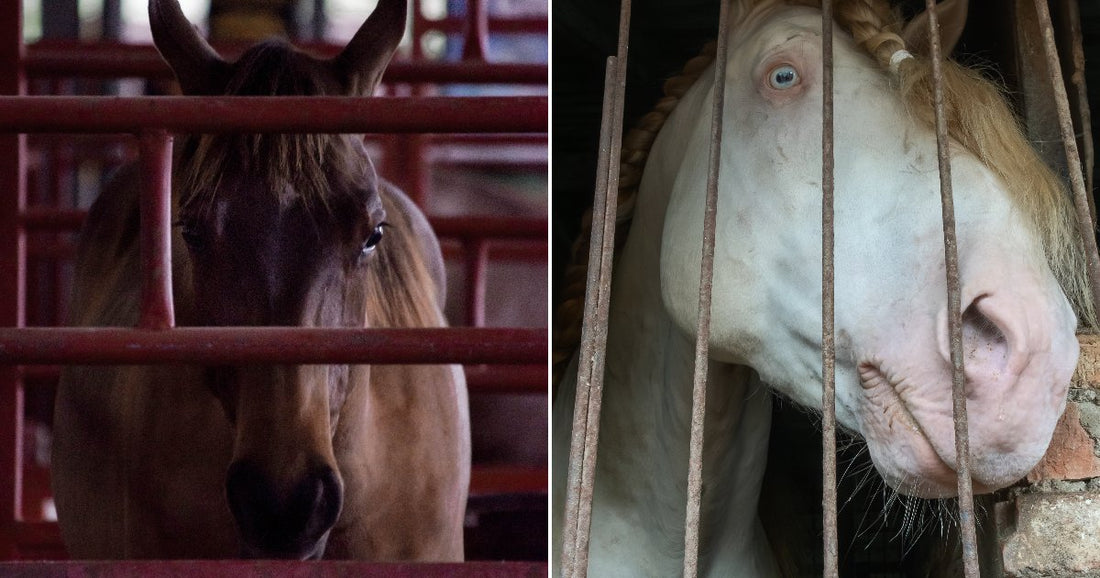
Most Americans are surprised to learn that horse slaughter for human consumption was never permanently banned in the United States. While no domestic slaughter plants currently operate on U.S. soil, tens of thousands of American horses are transported across the border to Canada and Mexico each year, where they are killed and their meat is exported to overseas markets. The pipeline is active, the numbers are significant, and the legal framework to stop it permanently does not yet exist.

The Slaughter Pipeline Is Still Running
According to Animals' Angels, the horse slaughter industry continues to draw from American horses transported abroad for processing. These are not wild horses rounded up from remote ranges — they include former racehorses, working animals, and horses surrendered by owners facing financial hardship. The journey to slaughter is often long, stressful, and conducted under conditions that investigators have documented as inadequate. Horses may travel for more than 24 hours without food, water, or rest.
The conditions at the point of slaughter are equally troubling. Horses are prey animals with acute stress responses, and the methods used in foreign facilities are not held to U.S. humane slaughter standards.

Federal Protections Keep Stalling
Legislation to permanently close this gap has been introduced in Congress repeatedly over the years. In February 2025, lawmakers reintroduced the bipartisan SAFE Act on National Horse Protection Day, according to the ASPCA. The bill would prohibit both domestic horse slaughter and the export of horses for slaughter abroad. It has broad support — from animal welfare organizations to a significant portion of the American public — but has not moved to a floor vote.
Meanwhile, other horse protections have been weakened. The USDA's Animal and Plant Health Inspection Service delayed implementation of Horse Protection Act rule changes that were designed to strengthen enforcement against soring — a painful practice used in certain show horse competitions. As reported by the American Veterinary Medical Association and confirmed in the Federal Register, those amendments were postponed, leaving a weaker standard in place.

A Legislative Window Is Open — For Now
By mid-2026, momentum had shifted slightly. A coalition of lawmakers called for executive action to ban horse slaughter outright, as covered by Return to Freedom Wild Horse Conservation. Around the same time, a Senate Farm Bill draft included provisions favorable to farmed animal welfare, signaling at least some appetite in Congress for stronger protections, according to the Animal Welfare Institute. Whether that opening translates into permanent law depends heavily on public pressure and direct advocacy.
Return to Freedom has noted that the SAFE Act has the votes to pass — if it reaches the floor. That is precisely where the bottleneck is: the bill needs to be brought to a vote by Senate and House leadership.

What a Permanent Ban Would Do
A federal prohibition would close domestic slaughter permanently, end the transport loophole that sends American horses across both borders, and establish a legal baseline that temporary budget riders cannot provide. It would not eliminate horse ownership or the equine industry. It would make it illegal to profit from slaughtering American horses for human consumption, anywhere.
The petition calls on the President Pro Tempore of the Senate and the Speaker of the House to bring the SAFE Act to a vote and pass a permanent federal ban.
Click below to make a difference.