🚨Urgent: Missile Strikes Shelter in Ukraine! Rush Emergency Aid!
Brazil Slams the Door on Cosmetics Cruelty—Will It Spark a Beauty Revolution?
Matthew Russell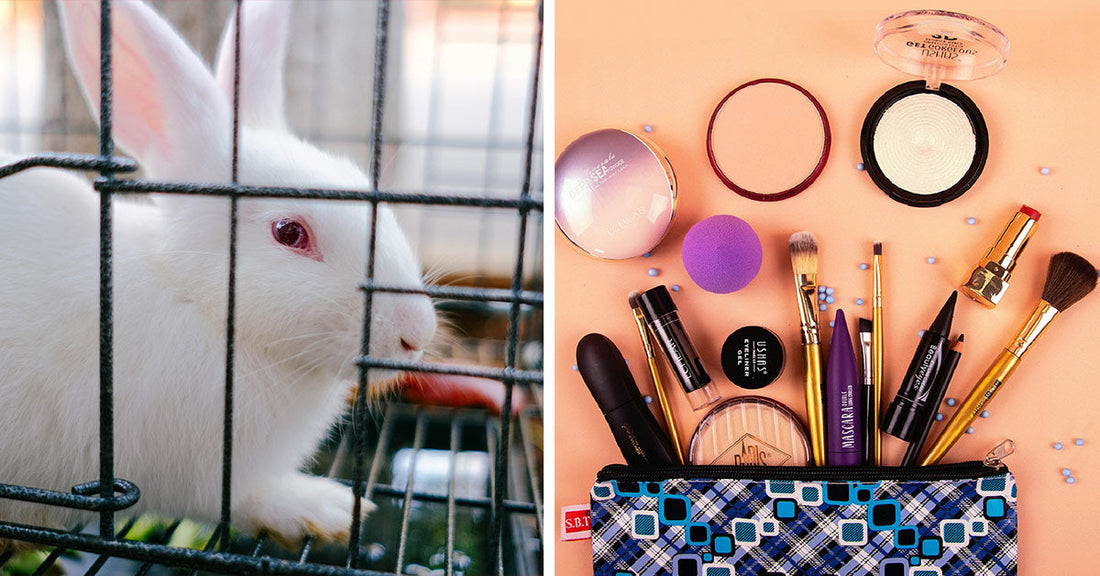
Brazil’s cosmetics aisle is about to change forever. In a landmark vote on July 9, the Chamber of Deputies sent a bill to President Luiz Inácio Lula da Silva that would outlaw all safety and efficacy tests on live vertebrates for shampoos, lipsticks, fragrances, and other personal-care staples, NE9 reports. The text rewrites the country’s 2008 animal-research statute, closing the door on a practice critics long called cruel, outdated, and scientifically shaky.
The measure is more than a symbolic victory. Once signed, any data generated from new animal trials will lose legal validity in Brazil. Products relying on such data cannot carry feel-good claims like “cruelty-free.” Exceptions exist only when another health regulation explicitly demands in-vivo proof, and even then companies must provide paperwork that justifies every animal used, according to GPS Brasília.

Brazil’s bill bans live-animal tests for every cosmetic product.
Why the ban matters to animals and science
Rabbits, guinea pigs, and mice suffer most in cosmetics safety trials. Draize eye-irritation protocols can leave them with ulcerated corneas; LD50 assays feed them escalating chemical doses until half die.
Around 500,000 animals endure these ordeals each year worldwide, Sentient Media reports. Yet such tests predict human reactions only about 60 percent of the time for ocular damage and 42 percent for cancer risk. In short, animals pay a heavy price for data that often misleads regulators and brands alike.
Brazil’s legislation recognizes that disconnect. Rapporteur Ruy Carneiro told lawmakers that modern tools—computational toxicology, 3-D bioprinted skin, organoids—already outperform live-animal assays on accuracy, cost, and speed, GPS Brasília observes. The National Council for the Control of Animal Experimentation had issued similar guidance last year, urging companies to swap rabbits for test-tube skin whenever possible.

Rabbits, mice, and guinea pigs face toxic eye and skin assays in cosmetics testing.
Industry already has the tools
Some giants still cling to the past. L’Oréal, Estée Lauder, and Neutrogena say they avoid animal tests “unless required by law,” but they continue selling in markets—most notably China—where those laws persist, according to Obvs Skincare.
Their decision is commercial, not scientific; in-silico hazard screens and reconstructed human epidermis models catch irritants with 85–95 percent accuracy, dwarfing the performance of century-old rodent protocols.
Smaller, fully cruelty-free labels prove the point. They limit formulas to ingredients with long safety records or validate new molecules entirely through cell-based and computer models.
Brazil’s impending law will push multinationals to follow that blueprint across Latin America’s largest beauty market—worth roughly US$30 billion in annual sales.

Chile and Colombia have bans but enforcement gaps persist.
How the ban reshapes labels and marketing
Consumers will soon see clearer shelves. Brands that rely on legacy animal data—even if gathered abroad—must strike “not tested on animals” and similar claims from packaging sold in Brazil. Marketing teams will have to rethink trust signals, shifting from fuzzy slogans to third-party seals such as the Leaping Bunny, whose standard bars both direct and indirect animal experiments.
Retailers are likely to respond fast. Previous bans in the European Union and India triggered swift reformulations as stores refused to stock non-compliant goods. Analysts expect a similar scramble in São Paulo and Rio drugstores, with local manufacturers that already use alternative methods gaining an early edge.

Compassion and innovation are now inseparable.
Brazil joins a growing global front
Forty-five countries ban cosmetic animal tests outright or block sales of products proved on animals. Canada, Chile, and Brazil all moved in 2023, part of an accelerating trend, according to Sentient Media. Brazilian lawmakers leveraged that momentum—and a groundswell of petitions from citizens tired of seeing rabbits blinded for mascara.
The ripple effect could stretch well beyond beauty. Activists argue that success here strengthens the case to end animal research in household cleaners and, eventually, pharmaceuticals where validated alternatives exist. The cosmetics fight often serves as the thin edge of a wider ethical wedge.

Humane science lowers costs and speeds product launches.
What happens next
President Lula is expected to sign the bill within weeks. Once published in the Official Gazette, laboratories must pivot immediately. Ingredients with unproven safety profiles will require submission to Brazil’s replacement-method registry or adoption of foreign non-animal data. Companies slow to adapt risk product seizures and brand-damaging headlines.
For shelter volunteers and rescue workers, who see cruelty up close, the vote offers rare good news: fewer animals sentenced to short, solitary lives under fluorescent lights. For scientists, it affirms that rigor and compassion can walk hand in hand.
Brazil’s decision shows that modern cosmetics can sparkle without suffering. The country’s beauty industry—celebrated for vibrant colors and botanical formulas—will soon thrive on a cruelty-free foundation. Shoppers, meanwhile, gain one more reason to scan shelves with confidence, knowing their glow no longer depends on another creature’s pain.
Click below to make a difference.