
Thirteen-Year-Old Finds a Helpless Hatchling and Refuses to Give Up Until Help Arrives
Guest Contributor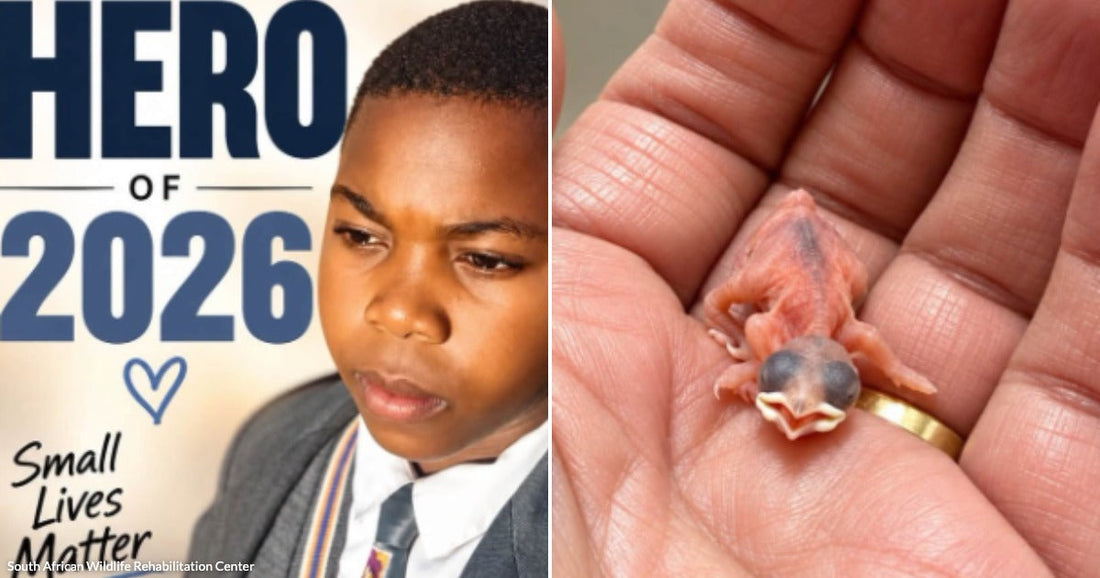
In a world where many people might step over a tiny bird without a second glance, a 13-year-old from Johannesburg chose a different path. The quiet courage and careful choices of young animal rescuer Morena Phenethi turned an ordinary day into a story that South African wildlife lovers are not likely to forget. His thoughtful actions, and the response from the South African Wildlife Rehabilitation Center, show how compassion and responsibility can come from the most unexpected places and the youngest hearts.
The story began in Johannesburg when Morena discovered a tiny hatchling in distress. It was the kind of fragile life that could so easily have been overlooked, yet Morena chose to pay attention. Instead of panicking or walking away, he did something that speaks volumes about his character. He took the time to research how to help the baby bird, searching online for guidance and information about what to do next. For a child of 13, these first decisions already reflected a careful, problem-solving mindset that any wildlife rehabilitator would admire.

South African Wildlife Rehabilitation Center
After reading up on what might give the hatchling its best chance, Morena tried the most natural solution first. He attempted to return the tiny bird to its nest, hoping to reunite it with its family and allow nature to continue its course. When that did not succeed, he did not give up or leave the little creature to fend for itself. Instead, he moved on to the next best option. Using what he had learned, Morena created a temporary safe space, finding a suitable box and making sure the hatchling stayed warm, protected, and as calm as possible given its vulnerable state.
Warmth and safety are often the first critical steps in caring for an injured or displaced baby bird, and Morena managed those steps on his own initiative. Yet he also understood that expert help would be essential. He searched online for a wildlife rehabilitator who could provide the right care. The search led him to contact details for a rehabilitator based in Cape Town. Without hesitating, he picked up the phone and reached out, focused on securing real assistance for the defenseless animal he had found.

South African Wildlife Rehabilitation Center
There was a catch. Morena was in Johannesburg while the contact he found was all the way in Cape Town, on the other side of the country. For many people, that distance might have seemed like an insurmountable obstacle. In this case, it became the beginning of a fast-moving chain of support. Once members of CORE, the Coalition Of Rehabilitation Expertise, learned that a young boy in Johannesburg needed urgent local help, they moved rapidly. The South African Wildlife Rehabilitation Center shared later that things fell into place quickly after they were alerted to Morena’s call for assistance.
While the network of professionals and volunteers coordinated behind the scenes, Morena remained fully engaged. He did not simply place a call and return to his day. He waited outside on the pavement with the hatchling carefully contained and kept warm, ready to hand over his tiny rescue to whoever arrived to help. Within minutes, an Uber arrived to collect the bird and transport it to safety. The small passenger inside the box had no idea that its journey had begun with a young teenager’s determination and care.
Not long afterward, the hatchling reached the hands of wildlife rehabilitator Lauren Macleod. For the baby bird, that arrival represented a real chance at survival under professional supervision. For everyone watching the story unfold, it became an example of how a calm, sensible response from a child can trigger a coordinated effort from adult experts. The South African Wildlife Rehabilitation Center later described the sequence of events as a true happy ending in the making.
In reflecting on the day, the organization highlighted how much Morena had already done for the hatchling before any official wildlife experts stepped in. He had done his own research, attempted to return the chick to its nest, provided warmth and shelter, and actively sought out a trained rehabilitator to take over. These are not minor steps. They represent a complete sequence of thoughtful actions that would make any experienced animal lover proud.
The South African Wildlife Rehabilitation Center publicly praised Morena in a heartfelt Facebook post that captured the emotional impact of his actions. They admitted that his effort brought them to tears. Their message to him focused less on the mechanics of the rescue and more on the values it revealed. They wrote that they did not know what he dreamed of becoming one day, but they were certain he was “destined for greatness.” Importantly, they pointed out that greatness is not always found in trophies, awards, or grand achievements. Sometimes, it is contained in a quiet decision to stop and help something so tiny and vulnerable that many others might have walked straight past.
This idea of quiet greatness sits at the heart of the story. The organization described greatness as simply caring enough to try. Morena’s commitment to helping a seemingly insignificant life became a powerful reminder of how character can be measured. They reminded him that while the hatchling might never understand what he did, the adults who witnessed his effort certainly did. Their admiration and respect, they said, overflowed.
They went on to express a series of hopes for Morena’s future that many readers may find moving. They wished that he would carry his enormous heart with him throughout his life. They hoped he would always notice small things others might overlook and always have the courage to help when something or someone needed him. Above all, they encouraged him never to lose the extraordinary kindness that made him stop for one tiny, vulnerable life on an ordinary day.
Their message also offered a broader reflection on empathy and care. Sometimes the smallest lives bring out the biggest hearts, they noted, and this single hatchling had reminded them just how large the heart of a 13-year-old can be. For people who care about wildlife rehabilitation in South Africa and beyond, the story serves as a hopeful example. It shows the impact young people can have when equipped with curiosity, access to information, and a willingness to act.
For anyone reading about Morena’s actions, there is an encouraging takeaway. You do not need special titles, advanced qualifications, or decades of experience to make a meaningful difference. Often, what matters most is choosing not to look away, taking the time to learn what to do, and connecting with those who can help. A tiny hatchling, a cardboard box, a phone call, and a coordinated network of wildlife professionals became the ingredients for a life-saving rescue story that began with a single caring choice made by a 13-year-old boy on a street in Johannesburg. Read more at https://www.goodthingsguy.com/young-hatchling-hero-sa-wildlife-rehab/