
🚨Urgent: Missile Strikes Shelter in Ukraine! Rush Emergency Aid!
Over 200 Animals Suffered in Allegedly Unsanitary Conditions While Their Owners Walked Free Pending Trial
Guest Contributor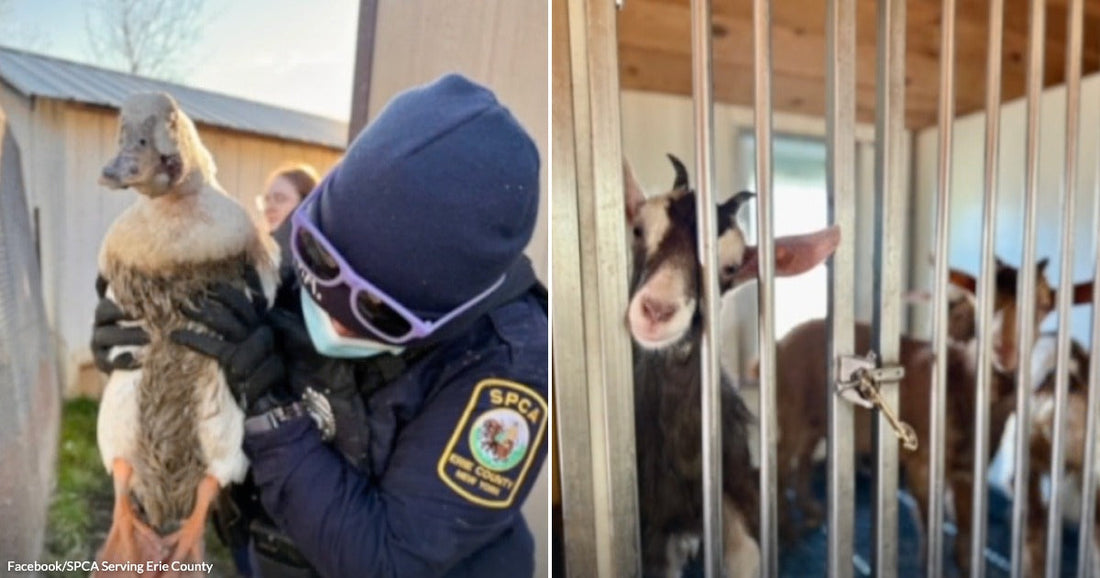
The recent case of a couple charged with animal cruelty in Brant, New York has drawn intense local concern and raised broader questions about animal welfare on private farms. Authorities report that more than 200 animals were seized from a single property after investigators allegedly found them living in neglectful and unsanitary conditions. For anyone who cares about animal welfare, stories like this one are difficult to read, yet important to understand because they reveal both the scale of potential harm and the systems in place to respond.
According to information released by the Erie County District Attorney’s Office, 74-year-old Bonnie L. George and 77-year-old Donald L. George of Brant were arraigned on multiple counts related to animal cruelty. Each is charged with one count of second-degree obstruction of governmental administration and 207 counts of overdriving, torturing and injuring animals, specifically for failure to provide proper sustenance. These animal cruelty charges in Erie County stem from a November 2025 investigation that began with one anonymous complaint.

The case reportedly started when a dog control officer received a tip about animals living in unsafe conditions on a farm along Brant Farnham Road. That complaint did not stop with a single official. It was forwarded to the SPCA Serving Erie County for deeper investigation. From there, SPCA investigators visited the property on November 19, 2025, and, according to the district attorney’s office, they allegedly observed neglected animals and unsanitary conditions during that initial inspection.
Investigators returned to the property the next day armed with a search warrant. What they described finding on that second visit underscores the seriousness of the allegations. A total of 216 animals were reportedly seized from the farm. Authorities say that among those animals were 119 goats, 47 chickens, 18 ducks and geese, 11 cats, six sheep and six dogs. The district attorney’s office alleges that 207 of those farm and domestic animals had not been provided with necessary food, water and basic care.
Reports from the investigation indicate that many animals were allegedly found without proper access to food and water, and that they were kept in conditions considered unsanitary by the responding officials. Investigators also state that multiple dead animals were discovered on the property during the search. Those details, taken together, suggest a pattern of prolonged neglect rather than an isolated lapse in care. I found this detail striking because it highlights how animal cruelty cases often involve large numbers of animals whose suffering may go unnoticed until someone speaks up.
The legal process moved quickly once the animals were removed. Brant Town Court Justice Jeff Gier ordered that the surviving animals be forfeited to the custody of the SPCA Serving Erie County. This step is significant. It transfers responsibility for the animals’ immediate and ongoing care to an organization whose mission is to protect and advocate for animals, rather than returning them to the environment where the alleged neglect took place. For people who follow animal welfare stories, this forfeiture is often one of the most critical outcomes because it directly affects the well-being of each living creature involved.

Facebook/SPCA Serving Erie County
The charges brought against Bonnie and Donald George do not end with accusations of neglect. The district attorney’s office also alleges that they intentionally obstructed the administration of law and prevented a public servant from performing an official function. In the language of the criminal justice system, this is reflected in the count of second-degree obstruction of governmental administration. While the specific behavior behind that charge is not detailed in the available report, the existence of the charge suggests that investigators believe their work was hindered in some way.
After their arraignment, the couple was released on their own recognizance. This decision ties directly to New York’s current bail laws, which identify certain offenses as non-qualifying for bail. Animal cruelty laws in New York classify the charges in this case within that non-qualifying category, which means the court could not require bail for their release. At the same time, the court did not leave the situation unaddressed.

Facebook/SPCA Serving Erie County
A temporary securing order was imposed that prohibits the two defendants from owning, harboring or having custody or control of any animals while the case is pending. This type of order reflects an effort to prevent any potential further harm while still operating within the constraints of the legal framework. It is a reminder that animal welfare cases operate at the intersection of criminal law, public safety and ethical responsibility.
The couple is scheduled to return to court on March 12 for a pre-trial conference. For now, they remain accused rather than convicted, and as in all criminal cases they are presumed innocent unless and until proven guilty. If they are ultimately convicted on the current charges, they reportedly face a maximum sentence of 364 days in jail. The duration of the potential sentence illustrates a tension that often emerges in public discussion of farm neglect cases. On one hand, the law recognizes harm to animals and imposes criminal penalties. On the other hand, the maximum sentence is relatively short when compared with the number of animals involved.

Facebook/SPCA Serving Erie County
Beyond the specifics of this farm in Brant, the story underscores a few broader issues relevant to animal welfare and community responsibility. First, it shows how a single anonymous complaint can trigger a thorough investigation that brings hidden conditions to light. People who witness or suspect neglect sometimes worry their report will not matter. Yet in this case, that initial concern set into motion an SPCA inspection, a search warrant, the seizure of more than 200 animals and the filing of over 200 criminal counts.
Second, the case highlights the central role of local animal protection organizations such as SPCA Serving Erie County. These organizations not only assist with investigations but also bear the long-term responsibility of caring for seized animals. That includes providing veterinary treatment, food, clean shelter and, when possible, placing animals into new homes. Even in concise news reports, the scale of that work quickly becomes apparent when dozens or hundreds of animals need immediate care.
Third, the situation illustrates how legal tools are used to address alleged neglect. From search warrants to forfeiture orders and temporary bans on animal ownership, each step is designed to balance the rights of the accused with the urgent need to protect animals from ongoing harm. It also emphasizes that animal neglect on a farm is not viewed solely as a private matter. Instead, it is treated as a community concern subject to oversight, investigation and, when supported by evidence, criminal charges.
For anyone who follows cases of alleged animal cruelty on farms, this story from Brant may serve as a stark example of how quickly conditions can deteriorate when basic care is not consistently provided. It also shows that neighbors, local officials and animal welfare organizations each have a role in identifying and responding to potential neglect. As the case moves forward and the courts weigh the evidence, the animals themselves have already experienced a significant change in their circumstances, now residing in the care of the SPCA. Read more at https://www.wkbw.com