🚨Urgent: Missile Strikes Shelter in Ukraine! Rush Emergency Aid!
A Veteran’s Journey of Healing Through Art and Creative Expression
Guest Contributor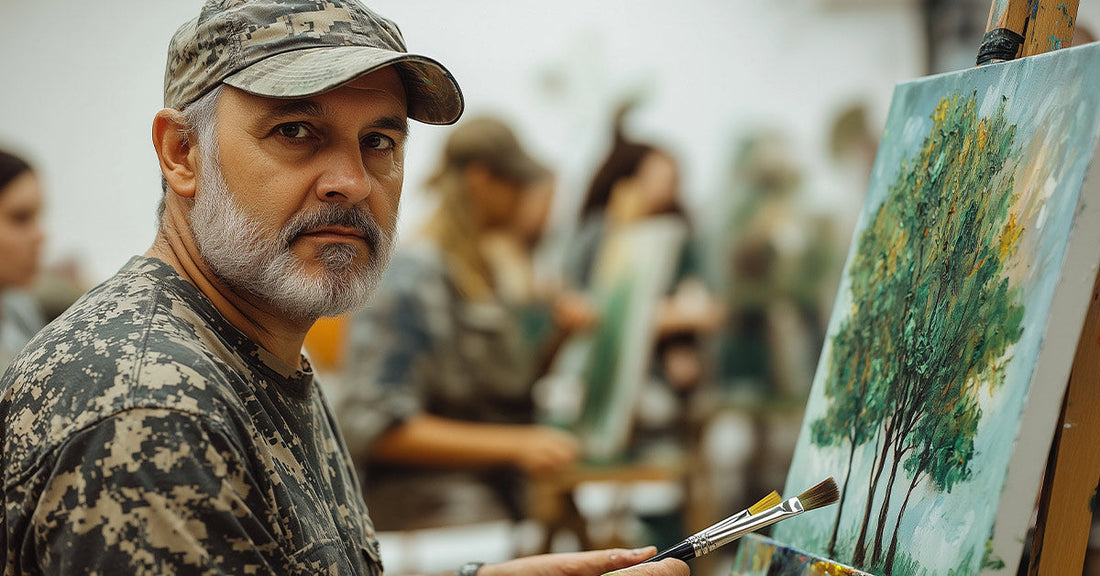
At the VA Salt Lake City Health Care System’s local Veterans Creative Arts Festival, a glittering red stone set in a bolo tie caught the attention of many. But for Walter Adam, the Veteran who crafted it, that tie represents far more than artistic expression. It symbolizes survival, healing, and the quiet strength required to face the shadows of post-traumatic stress disorder (PTSD). His journey from depression to creative renewal through art offers a powerful example of how veterans can find hope and connection in unexpected places.

Adam, a former Army Reserve doctor who served from 1999 to 2008, spent three active-duty tours treating soldiers and civilians injured by improvised explosive devices. The trauma of those experiences left lasting emotional wounds. Though he initially felt his symptoms were manageable, over time, the untreated PTSD began to take a toll. Adam became increasingly isolated, withdrawn, and emotionally volatile. “I was always depressed and looking down,” he shared. “I didn’t have friends and felt worthless.”

It wasn’t until he attended an art class at his senior center that a turning point emerged. There, he met David Jager, a fellow Army Veteran and experienced lapidary artist. Jager introduced Adam to the craft of working with stone, eventually teaching him how to make bolo ties. Their friendship became a lifeline. On one particularly difficult day, Jager noticed Adam was struggling and offered immediate support. “I just grabbed him and hung on to him,” Jager recalled. That moment of connection helped guide Adam toward further help.
Still, the weight of PTSD remained. When Adam experienced a crisis and felt suicidal, he reached out to another Veteran from his church, who brought him directly to the George E. Wahlen Department of Veterans Affairs Medical Center in Salt Lake City. There, Adam received the urgent care he needed. He was also introduced to ongoing resources, including cognitive behavioral therapy and adaptive sports, which helped him manage his symptoms more effectively.
Creative expression became a central part of Adam’s recovery. Through his work with Jager and the support of the VA’s recreational therapy programs, Adam found that making art offered a therapeutic outlet. His handcrafted bolo ties, while beautiful, are not made for profit. Instead, he gives them away, using them as a way to connect with others. “I make bolo ties that are exquisitely beautiful,” he said. “I’m not a good businessman. I don’t sell them; I give them away.”
The Veterans Creative Arts Festival gave Adam a platform to share his work and, in doing so, share a piece of his story. Initially hesitant to participate, he entered the festival at Jager’s encouragement. The experience proved transformative. “Somehow, I was able to put together something that made people ask questions and pulled out emotions,” Adam said. “That meant so much to me that I’m looking at other things I can do.”
Melissa Larsen, a recreation therapist at the VA Salt Lake City Health Care System and lead organizer of the local festival, emphasized the healing power of artistic expression. “Art can help Veterans process and express difficult emotions,” she explained. “It can also be a stress reduction and boost self-esteem.” For many Veterans, the festival represents the first opportunity to publicly share their creative work. Larsen noted that witnessing the mutual support among participants is one of her favorite aspects of the event.
The therapeutic value of art for Veterans with PTSD is increasingly recognized. Activities like lapidary work, painting, music, and writing allow individuals to process trauma in a non-verbal, constructive way. They also foster community and purpose, which are critical components of recovery. In Adam’s case, the act of creating something tangible helped him reclaim a sense of worth and direction.
Visitors to the festival paused to admire Adam’s bolo tie, drawn by its craftsmanship and sparkle. But the true value of the piece lies in the story behind it—a story of resilience, friendship, and the quiet courage to keep going. As Adam continues to refine his skills and prepare for future festivals, he reflects on how far he has come. “Art is almost always an entity in progress and so are we,” he said. “We shouldn’t expect to be all the way completed… but we should strive to make ourselves just a little bit better every day.”
For Veterans facing similar struggles, Adam’s experience offers a message of hope. Support can come from unexpected places—a fellow artist, a church friend, a phone call. And healing, while never linear, is possible. Through creativity, connection, and the right resources, Veterans like Adam are finding their way forward, one piece of art at a time.
Veterans interested in participating in the next local creative arts festival can contact Melissa Larsen at (801) 582-1565 x2691 or Melissa.Larsen@va.gov.
If you or someone you know is in crisis, help is available. Call the suicide crisis hotline at 988. Veterans press option 1.