
Puppy Returned Twice In Just Weeks Finally Gets The Chance Someone Should Have Given Her First
Guest Contributor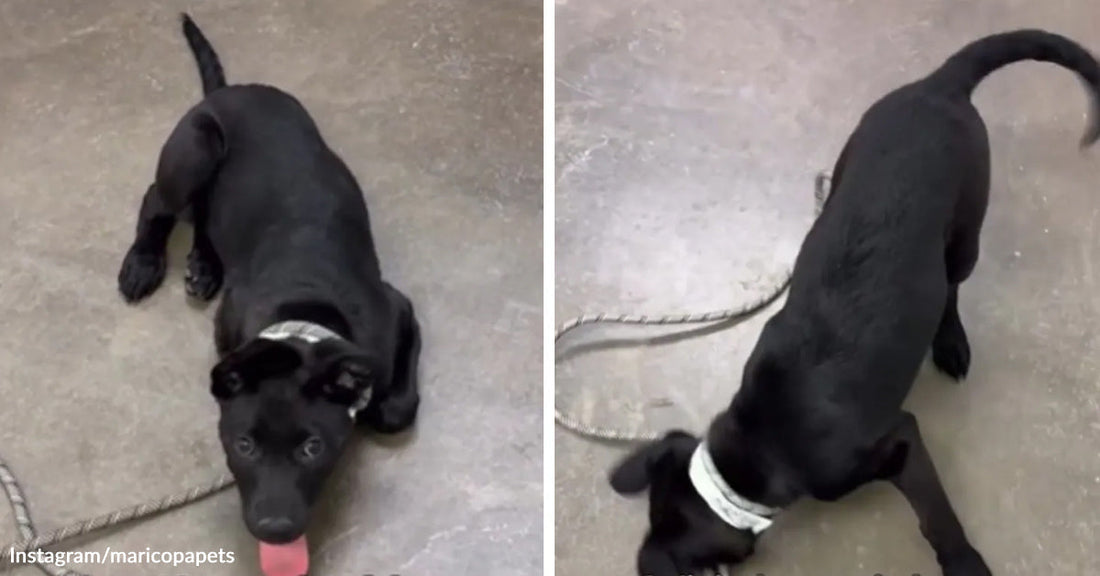
A tiny 13-week-old puppy in Arizona has become an unlikely internet star after being returned to the shelter not once, but twice, before finally finding what staff hope will be her forever home. Her name is Nebula, and her story is a mix of heartbreak, ordinary puppy chaos, and a lot of hope for a happier future. Many people who watched her viral clip have been reminded just how much commitment and understanding a young dog really needs, especially during the critical window for puppy development.
Nebula’s journey began at Maricopa County Animal Care and Control, where she arrived on March 6 with her stray mother and eight littermates. The puppies had been raised mostly outdoors in a fenced yard. Like many dogs who start life without the structure of a home, Nebula suddenly had to adjust to the noises, routines, and constant activity of a shelter. Staff quickly realized she was full of energy and personality, which became obvious in an April 3 Instagram video shared by the account @maricopapets.

In the clip that caught so much attention, Nebula is seen racing around a room, jumping toward the camera, and buzzing with that familiar puppy energy. While she sprints in circles, a staff member jokingly describes her as “calm” and “mellow” and insists she is “definitely not a baby shark.” The playful sarcasm is obvious; Nebula is acting exactly like a young puppy in need of guidance and structure, and viewers immediately recognized that blend of mischief and charm.
Communication supervisor Kim Powell explained to Newsweek that Nebula was born to a stray mother and lived mainly outside before coming into the shelter. In that context, her behavior makes sense. She is at an age where the world is new and overwhelming, and where exploration often happens with teeth and paws. Despite that, Nebula’s early attempts at adoption were more turbulent than anyone expected.
Just three days after arriving, Nebula was adopted for the first time. Shelter staff likely felt relieved to see such a young dog heading into a home. Only four days later, however, she was brought back. Powell shared that the adopter did not go into much detail about the decision, but did mention “lots of chewing.” According to the American Kennel Club, chewing is completely normal for puppies, especially as they explore their surroundings and soothe teething discomfort. What one person might see as a behavioral problem, another might view as a training opportunity and a standard part of puppyhood.
Nebula got another chance about two weeks later when a second adopter brought her home. This time, her stay was even shorter. After only two days, she was returned again, reportedly because she was not a Labrador retriever. It is a reason that surprised many people who followed her story, especially because breed expectations are often something potential adopters can clarify before filling out paperwork. For Nebula, the result was the same: back to a kennel, waiting again.
Powell estimated that Nebula spent about a month at the shelter, which is quite a long time for such a young puppy. That detail struck me, because she has been living through one of the most important stages of puppy development largely inside a stressful environment. From birth to about 18 weeks of age is often described as a crucial socialization window, and Nebula has spent a significant portion of that period in a shelter run instead of a stable home.
The American Veterinary Society of Animal Behavior highlights that the first three months of life are the primary period for puppy socialization. During this time, sociability tends to outweigh fear, which means puppies are more open to new experiences and more capable of forming positive associations with people, other animals, and novel situations. When puppies have safe, positive exposure to everyday sights, sounds, and interactions, it can lay the foundation for confident and adaptable adult dogs.
The reverse is also true. Incomplete or poor socialization during this window can increase the risk of behavior problems later on, including fear, avoidance, and aggression. Behavioral issues are one of the leading reasons dogs are surrendered to shelters. That is why organizations like AVSAB strongly encourage early socialization in controlled, thoughtful ways, even before a puppy has completed all vaccinations. Puppy classes, supervised play sessions, and careful introductions can be powerful tools in shaping behavior and preventing future problems.
In Nebula’s case, staff worried that her extended stay at the shelter would limit her exposure to normal home life. The constant noise, the presence of many other dogs, and the turnover of people can be stressful for any animal, particularly a very young one. To give her a better chance, the team turned to social media and shared her story more widely. They noted that by the time of the post, Nebula had spent roughly a third of her life in the shelter, and they emphasized her need for consistent socialization, training, and enrichment.
They also highlighted that, beneath all that puppy energy, Nebula is a “real sweetheart” who simply needs time to learn. Tools such as interactive chew toys, treat puzzles, and structured play can help channel chewing and bouncing into productive enrichment. As AVSAB and other experts point out, these kinds of activities not only redirect normal behaviors like chewing, they also help build confidence and reward calm, focused engagement.
The Instagram video clearly struck a chord. It has drawn hundreds of thousands of views and hundreds of comments and reposts. Viewers acknowledged that puppy training can be frustrating, but many expressed affection for Nebula’s spirited nature. One commenter wrote that she is “a puppy” and simply needs time and training to grow into a good dog. Another noted that dogs like her, once given love and a little structure, can keep people “giggling all day.” A third viewer summed it up with a fond description, calling her “a menace” and loving her for it.
The attention seems to have made a difference. Two weeks after Nebula was returned for the second time, a new adopter visited the shelter, met her, and decided to take her home. According to Powell, Nebula has been with this family for a few days, and as of the last update, she has not come back. The shelter team is hopeful that this will finally be the match that understands her needs and is ready to guide her through the rest of her critical socialization period.
Nebula’s story is a reminder that adopting a puppy is not only about cuteness, it is also about patience, preparation, and a willingness to work through normal developmental stages. Chewing, high energy, and occasional chaos are features of puppy life, not flaws. When adopters recognize that and lean on tools like enrichment and early training, they give dogs like Nebula the chance to become the confident, loving companions they are capable of being. For now, shelter staff and thousands of viewers are quietly cheering for this little dog and hoping that, for Nebula, the third time truly is the charm. Read more at Newsweek