
🚨Urgent: Hurricane Isaias Smashes Into the Gulf Coast! Rush Emergency Aid!
Humans Nearly Wiped Out These Giant Tortoises but Now 180,000 Roam Free
Guest Contributor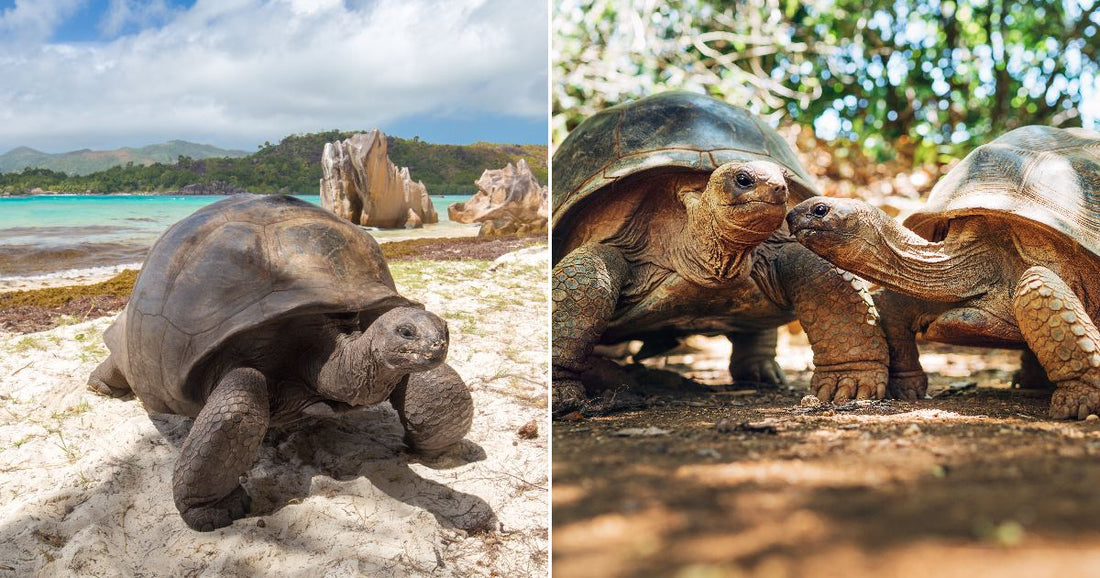
News from Seychelles has delivered an unexpectedly hopeful headline for global conservation: scientists have discovered that more than 180,000 Aldabra giant tortoises are roaming freely on Aldabra Atoll. For a species once driven to the brink of extinction, this population estimate stands as a powerful reminder that long-term protection and careful management can transform a grim outlook into a genuine conservation success story. The story of this giant tortoise population is also a rare example of wildlife recovery on a grand scale.
Aldabra Atoll, part of Seychelles, hosts the world’s largest free-roaming population of giant tortoises. It is one of only two places on Earth where giant tortoises still live in the wild, the other being the Galápagos. For decades, the accepted figure for Aldabra’s tortaoises hovered around 100,000 individuals, a number commonly cited since the late 1990s. The new research, led by the Seychelles Islands Foundation (SIF) and the University of Exeter, has shown that the reality is even more remarkable. By carefully analyzing data gathered between 2018 and 2022, the team concluded that there are approximately 180,000 Aldabra giant tortoises on the atoll, including almost 183,000 adults and sub-adults in their best estimate.

The scale of this finding becomes clearer when set against Seychelles’ human population, which the article notes is far smaller than the tortoise population now living on Aldabra. The atoll itself is remote and strictly protected, which has allowed these animals to reclaim space and thrive. It is not just the number that matters, but what it signifies. In the 19th century, exploitation and overharvesting left fewer than 1,000 Aldabra tortoises on the island. The species seemed perilously close to disappearing from its ancient home.
In response, a concerted recovery effort began, rooted in the recognition that Aldabra’s ecology and cultural heritage were deeply intertwined with these slow moving herbivores. Aldabra Atoll was designated a strict nature reserve in 1981 and was then recognized as a UNESCO site in 1982. These milestones formalized what had already become a serious commitment to conservation. Over time, protections strengthened, human pressure eased and the tortoises began to rebound. The newly released numbers demonstrate just how transformative that sustained effort has been.

Dr Frauke Fleischer-Dogley, CEO of SIF, described the finding as proof of what long-term conservation can achieve, highlighting that more than 180,000 giant tortoises now roam freely across the atoll. Researchers involved with the study are calling this one of the greatest conservation success stories in the Indian Ocean, and the new population estimate helps anchor that claim in evidence. The work was published in the scientific journal Ecology and Evolution, lending it the kind of peer-reviewed scrutiny that conservation managers can rely on when planning for the future.
Counting this many animals across a wild island environment is far from straightforward. Aldabra’s dense vegetation creates plenty of places for tortoises to hide from view, which complicates direct counting approaches. According to co-author Dr Nancy Bunbury, the team tackled this by accounting for both what they saw and what they likely missed. By modeling the unseen portion of the population along with observed counts, they generated what they describe as the most reliable baseline yet for this iconic Seychelles species. This statistical rigor provides a benchmark against which future changes can be measured, an essential tool for long term monitoring.

I found this detail striking because it underlines how modern conservation often blends fieldwork with careful quantitative analysis. It is no longer enough to know that a species is present or even common. Managers need solid baselines and repeatable methods so that shifts in population size, health or distribution can be detected early. In the case of the Aldabra giant tortoise, that kind of insight may be crucial in a changing climate.
Although the new numbers are cause for celebration, the scientists involved are clear that they are not declaring the work finished. Instead, they describe this population estimate as a starting point. Aldabra’s climate is already shifting, with projections indicating longer and more frequent droughts. For giant tortoises, this could mean reduced shade and less available food, as vegetation patterns respond to hotter and drier conditions. These are slow animals that live long lives, so changes in their environment might unfold over decades, yet the decisions that determine their resilience need to be made now.
Rising sea levels present another concern for the atoll, which contains low-lying areas vulnerable to inundation. A habitat that has supported giant tortoises for centuries could gradually shrink or change, potentially affecting nesting sites and the availability of safe ground for hatchlings. This intersection of climate change, sea level rise and species recovery underlines why researchers emphasize vigilance, even in the face of apparently healthy numbers.
Invasive species also remain a serious challenge. The study authors note that feral cats and black rats continue to threaten tortoise eggs and hatchlings. These predators target the most vulnerable stages of the tortoise life cycle and can quietly undermine population growth, even when adult numbers seem robust. Planned eradication of these invasive mammals is expected to lift what the researchers describe as the last major barriers to further tortoise population growth. Removing these pressures could help Aldabra’s giant tortoises withstand the additional stresses that climate and habitat changes may bring.
From a broader perspective, this story offers valuable guidance for other conservation efforts. It shows that a coordinated, long term approach that protects habitat, limits human disturbance and addresses invasive species can deliver dramatic gains, even for animals that once teetered near extinction. It also illustrates how protected status, such as becoming a nature reserve and a UNESCO site, can help provide a stable framework for these measures to succeed over time.
Dr Dave Hudson, a postdoctoral research associate at the University of Exeter’s Cornwall campus, emphasized that the new population figure is a baseline rather than a final goal. His comments underline a core principle of modern conservation. Numbers alone are not the endpoint. Instead, they are tools for tracking change and recognizing when new threats emerge or when established pressures begin to intensify. For Aldabra’s tortoises, this means the impressive figure of approximately 180,000 individuals is both a milestone and a responsibility.
As global discussions about biodiversity loss often center on decline and disappearance, the Aldabra giant tortoise stands out as a rare and encouraging counterexample. It shows that with time, protection and careful science, a species that once seemed destined to fade away can instead return in extraordinary numbers. The lesson from Aldabra Atoll is not that the work is over, but that determined conservation action can reshape the future for vulnerable species and their ecosystems. Read more at https://www.theguardian.com/environment/2026/oct/08/researchers-find-180000-giant-tortoises-living-on-island-in-seychelles