
🚨Urgent: Missile Strikes Shelter in Ukraine! Rush Emergency Aid!
Man Who Left Two Dogs to Rot in a Tiny Cage Will Spend Just Two Months Behind Bars
Guest Contributor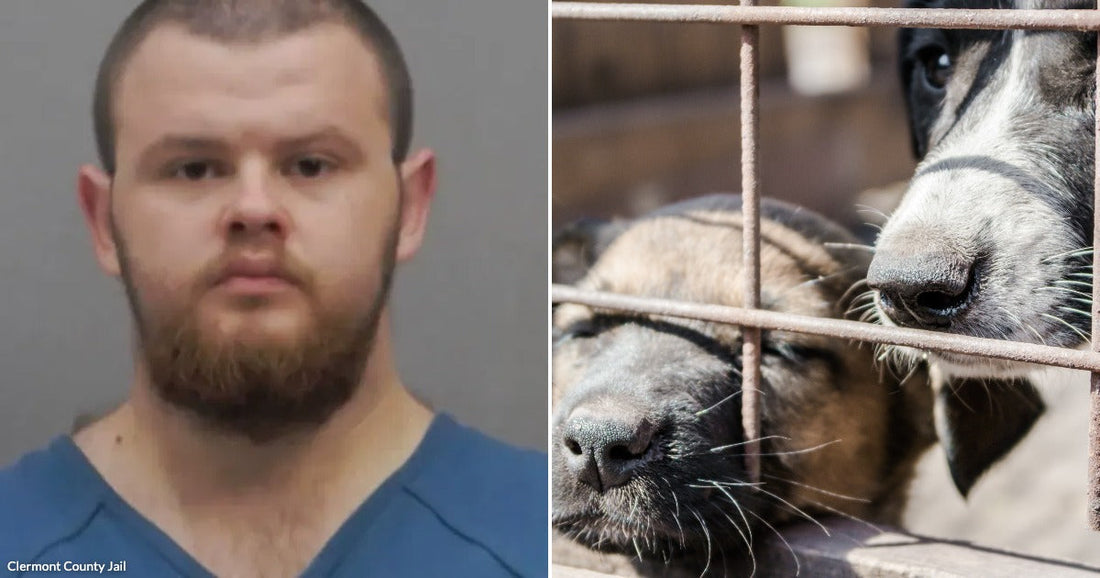
The sentencing of a Clermont County man to jail time for animal cruelty has brought renewed attention to how seriously communities respond to the neglect and suffering of animals. In this case, a Clermont County man was ordered to serve time after two dogs died when they were left confined in a small cage without food or care. For many readers, phrases like “animal cruelty sentencing” and “dogs left to die in a cage” are difficult to even read, yet it is precisely because the details are so disturbing that this story matters.
According to reports, the case began on June 1 when Clermont County sheriff’s deputies were called to a home on state Route 222 in Monroe Township. Neighbors or passersby had reported a strong odor coming from inside the residence. The smell was severe enough that it prompted a call to law enforcement. When deputies entered the home, they discovered two decomposed dogs inside a small cage, a discovery that clearly indicated that the animals had been deceased for some time.

Clermont County Jail
Authorities report that the owner of the dogs, identified as Michael Kimmerly-Huffman, admitted that he left the animals unattended and without care for about two weeks. The dogs were confined to a cage and had no access to food or proper care during that period. The outcome was fatal. They died in the very space that should have been a place of rest and safety. I found this detail particularly striking because it underscores how neglect, even without overt physical violence, can be every bit as devastating as more visible forms of abuse.
In court, Kimmerly-Huffman pleaded guilty to two misdemeanor counts of animal cruelty. Those charges stem directly from his admission that he left the dogs in that condition, and from the evidence deputies discovered at the scene. The case illustrates how animal cruelty laws can be used to address severe neglect, not just active harm, and how the justice system recognizes that failing to provide basic necessities like food, water, and an appropriate environment can constitute criminal behavior.

The sentencing that followed reflects an attempt to hold the defendant accountable within the framework of misdemeanor charges. Reports indicate that the court imposed a 90 day jail sentence. Of that, 30 days were suspended by the judge. Practically, this means Kimmerly-Huffman is expected to serve about two months behind bars. For some observers, the focus will be on the length of time in jail. For others, the simple fact that jail time was ordered at all will stand out because it signals that the court viewed the conduct as serious enough to warrant incarceration.
Along with the jail sentence, the court ordered a lengthy period of supervision. Kimmerly-Huffman was placed on three years of probation, a form of oversight that extends long after he finishes serving his time in jail. Probation typically includes conditions designed to monitor behavior and reduce the likelihood of reoffending. While the specific terms of this probation are not detailed in the available reports, the duration suggests that the court wanted a structured period in which the defendant’s actions could be observed and guided.
Perhaps the most consequential part of the sentence, at least in terms of preventing future harm to animals, is the prohibition on owning or possessing pets for the rest of his life. This lifetime ban speaks to a central concern in animal cruelty cases. When someone has been found responsible for severe neglect or abuse, the question becomes whether it is safe or appropriate for that person to have access to animals going forward. In this case, the answer from the court was an unequivocal no. By blocking future pet ownership, the judge aimed to reduce the chance of similar suffering occurring under the same individual’s care.
There is a painful simplicity to the story behind the legal details. Two dogs were confined in a small cage. They were left for about two weeks, unattended and uncared for, with no way to seek help or escape their conditions. By the time anyone entered the home, the only trace of their existence was the strong odor that had drawn attention and their decomposed remains. That discovery is likely to stay with the deputies and others involved in the investigation. It also lingers for anyone who considers what those animals endured.
Cases like this often prompt communities to reflect on their values around animal welfare and on the systems in place to protect vulnerable creatures. While this particular article does not expand into policy debates or broader political questions, it quietly highlights how crucial it is for neighbors, friends, and community members to speak up when something seems wrong. Here, a strong odor was the signal that something was gravely amiss inside the home. The response by law enforcement ensured that what had happened did not remain hidden, and that there were consequences under the animal cruelty laws of Clermont County and the state of Ohio.
For people who care about animal welfare, this case underscores the vital importance of recognizing neglect as a serious form of cruelty. It does not always involve visible physical violence. Sometimes it looks like absence, like failing to show up, failing to provide food or water, failing to ask for help when an owner can no longer care for an animal. When neglect is prolonged, the result can be just as tragic as any intentional act of harm. Court decisions that include jail time, probation, and pet ownership bans send a message that society has a responsibility to speak for those who cannot speak for themselves.
In Clermont County, the conclusion of this case will not bring back the two dogs that died alone in a cage, but it does mark a public acknowledgment of the wrong that was done to them. The sentence imposed on Michael Kimmerly-Huffman stands as a reminder that animals are not disposable and that leaving them without basic care can carry real legal consequences. It is also an invitation for ongoing awareness and vigilance, so that suffering like this can be recognized and addressed as early as possible. Read more at https://local12.com