
🚨Urgent: Missile Strikes Shelter in Ukraine! Rush Emergency Aid!
Black Pit Bull’s Heart Breaks After Eighth Foster Goodbye
Guest Contributor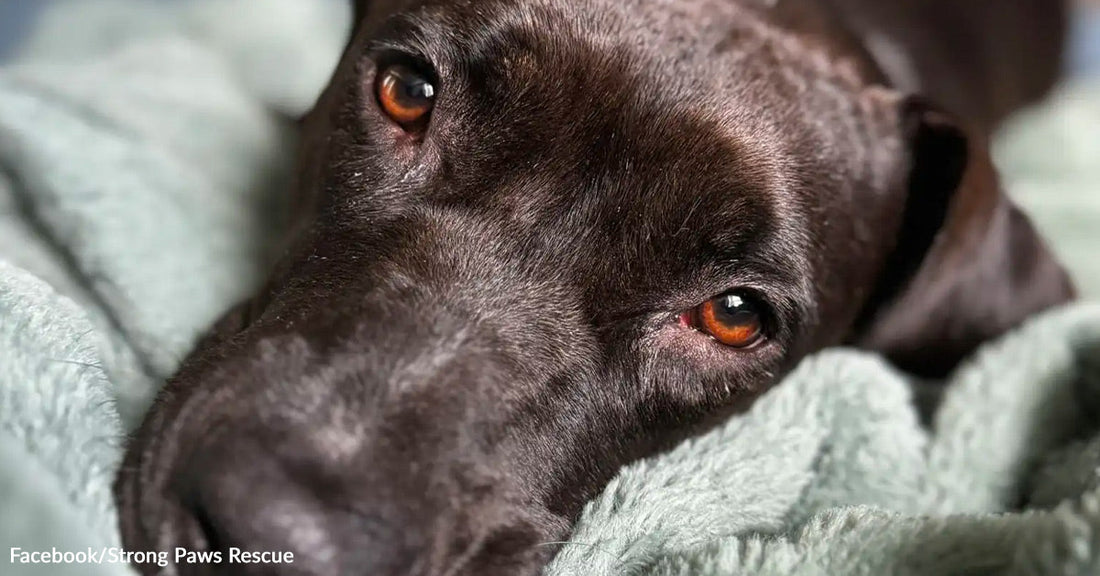
Some stories about animals looking for homes are sweet from the start. Others, like Anna’s, are quietly heartbreaking. This “world’s loneliest foster dog” has been waiting years for a permanent place to land, and her journey shines a light on how easily certain dogs, especially black shelter pets, can be overlooked despite having so much love to give.
Around two years ago, Anna was discovered in a dumpster alongside her mother and brother. Rescuers from Strong Paws Rescue took them in and hoped their lives were about to change for the better. Anna, a sleek all-black pit bull, struck them as a gorgeous, affectionate dog who should have no trouble capturing someone’s heart. Her family’s story took two very different paths, though, and that contrast has followed her ever since.

Facebook/Strong Paws Rescue
According to Strong Paws Rescue, Anna’s mother and brother, both fawn-colored, were adopted quickly. Their applications came in fast and they were able to settle into homes of their own. Anna did not get that chance. The rescue reports that because of her breed and her black coat, interest in her has been painfully limited. In fact, she has only received one adoption application in all this time, despite being described as an amazing dog.
This lack of interest meant Anna could not move straight from the shelter into a forever family. Instead, she has had to navigate a long, confusing series of short-term stays. Over the course of her life in rescue care, she has been placed in eight different foster homes. Each foster helped keep her safe, but each goodbye took a toll. With every move, Anna lost the chance to build the stable daily routine that so many dogs depend on to feel secure.

Facebook/Strong Paws Rescue
Strong Paws Rescue shared that Anna’s most recent transitions have been especially painful. When transport volunteers came to pick her up from her last two foster homes, she seemed to understand what was about to happen. She tried to run back into the houses where she had been staying, as if clinging to the small bit of stability she had found there. During one ride, she pressed her muzzle into a volunteer’s arm, appearing to seek comfort as they drove to yet another new place.
The rescue’s description of these moments conveys a dog who is not just confused, but aware that something is being taken away each time she leaves. I found this detail striking because it highlights how emotionally complex dogs can be when their lives are in constant motion. Anna’s reaction to each move suggests that she longs for consistency, caretakers she can fully trust, and a routine that will not be pulled out from under her after a few weeks or months.
Sadly, Anna’s experience reflects a broader pattern. Black dogs and cats in shelters are often harder to place. Many rescues and animal welfare groups have observed that darker-coated animals can be unintentionally passed over by potential adopters, even when their personalities are wonderful. This phenomenon has been reported so often that “black dog syndrome” and similar phrases have entered everyday rescue language. Anna’s story illustrates how deeply that bias, even when unintentional, can shape an animal’s fate.
The repeated upheaval in Anna’s life has also affected how she responds to new people. Strong Paws Rescue describes her as slow to warm up, which is understandable for a dog who has watched so many familiar faces disappear. When she first meets someone new or arrives at a new foster home, she may hold back, unsure of how long this arrangement will last or whether she can trust that person to stay. Given what she has been through, that caution is not only reasonable but deeply sympathetic.
Over time, though, Anna shows her true personality. Once she feels safe in someone’s presence, she reportedly transforms into an affectionate, joyful companion. The rescue team calls her a “complete wiggle butt,” a phrase many dog lovers will recognize as the ultimate compliment. It suggests a dog whose entire body wags when she is happy, who lights up when she sees the people she loves, and who is eager to connect once she believes she is truly wanted.
While Anna is not a match for every type of household, Strong Paws Rescue has a clear sense of the environment where she is most likely to thrive. The team shares that she should not live with cats, but that she does well with other friendly, playful dogs. They believe she would be happiest in a female-only home without young children, a setup that may help her feel secure and unthreatened as she continues to decompress from her past instability. Within those boundaries, her needs are simple. She wants safety, consistency, and affection from people who are ready to commit to her for the long term.
Her rescuers emphasize that Anna does not need anything extraordinary, only what every dog deserves: a permanent home where she can finally feel safe, settled, and unconditionally loved. Their hope is to move her out of the cycle of temporary placements and into a situation where she can learn that the people she bonds with are not going to disappear. In many ways, Anna represents countless “forgotten” dogs in the rescue system whose stories do not go viral but who wait, year after year, for someone to see past appearances and stereotypes.
Stories like Anna’s invite a different way of looking at adoptable animals. Instead of focusing solely on color, breed, or first impressions, they encourage potential adopters to consider personality, to ask about an animal’s history, and to imagine how that animal might change once given time to trust. A dog who appears reserved on a first meet-and-greet may, like Anna, be guarding a heart that has been broken too many times. With patience, stability, and kindness, that same dog might one day greet their people with a full-body wiggle that says, in its own language, “I know I am finally home.”