
Astronaut Comes Home From The Moon And Collapses Into Her Dogs Joyful Welcome
Guest Contributor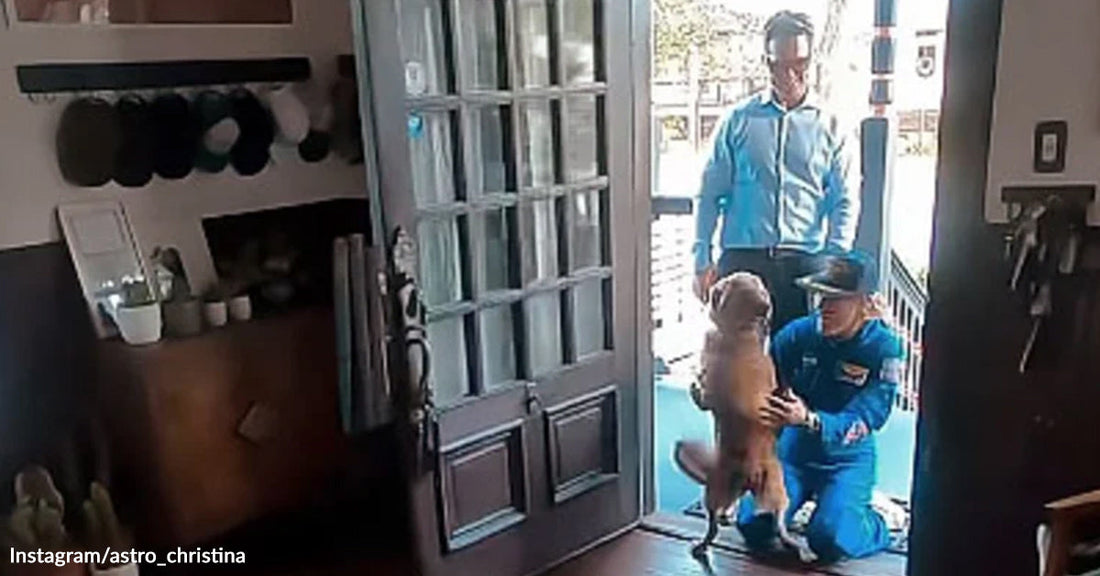
Some of the most unforgettable space stories do not unfold among the stars, but back on Earth in the moments that follow. A heartwarming video of Artemis II astronaut Christina Koch reuniting with her dog, Sadie, has captured exactly that kind of grounded, deeply human magic. In a mission celebrated for its record-breaking lunar flyby and scientific promise, it is this simple, joyful astronaut dog reunion that many people are finding impossible to forget.
The scene, shared on Koch’s Instagram, begins with an ordinary front door and a very extraordinary welcome home. After returning from her journey as one of the four Artemis II crew members, Koch walks up to her home and becomes visible through the window. Inside, Sadie instantly recognizes her. The dog’s whole body language transforms into pure excitement. Her tail whips back and forth, she jumps at the door, and her anticipation builds to the kind of overwhelming energy dog lovers everywhere recognize.

As Koch steps inside, Sadie practically explodes into motion. She barks with joy and launches herself into what many pet owners lovingly call “the zoomies.” She races across the room, sprints back, darts forward again, and repeats this joyous circuit as if she can hardly believe her human is really home. The moment is unscripted and unpolished, which makes it feel even more genuine. The mission might have spanned hundreds of thousands of miles, but this reunion unfolds in a few feet of living room floor, where emotion needs no explanation.
In the caption accompanying the video, Koch reflects on the happiness of that first embrace. She writes that she is “still pretty sure” she was the happier side of the reunion, even as Sadie bounces with excitement. She also credits Sadie with teaching her everything she needed to know about being an emotional support animal and notes that she did not expect how important that lesson would become. I found this detail striking because it highlights how the companionship of a pet on Earth can shape the emotional resilience required for high-pressure missions in space.
The reunion video is not the only glimpse Koch offered into life after splashdown. In the same post, she shared another clip of her and Sadie sprinting side by side along the beach. Together they run and jump through the ocean waves, a clear contrast to the structured environment of a spacecraft. These images of salt water, sunshine, and the uncomplicated joy of a dog playing with her person help illustrate the transition from the precision of spaceflight to the ease of homecoming. It is a reminder that recovery can be as much about joy as it is about rest.
While the video focuses on the emotional side of the story, it also sits against the backdrop of a mission of remarkable scale. Koch flew as part of the Artemis II crew alongside NASA astronauts Reid Wiseman and Victor Glover and Canadian Space Agency astronaut Jeremy Hansen. Together they traveled 694,481 miles, making their lunar flyby the farthest humans have ever journeyed from Earth. This achievement surpasses the distance record set by the Apollo 13 mission in 1970 and places Artemis II in a historic category of its own.
The crew spent 10 days in space, navigating a path around the Moon that pushes the boundaries of human exploration. Their mission was not a landing but a crucial step in preparing for future lunar surface expeditions. After completing their flight, the Artemis II crew returned to Earth, splashing down in the Pacific Ocean off the coast of San Diego. From the moment the capsule hit the water to the moment Koch walked through her front door, the timeline traces a journey from the edges of human travel back to the familiar rhythms of home life and the waiting wag of a dog’s tail.
Behind the warmth of the reunion lies the serious purpose of the Artemis II program. NASA has described how Artemis II science will shape what comes next in lunar exploration. According to the agency, the mission’s data will likely help plan future moon landings in practical and meaningful ways. The work done by Koch and her crewmates is expected to influence mission operations, enabling teams to refine how they design, test, and execute trips deeper into space.
NASA notes that Artemis II science will help train astronauts to use well informed judgment to identify areas of high interest for both science and exploration on the Moon’s surface. That kind of decision making is crucial when crews must weigh safety, scientific value, and limited time on another world. The mission serves not only as a technical test of systems and trajectories, but also as a real world classroom for the next generation of explorers who may walk on lunar soil.
What stands out is how seamlessly the human side of spaceflight fits next to its scientific ambitions. The same astronaut who helps gather information that could guide future moon landings is also someone who comes home to a dog that cannot stop racing circles of delight. The public often sees the spacesuits, the press conferences, and the historic milestones. Moments like Koch and Sadie’s reunion reveal the quieter side of exploration, where emotional support, companionship, and everyday love help make extraordinary missions possible.
In a world where space headlines often center on hardware and numbers, this video reminds people that behind every mission are individuals with families, friends, and pets waiting at home. The Artemis II crew’s record breaking journey around the Moon, their 694,481 mile voyage, and their safe return to Earth all represent major achievements. Yet many viewers will remember the image of Sadie’s zoomies just as vividly as any photo of the spacecraft itself.
This blend of technical triumph and heartfelt connection is part of what makes the Artemis II story resonate so widely. As future missions build on the science and operations tested by Koch, Wiseman, Glover, and Hansen, the world will likely see more milestones in lunar exploration. At the same time, there will be more quiet reunions in living rooms and on beaches, more wagging tails and running embraces that capture what it feels like when someone comes home from the farthest reaches of human travel. Read more at NBC News