
Man Arrested After Abusing Dog So Badly It Wound Up Paralyzed
Guest Contributor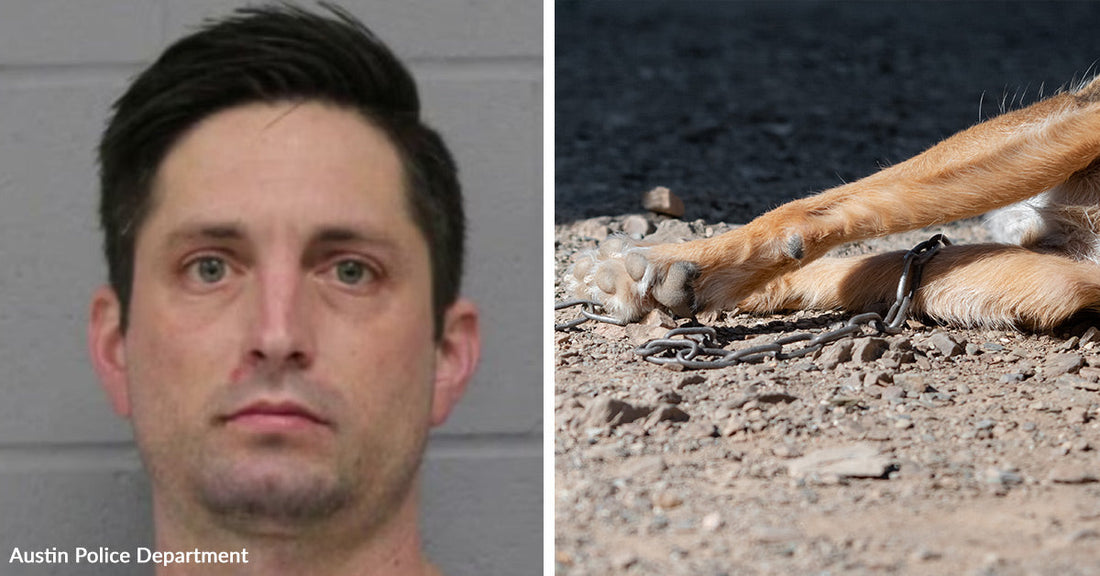
The recent viral video of an Austin dog abuse case has triggered outrage, heartbreak, and an urgent conversation about how communities respond when they witness cruelty. At the center of the story is Boone, a senior Blue Lacy, and his owner, John Kaschak, who now faces a third-degree felony charge of cruelty to animals. As disturbing as the incident is, it also highlights how bystanders, digital platforms, and local authorities can work together in real time to protect vulnerable animals.
According to details reported by the Austin Police Department, the case began to unfold on Sunday, February 8, when officers responded to an animal urgent call at the SEVEN Apartments at 615 West 7th Street in downtown Austin. The viral animal abuse video had already started spreading on social media, prompting residents and online users to contact authorities. Police noted that they received multiple reports, including a direct complaint from a resident and tips from the public who had seen the footage.

The videos that sparked the investigation appeared to show a man restraining a dog against an apartment balcony railing and striking the animal. One clip, posted on Reddit by user r/Acherontiaa, reportedly captured the man, later identified as Kaschak, on an apartment balcony above. The recording shows the figure interacting aggressively with Boone, which quickly galvanized viewers. The post gained over 3,000 upvotes and more than 600 comments, a measure of how strongly people responded to the apparent cruelty.
These images from a nearby unit became central evidence. The Austin Police Department wrote in a news release that a complainant provided officers with the videos that depicted the abuse. Those recordings did more than circulate online. They guided officers to a specific location, allowed them to identify a suspect, and prompted an immediate welfare check on Boone.
In the days that followed, APD's Animal Cruelty Unit joined forces with Austin Animal Services' Animal Protection Team to investigate the scene and evaluate Boone's condition. These specialized teams focus not only on whether a crime has occurred but also on what the animal needs in the moment. In this case, their investigation directly led to Kaschak's arrest on Thursday, February 12, on a third-degree felony charge of cruelty to animals. Boone was removed from the apartment and placed in the care of Austin Animal Services, effectively bringing him into protective custody.
Authorities shared a cautiously hopeful update about Boone. They reported that he is generally in good health and that staff members continue working with him to help him feel safe. That detail, I found, is particularly striking because it underlines the emotional toll these incidents can have on animals, especially older ones. Boone is described as a senior Blue Lacy, a Texas native breed recognized for its intelligence and working ability. Senior dogs often rely heavily on routine and stability, which means that cruelty and abrupt changes in their environment can be especially disorienting.
At the same time, the public has shown a strong interest in Boone's future. Many people who learned about the case have naturally wondered whether he can be adopted or fostered. For now, the answer is no. Austin Animal Services has clarified that Boone will not be available for adoption or foster placement until the legal case reaches a conclusion. This policy serves a dual purpose. It protects the animal's legal status as evidence in an ongoing criminal case and ensures that decisions about his long-term home align with the outcome of the court process.
The incident has reached beyond law enforcement and animal welfare agencies and into the professional world of the accused owner. Following the public circulation of the balcony video and the resulting backlash, Kaschak was released from his job at American Ventures, a real estate investment company. In a statement, CEO Shravan Parsi wrote that the behavior seen in the footage does not reflect the company’s values and is not something they condone under any circumstances. That corporate response illustrates how viral abuse footage can carry swift real-world consequences that are not limited to the courtroom.
This Austin dog cruelty case also underscores how quickly digital communities can mobilize to protect animals. A neighbor chose to film what they saw from a nearby balcony and share it online, where it spread rapidly. Others then amplified the content, posted comments, and flagged the situation to authorities. While social media can sometimes feel chaotic, this situation shows its potential to function as a kind of crowdsourced alert system when used responsibly. The decisive step, though, was not simply posting, but also contacting local law enforcement and animal protection services with clear evidence.
There is an important balance to strike here. On one hand, videos of animal abuse can be deeply upsetting to watch, and sharing them repeatedly may cause distress without adding new information. On the other, these recordings are often pivotal for investigations and can provide specific, time-stamped proof that investigators need. In this case, APD emphasized that the videos taken from the nearby unit and circulated online were key to identifying and charging a suspect, and to securing protection for Boone.
From a broader perspective, the story highlights the role of specialized units like APD’s Animal Cruelty Unit and local Animal Protection Teams. These organizations bring expertise in both criminal investigation and animal welfare, ensuring that cases are not treated as minor incidents but as serious offenses with real victims. Their work does not stop at removing an animal from harm. It also includes assessing health, managing trauma, and planning for safe long-term placement once legal barriers are resolved.
For community members, this case can serve as a stark reminder of what to do when confronted with suspected abuse. Documentation, prompt reporting, and cooperation with authorities are all vital pieces of the puzzle. It is also a reminder that outcomes can be complex. While Boone is now safer and receiving care, his future remains tied to the legal system’s timing and decisions. The people most directly involved, from neighbors to investigators, appear focused on one priority: ensuring his continued safety.
As the legal process continues, Boone remains under the care of Austin Animal Services, where staff are working to help him feel secure after a traumatic experience. His story has resonated with thousands of people who saw the video or read about the case, many of whom have expressed concern for his wellbeing and anger at the alleged cruelty. The response, from residents, online communities, law enforcement, and even the accused’s employer, reflects a growing consensus that animal cruelty is a serious matter with emotional and legal consequences. For now, Boone’s situation is a reminder that community vigilance can make a life-saving difference, and that behind every viral clip is a living being whose safety must come first. Read more at https://www.mysanantonio.com