
🚨Urgent: Missile Strikes Shelter in Ukraine! Rush Emergency Aid!
Bee Venom Research Offers New Hope for Treating Aggressive Breast Cancer
Guest Contributor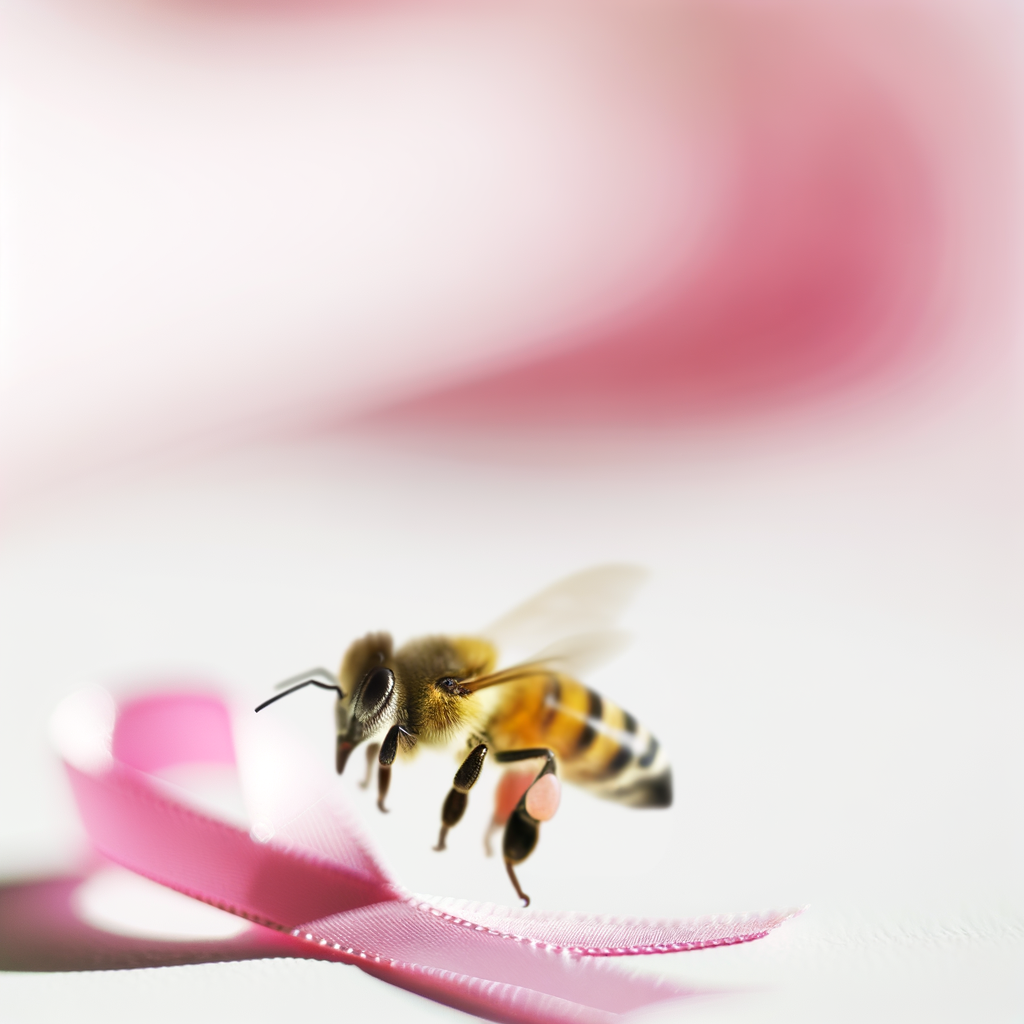
Could the sting of a honeybee become a powerful ally in the fight against cancer? That’s the question researchers at the Harry Perkins Institute of Medical Research in Perth, Australia, have been exploring since 2020. Their work, which focuses on the potential of bee venom to treat aggressive forms of breast cancer, has made what they describe as “important progress.” The research, centered on a compound called melittin found in bee venom, is showing early promise in targeting cancer cells while sparing healthy ones—a crucial goal in cancer therapy.

Breast cancer remains the most common cancer among women in the United States, accounting for about 30 percent of all new female cancer diagnoses annually, according to the American Cancer Society. With projections estimating over 316,000 new cases in 2025, the need for more effective and less toxic treatments is urgent. This is especially true for triple-negative breast cancer (TNBC), an aggressive subtype that lacks targeted therapies and has a poorer prognosis.

Melittin, the main active component in honeybee venom, has long been known for its ability to disrupt cell membranes. In the lab’s preclinical studies, a single injection of a specially engineered form of melittin led to cancer cell death within six hours and a therapeutic effect that lasted up to a week. Dr. Edina Wang, a postdoctoral researcher leading the study, explained that this modified melittin is designed to be safely injected into the bloodstream, targeting tumors with minimal harm to normal tissue. “Melittin alone is highly toxic and can damage healthy tissues if not carefully controlled,” she told Newsweek. “By adding specialized components, we've improved its precision.”
What makes this targeted melittin approach especially noteworthy is its ability to distinguish between cancerous and healthy cells. Wang’s team found that whole bee venom appears to be even more effective than melittin alone, suggesting that other components in the venom may help guide the compound directly to cancer cells. While bee venom in its natural form is not safe for therapeutic use due to its allergenic and toxic elements, it offers a valuable blueprint for creating safer, more precise treatments.
In addition to its direct anticancer effects, targeted melittin has shown promise in enhancing the delivery of complex proteins and molecules that typically struggle to penetrate tumors. This could potentially amplify the effectiveness of other therapies when used in combination. I found this detail striking—it suggests that bee venom’s role in cancer treatment might extend beyond its own cytotoxic properties, acting as a facilitator for broader therapeutic strategies.
Dr. Robert Clarke, executive director of The Hormel Institute and professor at the University of Minnesota, noted that drugs derived from natural sources have a long history in oncology. He cited examples like paclitaxel, originally extracted from the Pacific yew tree, which is widely used in chemotherapy. Clarke emphasized that the bee venom research aligns with existing studies and is not an isolated finding. What sets this study apart, he said, is its focus on breast cancer subtypes, particularly TNBC, which currently lacks approved targeted therapies.
Clarke acknowledged the potential of melittin in treating TNBC, calling the findings “timely and relevant.” He also pointed out that the best results were observed when melittin was combined with paclitaxel, suggesting that the venom-based therapy may be most effective as part of a combination treatment rather than a standalone cure. “If it proved better, so safer, with less toxicity for patients, and better anticancer activity, it could come to replace some existing drugs in current chemotherapy regimens,” he said.
While the primary research has focused on breast cancer, Wang’s team has also begun exploring the use of targeted melittin in treating ovarian cancer. Initial lab results indicate a sixfold increase in effectiveness against ovarian cancer cells compared to melittin alone. Though these findings are preliminary, they open the door to broader applications of the therapy. “We are continuing to optimize delivery methods and prepare for clinical trials to evaluate safety and efficacy,” Wang said.
Still, both researchers caution that much work remains. Clarke noted that the current research does not fully establish the safety of the treatment, particularly in terms of potential toxicity. He mentioned the absence of detailed toxicity indicators, such as changes in body weight in animal models, which are standard in preclinical evaluations. Wang also stressed that while the results are encouraging, clinical trials are essential to confirm the therapy’s safety and effectiveness in humans.
As it stands, chemotherapy and radiotherapy remain the standard treatment options for many cancer patients, often accompanied by significant side effects. The potential of targeted melittin lies in its ability to complement these existing therapies, possibly reducing their intensity or enhancing their outcomes. “Our goal is to develop a more targeted therapy that could potentially reduce the reliance on these traditional treatments or enhance their effectiveness,” Wang said. “It’s too early to say whether it could replace them, but in the future, it might help create more personalized and less toxic treatment options for patients.”
Whether bee venom will ultimately become a viable treatment for breast or ovarian cancer remains uncertain. The path from preclinical success to clinical approval is long and often unpredictable. However, the research underscores the promise of natural compounds in modern medicine and the importance of continued exploration into innovative cancer therapies.