



How America's Bison Came Back From the Brink to Nearly Half a Million Animals
Guest Contributor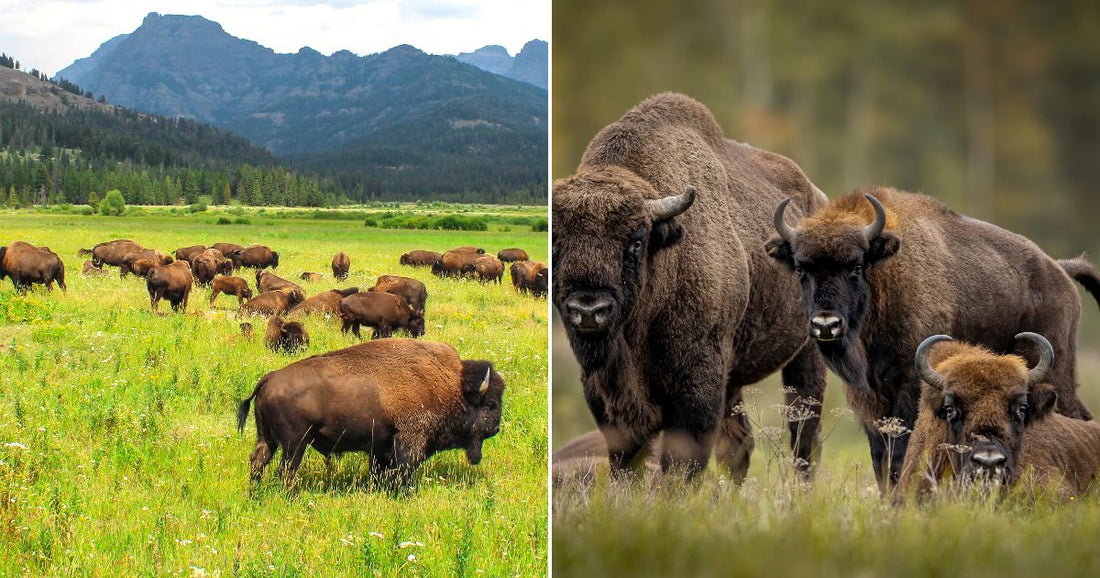
The story of how conservation efforts helped bison recover from near extinction is both sobering and deeply hopeful. Once roaming North America in the tens of millions, American bison were driven to the brink of disappearance in the 1800s. Today, thanks to more than a century of coordinated action, this iconic species has rebounded to nearly half a million animals. Their journey from near extinction to being named the United States’ national mammal in 2016 reveals how cultural values, science and community commitment can come together to reverse even a dramatic decline.
According to Ilana Xinos, executive director of the North American Bison Discovery Center, bison were once central to life on the continent. They shaped ecosystems and served as a critical part of Native American culture, providing food, shelter, tools, clothing and jewelry. The connection between Indigenous communities and bison was not simply practical. The animals also held spiritual importance that guided traditions, stories and a way of life closely linked to the land.

That relationship was nearly severed in the 1800s, when westward expansion accelerated the killing of bison. Railways opened the plains to large-scale hunting, rifles improved the efficiency of slaughter and an international market for hides turned each animal into a source of profit. Within a few decades, herds that had numbered in the tens of millions dwindled to fewer than a thousand animals scattered across the continent. The article describes this period as one of rapid and devastating decline, a near-total erasure of a species that had defined the North American landscape.
At that desperate moment, a diverse group of people decided to act. Xinos describes ranchers, Indigenous leaders and even a taxidermist who all recognized that bison were on the edge of extinction. One detail stands out. A taxidermist originally planned to collect animals solely for preservation in museums, believing they were doomed. During his efforts, he changed his mind. Instead of memorializing a lost species, he chose to help save it. I found this detail striking because it captures the turning point in the story: when people shifted from accepting loss as inevitable to believing recovery was possible.

Xinos calls American bison conservation “the greatest success story,” and the numbers support that assessment. From under a thousand animals to nearly half a million today, the recovery illustrates the power of long-term conservation. These gains did not happen quickly and did not rely on one approach. Bison conservation has taken different forms, including public herds in national parks, tribally managed herds that honor cultural traditions and private ranches that raise bison for meat. Xinos emphasizes that there is not a single “right” strategy and that different methods can contribute to the same overarching goal of preserving the species.
The article underscores that while bison have made a remarkable comeback, they are still considered “near threatened.” Their numbers are far below historic levels, and their habitat is limited by human development. Xinos notes that bison are meant to be wild, yet the modern landscape makes it virtually impossible for them to roam as they once did. What was once a continuous range is now fragmented by roads, fences and cities, so most bison now live within managed spaces where people carefully balance land use, animal welfare and safety.
One modern twist in the story is the growing presence of bison on dinner tables. Xinos points out that many people feel uneasy about eating bison meat because they assume it harms conservation. She counters that ranchers who raise bison typically care deeply about the animals and see themselves as partners in their survival. This perspective highlights a broader idea in wildlife management. Carefully managed, sustainable use can sometimes support conservation by giving landowners a reason to maintain healthy herds and protect open spaces. It is a nuanced point that challenges the assumption that consumption always harms endangered or vulnerable species.

Despite the steady recovery, Xinos says many people still believe bison are extinct. That misconception contrasts with another compelling fact from the article. Bison can now be found in all 50 states, a testament to how widespread reintroduction and ranching efforts have become. The return of bison to landscapes across the country has cultural and symbolic meaning that extends beyond biology or economics. It reminds people that recovery is possible even after a species has come close to vanishing.
This layered significance helped pave the way for the National Bison Legacy Act of 2016, which designated the bison as the national mammal of the United States. The article explains that spiritual importance to Native Americans, economic importance to ranchers and symbolic importance to the nation all contributed to that decision. Xinos reflects that “this is an animal. It represents us. And look what it did and look how it keeps going.” In that observation, the bison becomes more than a species. It becomes a symbol of resilience, of surviving profound loss and still moving forward.
Yellowstone National Park holds a special place in this story. The National Park Service notes that it is the only place where bison have lived continuously since prehistoric times. That continuity helped seed recovery efforts, as animals from Yellowstone and other remnant herds provided the foundation for new populations elsewhere. The park also reminds visitors that bison are powerful wild animals, not domestic livestock or oversized pets. A typical adult can weigh more than 1,000 pounds, move with surprising agility and reach speeds of up to 35 miles per hour.
Because of their size and speed, bison can be dangerous when people get too close. The National Park Service recommends staying at least 25 yards away, roughly the distance of two standard school buses. This safety message appears again and again in public information about bison viewing, especially in places like Yellowstone where tourists sometimes underestimate the risks. Respecting that distance is part of respecting the animals as truly wild, acknowledging that their recovery depends on keeping them and people safe.
Looking at the arc of this story, the recovery of bison from near extinction reflects a rare combination of science, cultural respect and perseverance. It began with recognizing the loss, then moved into decades of coordinated actions that included breeding programs, protected habitats, policy changes and a growing public appreciation of the animals themselves. Today, bison herds across the country serve as living proof that conservation can work, even when a species has fallen to a fraction of its former numbers. Their presence in all 50 states, their status as the national mammal and their continued importance to Native communities and ranchers all speak to a shared commitment to never let them vanish again. Read more at https://www.kbtx.com/2026/11/20/how-conservation-efforts-helped-bison-recover-near-extinction/