
🚨Urgent: Missile Strikes Shelter in Ukraine! Rush Emergency Aid!
San Francisco’s Wandering Sea Lion Finally Sees the Pacific Again
Guest Contributor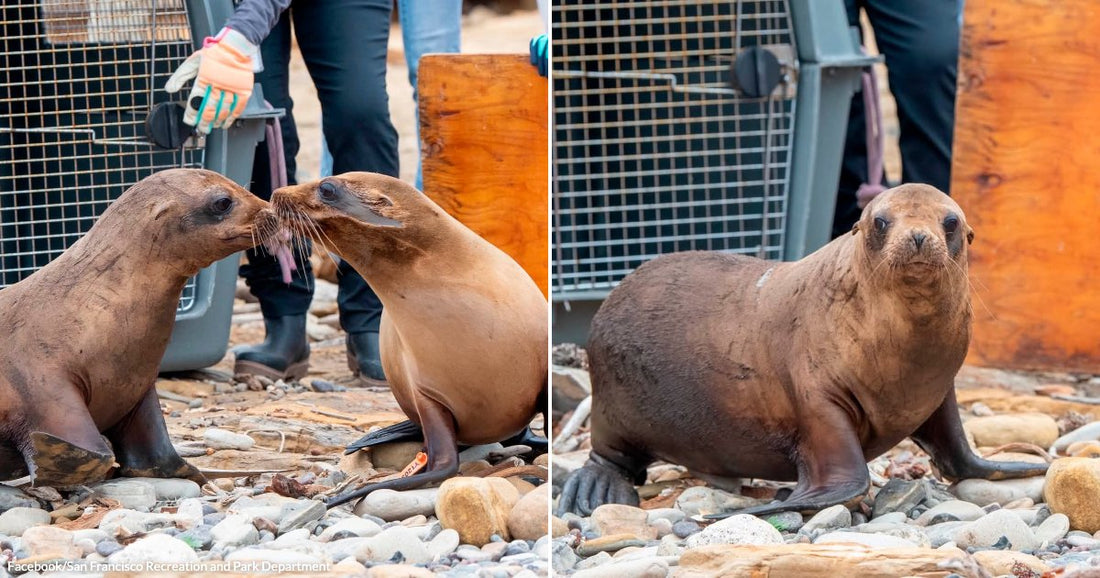
San Francisco has a special way of turning everyday street scenes into something unforgettable, and the story of Irving the sea lion is one of those moments. Earlier this year, residents in the city’s Outer Sunset neighborhood looked out to find not a dog or a cyclist passing by, but a young California sea lion pup far from the shoreline. What followed was a careful rescue, months of rehabilitation, and a hopeful return to the ocean. Irving’s journey from city streets to the waves of Monterey offers a glimpse into urban wildlife encounters, compassionate response, and the power of expert care in marine mammal rescue.
Irving’s adventure began on the morning of April 16, when he was spotted wandering near 48th Avenue and Irving Street, a part of San Francisco that normally sees more surfers and dog walkers than marine mammals on the pavement. Video from the day showed the young sea lion calmly sharing space with San Francisco police officers, an unusual and somewhat lighthearted scene that quickly captured public attention. It was an example of urban wildlife meeting city services in real time, with officers working not to enforce the law, but to protect a vulnerable animal.

According to San Francisco Recreation and Park spokesperson Tamara Barak Aparton, this was no typical public safety call. She explained that the officers were trying to get the California sea lion “in custody” after it had left the ocean and ended up on a city street. The situation required a bit of improvisation, since few people keep sea-lion-sized equipment on hand. Officers and park rangers eventually tracked down a dog crate large enough to safely hold the pup. Once contained, Irving was moved to the bike storage area at a nearby ranger station, where he could wait in relative calm for trained rescuers to arrive.
That rescue team came from the Marine Mammal Center, which operates a hospital in Sausalito dedicated to the care of sick, injured, or stranded marine mammals. From the outset, it was clear that Irving needed more than a simple ride back to the shoreline. The city’s Recreation and Park Department later reported that when staff first encountered him, Irving was severely malnourished and weighed about half of what a healthy seal pup his age should. Instead of returning to the sea that day, he was transported to the center for intensive treatment.

Facebook/San Francisco Recreation and Park Department
The Marine Mammal Center’s role in this story is central, even if much of their work took place out of public view. At the hospital, specialists could provide the nutrition, medical evaluation, and structured care required to help an underweight sea lion recover strength. Details of Irving’s daily regimen were not described in the report, yet the outcome makes clear that the center’s approach was both careful and effective. Over the course of months, Irving received the type of monitored rehabilitation that stranded marine mammals often need in order to have a viable chance at survival in the wild.
Back in April, as Irving settled into care in Sausalito, those involved in his rescue were already hoping the story would eventually end back in the ocean. Tamara Barak Aparton shared at the time that “we are all rooting for him,” capturing a sentiment that likely reflected not just the staff on scene, but many people who heard about a sea lion pup found in a city neighborhood. There is something inherently compelling about an animal clearly out of place, relying on human intervention to return to where it belongs. I found this detail striking because it underscores how invested people can become in the fate of a single animal once a story brings that animal into focus.

Facebook/San Francisco Recreation and Park Department
Months later, that wish for a happy outcome was fulfilled. In an update shared by San Francisco’s Recreation and Park Department, officials confirmed that Irving had made a full recovery at the Marine Mammal Center. The once-malnourished pup was now described as healthy and strong. Instead of roaming an asphalt street, he was ready for a proper homecoming into his natural environment. The department announced that Irving was released back into the wild in Monterey, a region known for its rich marine life and expansive coastline.
The agency’s statement made clear how far Irving had come. When rangers first met him, his weight and condition signaled serious risk. After months of expert care and rehabilitation, his transformation into a robust, releasable sea lion marked a clear success for marine mammal rescue efforts. The description of him as “back where he belongs” captured the broader meaning of the story. This was not just about a single day’s emergency response. It was about seeing that response through to a conclusion that gave the animal a renewed chance at life in the ocean.
Irving was not alone on the day of his release. He returned to the wild alongside another sea lion, named Jade, who had also recovered from malnutrition at the Marine Mammal Center. The detail that there were at least two animals ready to go back to sea at the same time hints at a larger pattern of need. While the article focused on Irving’s time in San Francisco, the mention of Jade serves as a reminder that many marine mammals encounter health challenges that require human assistance. Their joint release offers a small but meaningful sign of hope in the broader work of marine animal rehabilitation.
Stories like Irving’s resonate not only because of the unusual sight of a sea lion in an Outer Sunset neighborhood, but also because they highlight cooperation among ordinary residents, local public agencies, and specialized wildlife experts. City police officers and park rangers recognized that something was wrong and acted quickly. Community members paid attention and helped bring attention to the situation. The Marine Mammal Center brought deep expertise to the next stage, guiding a severely malnourished young sea lion back to health.
In a time when many environmental headlines focus on large-scale problems, the rescue and release of Irving and Jade offers a more intimate look at how individual lives can be changed through timely care. A curious pup on a San Francisco street became a symbol of both vulnerability and resilience. From a crate in a ranger’s bike storage area to the waters off Monterey, Irving’s journey shows how thoughtful response and patient rehabilitation can bridge the gap between crisis and recovery for wildlife that finds itself in trouble close to home. Read more at https://www.cbsnews.com