
🚨Urgent: Missile Strikes Shelter in Ukraine! Rush Emergency Aid!
Calvin Graham Was The Youngest American to Serve in World War II
Guest Contributor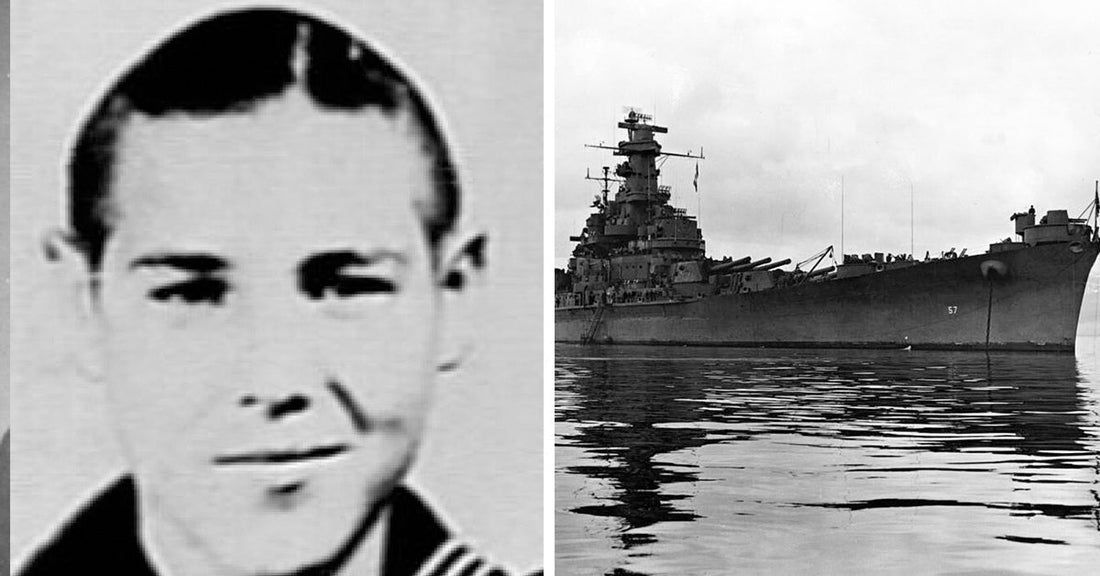
In the annals of World War II history, few stories are as astonishing as that of Calvin Graham, the youngest American to serve in the conflict. At just 12 years old, Graham enlisted in the U.S. Navy, fought in key battles of the Pacific Theater, and earned both the Bronze Star and the Purple Heart. His journey, marked by determination, hardship, and eventual recognition, is a powerful reminder of the extraordinary sacrifices made during wartime—and the resilience of a child who refused to be sidelined by his age.

Born and raised in Crockett, Texas, Calvin Graham was already living a life of independence by the time he reached adolescence. After escaping an abusive household, he moved into a boarding house with his older brother and began working multiple jobs to support himself. It was during this period, in the shadow of the attack on Pearl Harbor, that Graham became determined to join the war effort. He began shaving early and practiced speaking in a deeper voice, all in an effort to appear older than his years.
At a time when enlistment in the Navy required a minimum age of 17—or 16 with parental consent—Graham was undeterred by the rules. He forged his mother’s signature on enlistment papers and even stole a notary stamp to make the documents appear legitimate. On August 15, 1942, he traveled to Houston and successfully enlisted, despite being only 12 years old. One of the most nerve-wracking moments came during the dental examination, where he feared the dentist would recognize his age. According to accounts, Graham cleverly pointed out that others ahead of him were also underage, and the dentist, unwilling to challenge him, let him pass.
Graham’s story is not just one of deception; it is also one of courage and perseverance. After completing training, he was assigned to the USS South Dakota, a battleship that would become renowned for its role in the Pacific. The ship, manned by a young and inexperienced crew, soon saw action in the Battle of Santa Cruz and, more notably, the Naval Battle of Guadalcanal. During the latter, the South Dakota sustained 42 enemy hits. Amid the chaos, Graham was struck in the face by shrapnel and fell three stories through the ship. Despite his injuries, he continued to assist wounded sailors, fashioning tourniquets from belts and offering comfort through the night.
For his bravery, Graham was awarded the Bronze Star and the Purple Heart. However, his moment of recognition was short-lived. His mother, having seen him featured in a news segment, alerted the Navy to his true age. The military responded by stripping him of his medals and placing him in a military prison in Corpus Christi, Texas. He spent nearly three months incarcerated before his sister’s advocacy—through letters to newspapers—helped secure his release. Still, he was denied an honorable discharge, a decision that would haunt him for decades.
Calvin Graham’s post-war life was marked by continued struggle. He tried to return to school but eventually dropped out, married young, and became a father. A back injury sustained while serving in the Marine Corps during the Korean War left him unable to work in many fields, and he was forced to sell magazine subscriptions to make ends meet. Despite these challenges, he never stopped fighting to have his service recognized.
In 1976, Graham appealed directly to President Jimmy Carter, a fellow Navy veteran, asking for an honorable discharge. Two years later, his request was granted, and his medals were reinstated—except for the Purple Heart. It wasn’t until 1988 that he received disability benefits and back pay. The Purple Heart was finally re-awarded in 1994, two years after his death from heart failure at the age of 62.
I found this detail striking: Graham’s story, while extraordinary, also underscores the desperation and sense of duty felt by many during the war. That a 12-year-old could not only enlist but also serve with distinction speaks volumes about the era’s unique pressures and the blurred lines between childhood and adulthood in times of crisis.
Today, Calvin Graham’s legacy lives on as a symbol of youthful bravery and the enduring human spirit. His experience continues to captivate historians and readers alike, offering a poignant lens through which to view the sacrifices made during World War II.