
Firefighters and Farmers Join Forces When a Horse Becomes Trapped in Deep Water
Guest Contributor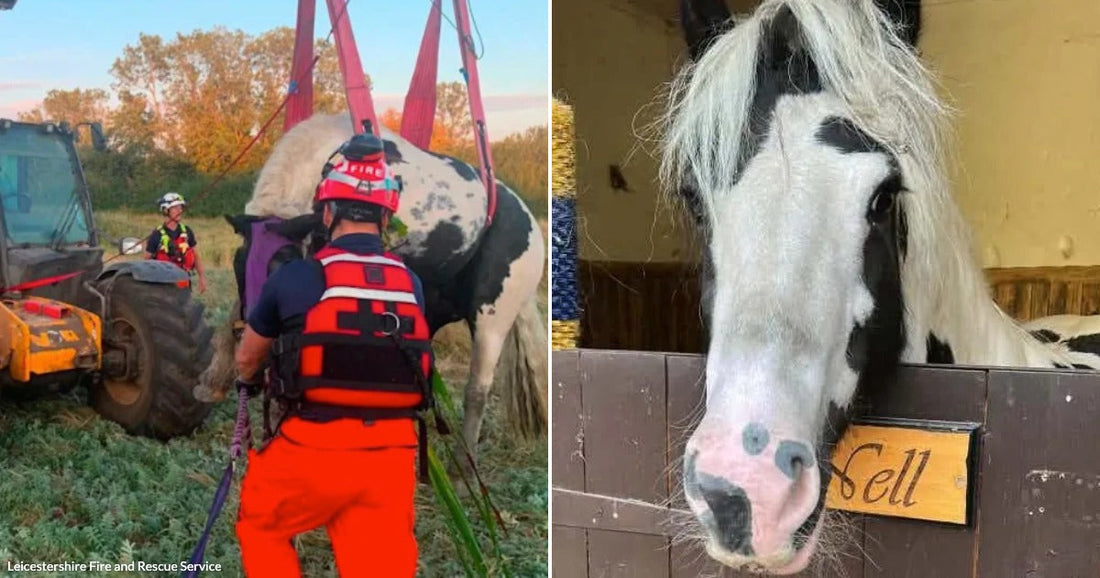
There are some rescue stories that feel made for a headline, and the tale of horse Nell pulled from a canal in Leicestershire is one of them. This light-hearted but dramatic incident, involving Leicestershire Fire and Rescue Service and a stranded horse in Aylestone Meadows, offers a glimpse into how prepared local crews are for unusual emergencies. It is also a reminder that even a quiet day by the water can turn quickly, especially when a curious animal decides to cool off in a canal.
According to Leicestershire Fire and Rescue Service, the incident unfolded when Nell, a horse from the local area, ended up in the waterway near the historic Packhorse Bridge. The service reported that Nell “must have decided to cool-off in the canal” before finding herself stuck and unable to get out again. What might have started as a simple attempt to escape the heat turned into a complex operation requiring specialist skills, teamwork and careful handling of a large, frightened animal.

Emergency crews received the call on a Saturday evening, a time when many might assume that the most pressing problems involve traffic collisions or household fires. Instead, a technical rescue team from Southern Station and a crew from Wigston Fire Station were dispatched to Aylestone Meadows. This location, known for its green spaces and waterways, became the staging ground for an intricate canal rescue that had to balance speed with safety for both people and horse.
The involvement of a dedicated technical rescue team highlights how fire and rescue services today are trained for far more than extinguishing flames. These teams handle complex scenarios that might include animals stuck in precarious spots, people trapped in vehicles or incidents near water. In Nell’s case, the effort required not only professional expertise but also coordination with the local farming community. Fire crews worked alongside local farmers to lift the horse from the canal and bring her back onto solid ground.

Leicestershire Fire and Rescue Service
The description from the service suggests a methodical operation, handled with care and calm. The rescuers had to consider Nell’s weight, position in the water and stress level. They also had to keep themselves safe while operating near a canal, where footing can be unstable and visibility challenging. The fact that the rescue brought together firefighters and farmers underlines how rural and semi-rural communities often rely on shared knowledge and equipment to solve urgent problems. Local farmers are likely to be familiar with handling large animals, which can be invaluable in situations where strength and calm guidance are both required.
Once Nell was successfully lifted from the waterway, attention turned immediately to her health. A vet examined her at the scene, making sure she had not suffered serious injury or complications from being stuck in the canal. After that quick but vital assessment, Nell returned home and, according to the fire and rescue service, now “appears to be in a stable condition.” The wording was deliberate and wry, blending reassurance with a classic equine pun that suited the light-hearted outcome of what could have been a much more serious event.

Leicestershire Fire and Rescue Service
That simple phrase, “stable condition,” captures much of the mood surrounding this story. The immediate danger passed, the horse has reportedly come through the ordeal, and the people involved were able to set a slightly playful tone without dismissing the risks they faced. The service even remarked that “you can lead a horse to water, but it can be a struggle getting it back out again,” a twist on a familiar proverb that acknowledges both the humor and the challenge of the situation. I found this detail striking because it showed how emergency responders can communicate serious work with a touch of humanity and warmth.
The incident also offers a reminder of how easily animals can find themselves in trouble around canals and rivers. Aylestone Meadows is likely attractive to horses and other animals because of its open spaces and accessible water. On hot days, the temptation to step into a canal to cool off can be strong, yet the banks may be steep, slippery or overgrown, and the depth or current of the water can make climbing out difficult. Stories like Nell’s highlight the importance of vigilance near waterways, particularly when walking animals in areas that are not specifically designed for safe access.

Leicestershire Fire and Rescue Service
From a community perspective, the successful canal rescue in Leicestershire showcases the quiet professionalism of local services. These are the kinds of events that might not dominate national headlines for long, but they are deeply meaningful to those directly involved. For Nell’s owner, the sight of firefighters and farmers working together to bring her safely out of the canal must have been a powerful mix of anxiety, relief and gratitude. For the crews, it was another reminder that their training in technical rescue and cooperation with local people can make the difference between a tragic outcome and a story that ends at home, in a stable, with a recovering horse.
Animal rescues by fire and rescue services often resonate with the wider public because they bridge the gap between everyday life and emergency response. People can easily imagine walking near a canal in Leicestershire, noticing a horse in difficulty and feeling unsure what to do next. Knowing that there are teams prepared and equipped for such scenarios offers reassurance, and the gentle humor in the official statements helps make the story shareable without diminishing the effort involved. It is an example of how local news, combined with careful communication, can turn a potentially distressing incident into an uplifting narrative.
Nell’s adventure in Aylestone Meadows will likely be remembered as one of those local stories that friends and neighbors retell with a mix of amusement and appreciation. It demonstrates the value of technical rescue capabilities, the importance of collaboration between emergency services and local communities, and the reality that even something as seemingly simple as a horse cooling off in a canal can become a complex situation. In the end, the most important detail is that Nell is reported to be safe, at home and yes, in a stable condition. Read more at https://malaysia.news.yahoo.com