
Starving Penguin Approaches Kayakers Far Out at Sea and Changes Their Plans
Guest Contributor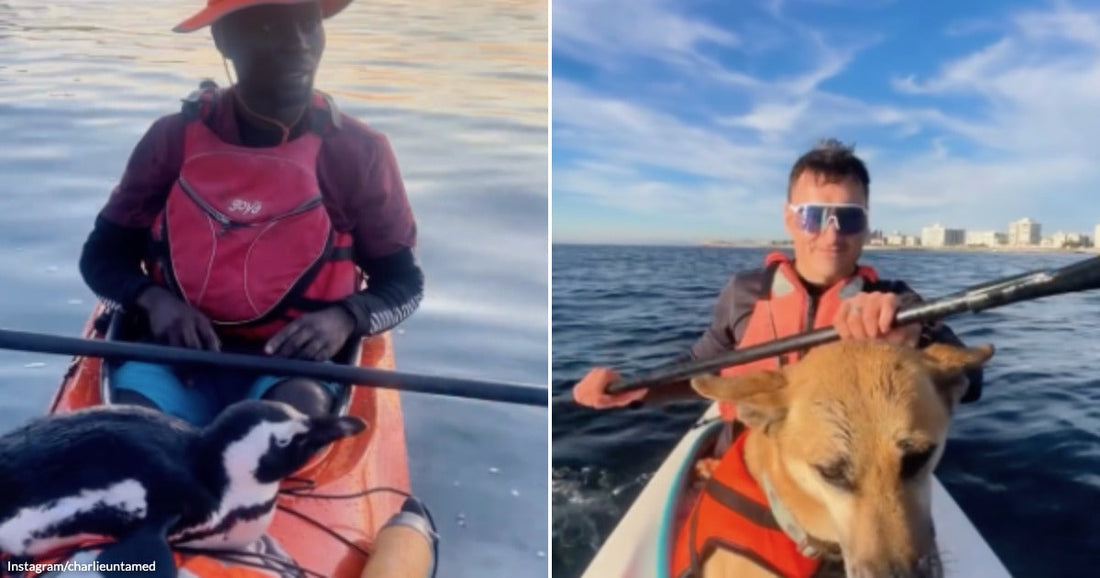
A quiet sunset paddle turned into a life-saving mission when a group of Cape Town kayakers helped rescue a starving African penguin far out at sea. What began as a simple outing to spot whales close to Cape Town’s shoreline became an unforgettable reminder of how closely human compassion and wildlife conservation are linked. In a region where African penguins are now listed as Critically Endangered, this chance encounter shows how much difference a single act of kindness can make.
The kayakers were out on the water with Cape Kayak Adventures, led by guide Hassan Chinyama, when the moment unfolded. As the group paddled at sunset and scanned the horizon in hope of whale sightings, Cape Town kayaker Charlie noticed something unusual. A lone African penguin bobbed on the surface of the ocean, far from land and even farther from any other penguins. For a species that thrives in groups, this solitary sight raised concern right away.

African penguins are highly social birds that typically travel and hunt together. The author explains that seeing one bird alone so far from its colony is an immediate red flag, suggesting that something might be wrong. Charlie recalls that after about an hour of paddling quite far out, the group had already turned around to head back when the penguin appeared. Its presence might have been cause for curiosity at first, but what happened next made it clear that this was not a simple wildlife sighting.
Instead of diving beneath the surface or keeping its distance, the penguin swam directly toward the kayaks. It was not wary, and it did not seem interested in hunting or playing. According to Charlie, the little bird repeatedly tried to hop onto their kayaks and even attempted to climb onto a paddle. This persistent behavior was extraordinary to witness. It suggested not only exhaustion, but also an almost desperate attempt to seek help from the only beings nearby.

Instagram/charlieuntamed
As the penguin continued to circle back and attempt to haul itself aboard, it became obvious to the paddlers that this was no ordinary encounter. The bird’s actions made it feel as though it was actively asking for assistance. I found this detail particularly striking, because wild animals generally avoid such close contact unless something is very wrong. The kayakers quickly realized that doing nothing was not an option. Alone, far from shore, and clearly worn out, the penguin was in serious trouble.
Time was critical. Rather than trying to grab or restrain the bird, the group chose a gentler approach. They stayed close, adjusted their pace, and carefully guided the penguin as they paddled back toward the shore. With the kayaks as companions and reference points, the weakened bird was able to follow a safe route to land. The paddlers essentially became its escort across the water, keeping an eye on the penguin and making sure it did not get left behind.

Instagram/charlieuntamed
Once back on solid ground in Cape Town, the team at Cape Kayak Adventures moved quickly. Trace Rauch from the company immediately contacted the Southern African Foundation for the Conservation of Coastal Birds, better known as SANCCOB. The organization specializes in the rescue, rehabilitation, and release of seabirds, including African penguins, and has long been a key player in efforts to protect the species along southern Africa’s coastline.
SANCCOB’s veterinary team responded and stepped in to assess the bird. Their findings confirmed what the kayakers had suspected. The penguin was severely emaciated and dehydrated, and it was dangerously close to starvation. According to the report, without this timely intervention, the little adventurer likely would not have survived. The rescue at sea and the decision to seek professional help had bought the penguin the time it desperately needed.
After its assessment, the penguin was admitted to SANCCOB’s rehabilitation program. There, it entered a specialized care plan designed to address its dehydration, malnourishment, and overall weakness. Rehabilitation for African penguins can include carefully regulated feeding, fluid therapy, monitoring for infections, and gradual strength building until the bird is healthy enough to fend for itself again in the wild. In this case, the response appears to be working remarkably well.
The rescued bird has been receiving plenty of care, attention, and nutritious fish-based meals. The team reports that the penguin has already gained a whole kilogram since the rescue. For an animal that arrived on the brink of starvation, this healthy weight gain is an important sign of recovery and resilience. It also underscores the impact of SANCCOB’s expertise and the resources that go into every single penguin rehabilitation case.
This story carries added weight when viewed against the broader conservation challenges facing African penguins. The species is currently listed as Critically Endangered. Major threats include declining fish stocks linked to overfishing and shifting ocean conditions, along with the long-term effects of climate change on marine ecosystems. Food scarcity has become a serious problem, leaving many penguins struggling to find enough to eat, especially during crucial breeding and molting periods.
Because their numbers have fallen so sharply, every penguin counts. The rescue of one underweight bird might seem small when measured against global statistics, yet each individual life contributes to the survival of the species as a whole. Stories like this highlight how everyday people, not just professional conservationists, can help at critical moments. A group that set out simply to enjoy a whale watching paddle ended up playing a vital part in conserving one of the ocean’s most iconic birds.
The kayakers’ response also reflects a broader ethic of listening to nature’s signals. They noticed something that did not look right, trusted their instincts, and acted with care. Their decision to support the penguin’s long swim back to land and to reach out to SANCCOB demonstrates how collaboration between community members and conservation organizations can change outcomes for wildlife in distress.
The article extends a heartfelt acknowledgment to everyone involved. There is gratitude for kayakers like Charlie, for guide Hassan Chinyama and organizer Trace Rauch from Cape Kayak Adventures, and for the dedicated staff at SANCCOB who work tirelessly to give injured or weakened seabirds a second chance. Their combined efforts turned a potentially tragic encounter into a hopeful chapter in the ongoing story of African penguin conservation near Cape Town.
For anyone who loves marine wildlife or cares about endangered species, this rescue is both inspiring and instructive. It offers a concrete example of how attention, compassion, and quick action can help protect vulnerable animals facing extreme hardship at sea. With African penguins under such intense pressure, these everyday acts of heroism become all the more meaningful, reminding us that the survival of this charismatic, tuxedoed seabird is a responsibility shared by all who share its coastline. Read more at https://www.goodthingsguy.com/cape-town-kayakers-rescue-starving-african-penguin/