
🚨Urgent: Missile Strikes Shelter in Ukraine! Rush Emergency Aid!
Cat Named 'Booger' Vanishes for Six Years Until His Mom Recognizes One Sick Shelter Cat Online
Guest Contributor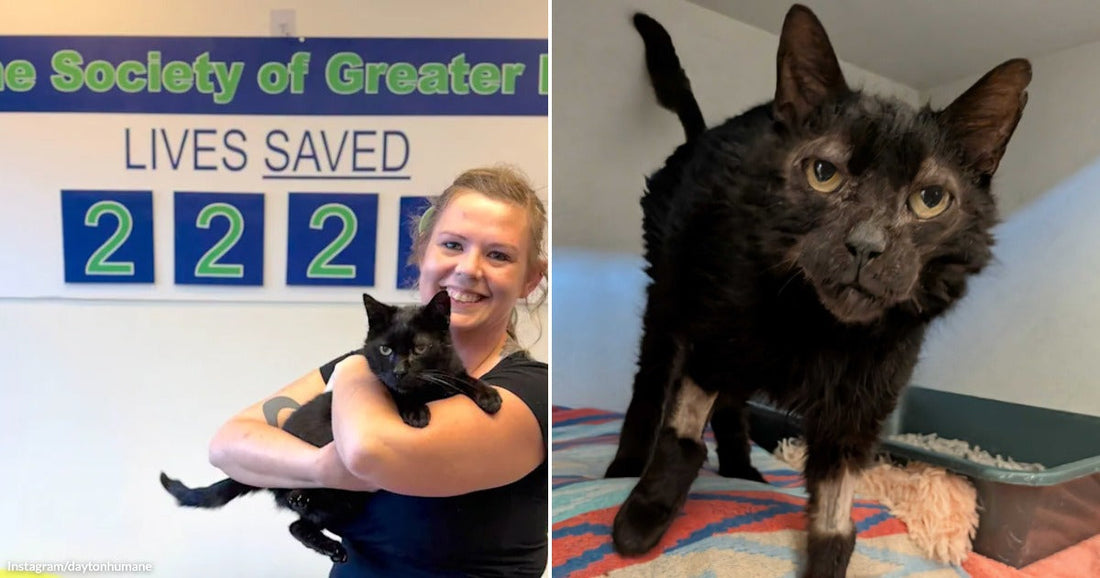
Six years is a long time to wonder what happened to a missing pet. Yet in Dayton, Ohio, one woman kept searching, hoping that the black cat who vanished in 2020 might somehow find his way back to her. That hope finally became reality when a viral post from the Humane Society of Greater Dayton led to an emotional reunion with her long-lost cat. This uplifting story of a cat reunited after six years, despite serious illness and uncertainty, highlights both the resilience of animals and the quiet determination of people who never stop looking for them.
The shelter initially knew the elderly black cat only as Eugene. When he arrived as a stray in February 2026, his condition was critical. Staff at the Humane Society of Greater Dayton focused on one urgent goal: keeping him alive. He had lost a significant amount of weight and was dehydrated, with visible muscle wasting. Bloodwork revealed anemia, and his physical exam exposed a long list of medical issues that had likely developed over years without care.

The cat had open wounds, patchy fur, ear mites, and severe dental disease. Nine of his teeth were already gone, and veterinarians removed nine more that were too damaged to save. He had a serious respiratory infection that left him sneezing blood. On top of that, testing showed he was positive for Feline Immunodeficiency Virus and suffering from a severe case of ringworm. It would have been easy to assume that a sick, elderly stray with this many challenges had little chance of recovery or a future home.
Instead, the shelter committed to months of intensive care, rehabilitation, and monitoring. Over seven months, the cat received medical treatment, vaccinations, medicated baths, and a carefully managed diet. His weight began to improve, his coat started to regrow, and his overall condition slowly stabilized. The Humane Society later described his progress as gradual rather than dramatic. Every gain, no matter how small, was hard-earned.

Instagram/daytonhumane
At that stage, staff still did not know anything about his past. To them, Eugene was a vulnerable animal who needed help, not a missing family member. The Humane Society of Greater Dayton shared his story and photos on social media, hoping that this older cat, now in much better shape, might be adopted. They could not have predicted how far that post would travel or what it would set in motion.
As the post was shared again and again, it eventually reached a woman who had been missing her cat for six years. Her pet, a black cat named Booger, had disappeared in 2020. When she saw Eugene’s photos and read his story, something about him felt familiar. The shelter reports that she suspected this 14-year-old cat, known online as Eugene, might actually be Booger returned against all odds.

Instagram/daytonhumane
Instead of dismissing the resemblance, she acted. She contacted the shelter and provided photos and personal details to support her belief that Eugene and Booger were the same cat. The Humane Society of Greater Dayton reviewed what she shared and arranged for a reunion at the shelter. When they finally met in person, it became clear that this was not just a hopeful guess. The cat and the woman recognized each other. After six years apart, they were together again.
The shelter reflected later that throughout all his time as a stray, “he had a name” and “he had someone who loved him, missed him and never stopped looking for him.” I found this detail striking because it reframes how many people see stray animals. A cat on the street is often more than a random wanderer. It may be a lost companion whose family is still searching, checking shelters, and scrolling through social media posts year after year.
The emotional impact of this reunion was felt not only by the woman and her cat but also by the team that had cared for him through months of uncertainty. Brian Weltge, president and CEO of the shelter, described Booger’s story as a reminder of their purpose. He said that seeing the cat reunited with the family that never stopped searching underscored their belief that every animal deserves a chance. It is a powerful statement in a field where difficult decisions and limited resources are everyday realities.
One small but generous detail adds another layer to the story. An anonymous person had already stepped forward to waive the adoption fee for Eugene before anyone realized he was Booger. That simple act of kindness helped clear the path for his return home. It also suggests that even strangers who never meet the animal directly can play a part in an outcome like this.
The Humane Society does not know what happened during Booger’s missing years. There is no record of where he lived, how he survived, or what led him to arrive at the shelter in such dire condition. What is known is that online visibility turned out to be the key to reconnecting him with his original family. In this case, a viral Humane Society post did what years of searching had not been able to accomplish. For anyone who has lost a pet, this offers a measure of realistic hope, especially when combined with practical tools like microchipping and updated veterinary records.
While the shelter’s posts and the woman’s persistence were central to this successful reunion, the story also highlights some broader lessons about reuniting lost pets and responsible pet care. Keeping microchip information current, maintaining clear photos of pets, and staying in touch with local shelters and rescue organizations can make a big difference when an animal goes missing. When shelters share photos and updates for older or medically fragile animals online, those posts may reach the one person who recognizes a familiar face.
Booger’s journey from a critically ill stray to a recovering senior back in a familiar home reflects a wider pattern in animal welfare that often flies under the radar. Older cats in shelters, especially those with medical issues like Feline Immunodeficiency Virus, are sometimes overlooked in favor of younger, healthier animals. Stories like this one push back against the idea that age or illness automatically defines an animal’s future. Even after severe hardship, healing is possible, and meaningful bonds can be restored.
Similar reunions and rescues around the world echo the same message. Reports of a California cat who flew 2,500 miles to reunite with family in Florida, or a flea-covered cat rescued from trash along a Vietnam highway who now lives in Canada, point to an underlying theme of resilience and connection. These accounts do not promise that every missing pet will come home, yet they do demonstrate that persistence, compassion, and modern communication tools can change outcomes in surprising ways.
For the Dayton woman, the outcome was simple and extraordinary at the same time: the black cat she had refused to give up on is home again. For the Humane Society of Greater Dayton, it was tangible proof that their long, careful work with a gravely ill stray was worth every effort. For anyone following along, it is a reminder that behind each shelter photo and each shared post is a life with a story, a name, and possibly a family still waiting. Read more at https://malaysia.news.yahoo.com