
Rescued Raccoons Snuggle Into Old Jeans Turned Hammocks
Guest Contributor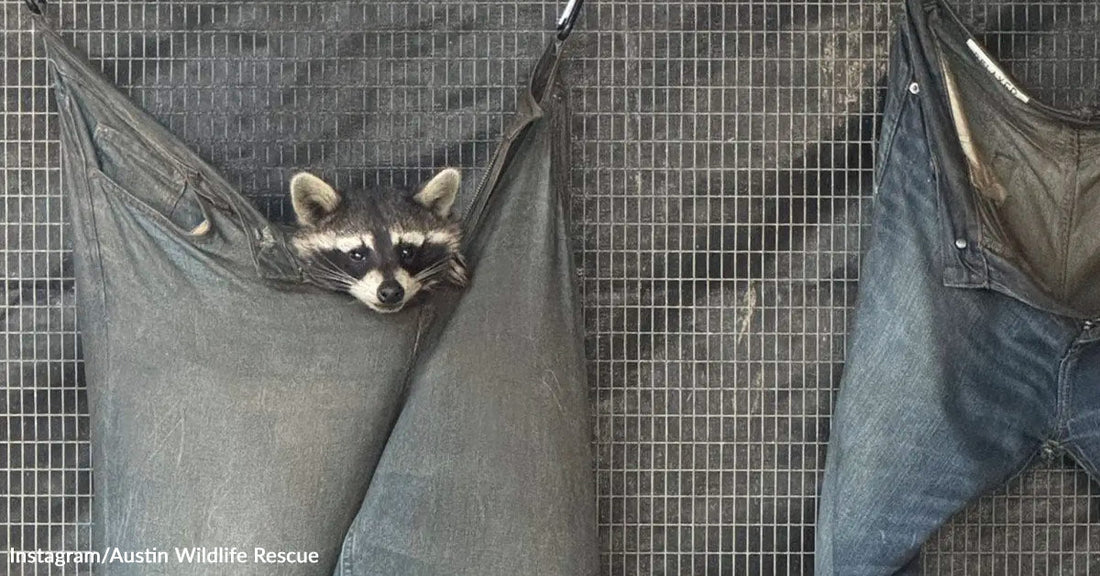
At Austin Wildlife Rescue in Texas, something ordinary is doing extraordinary work. Among the bags of dog food, stacks of paper towels, and boxes of gloves that arrive from generous neighbors, one humble item reliably steals the show. Old jeans, soft from years of wear, are being transformed into the coziest little hammocks for rescued raccoons and their fellow wild orphans. In the world of wildlife rehabilitation, where every scrap of support can mean a second chance, these denim donations have quietly become as valuable as any bag of kibble.
The team at Austin Wildlife Rescue, often called AWR, relies on the community to keep their operation running. Dry dog food keeps their young residents healthy and full. Cleaning supplies like paper towels, gloves, and plastic bins help staff and volunteers maintain the sanitary spaces these vulnerable animals depend on. Yet when someone walks through the door with a pile of worn-out jeans, the excitement is different. Those jeans are not just fabric. They are future beds, hiding spots, and play areas for raccoons, squirrels, and opossums learning how to navigate the world again.

Facebook/Austin Wildlife Rescue
AWR explains that they use donated jeans to create hammocks for the small mammals in their care, calling that “denim hammock life” an elite level of animal comfort. It may sound whimsical to picture raccoons lounging in suspended pant legs, but the concept is rooted in practical, animal-centered design. The denim mimics a natural den in a way that is surprisingly effective. Fabric surrounds the animals, providing warmth, soft support, and a sense of safety that hard enclosures alone cannot offer.
This is especially important for orphans that have lost the security of a parent and a nest. In the wild, young raccoons, squirrels, and opossums would rest in hollow trees, burrows, or other sheltered spaces. The drape of jeans in hammock form gives them a cozy nook that echoes that feeling of enclosure. According to AWR, this fabric setup helps them feel more at home, even while they are in a rehabilitation center instead of a forest or field.

Facebook/Austin Wildlife Rescue
The process of turning old denim into wildlife hammocks is charming in its simplicity. Staff members take each pair of jeans, tie the pant legs shut, then attach the jeans to enclosure walls with sturdy carabiners. In moments, a familiar piece of clothing becomes a snug swing, ready for curious little residents. Once the hammock is in place, the animals do the rest. AWR describes them eagerly climbing in, sometimes several at a time, until the hammock is full of tiny faces and paws.
One of AWR’s shared snapshots tells the story clearly. In a single pair of jeans, at least four raccoons managed to tuck themselves into the available pockets of space, with one visible on top and another peeking out of the bottom. It is a funny and endearing image, yet it also captures the deeper purpose behind these makeshift beds. The jeans provide a safe, contained place for social animals to nest together, to feel close and secure as they grow strong enough to be released back into the wild.
From a practical standpoint, not all fabrics perform equally in a rehabilitation setting. AWR points out that denim has distinct advantages for tiny paws and claws. The fabric is durable and strong, capable of standing up to climbing, scratching, and the occasional tug-of-war without tearing apart immediately. At the same time, it does not easily snag on nails, which reduces the risk of minor injuries that could complicate an animal’s recovery.
Denim also balances warmth and breathability in a way that serves the animals well. It helps insulate against drafts without becoming stifling. According to AWR, the material allows airflow while still providing a cozy refuge. For animals that need stable, comfortable conditions while they heal and grow, that combination matters. Old jeans, it turns out, are exceptionally well suited to the job.
There is something especially striking about how resourceful this solution is. Instead of discarding clothing that no longer fits or has worn thin at the knees, community members can extend the life of those jeans in an entirely new direction. In the hands of wildlife rescuers, each pair becomes part of a larger cycle of care. What once accompanied someone through their daily routine might next cradle a young raccoon as it naps, clutching the fabric with small hands.
For AWR, every donation plays a part in getting animals ready for release. Dog food provides energy, cleaning supplies protect their health, and old denim helps recreate the comfort of a natural den. That support system prepares raccoons, squirrels, and opossums to transition from a safe indoor hammock back to the trees, burrows, and hidden corners of the landscapes they belong to. Each hammock is temporary, just like their stay at the rescue, but it helps bridge the gap between rescue and release.
There is also a quiet emotional power in these denim hammocks. AWR notes that seeing a rescued raccoon curled up in a pair of well-loved jeans becomes a visual reminder of community care in action. People contribute something as simple as an old pair of pants, and the result is a small life resting more comfortably, gaining the confidence to face the wild again. It is a tactile, visible link between everyday generosity and meaningful change for vulnerable animals.
Wildlife rehabilitation can be intense, often involving long hours, medical care, and careful monitoring. In that context, the sight of raccoons, squirrels, and opossums tucked into soft denim becomes more than just cute. It reflects the creativity and dedication of those who work to give wild orphans a second chance and the willingness of local residents to play their part. When someone gives a raccoon a pair of jeans, as AWR puts it, it becomes almost impossible not to smile at what that simple act of giving has made possible.