
Service Dog Saves Diabetic Boy Then Refuses To Leave His Side
Guest Contributor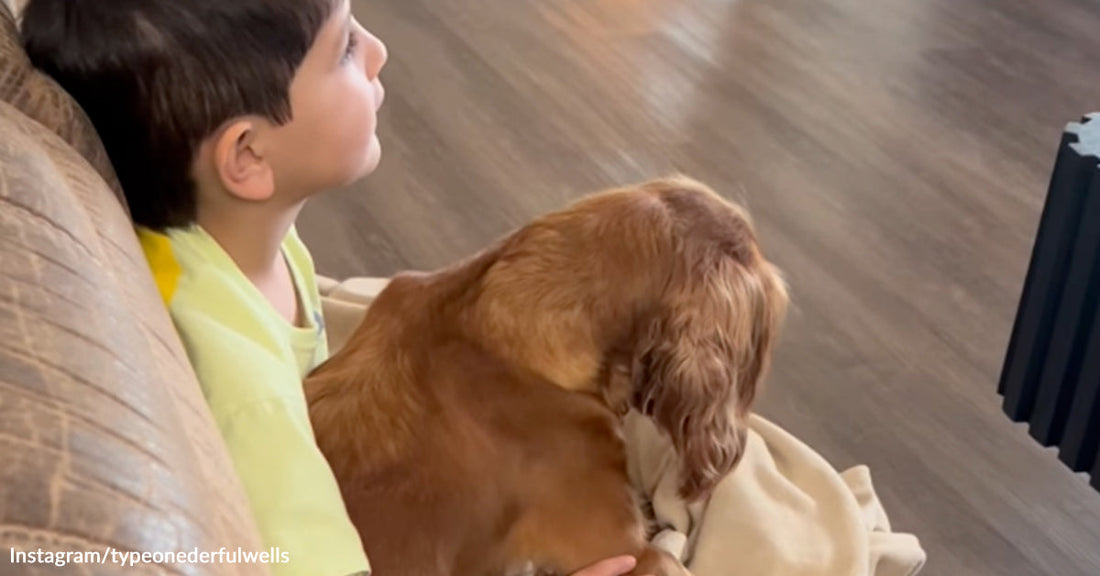
For many families navigating childhood Type 1 diabetes, each day is structured around technology, numbers, and constant vigilance. In the midst of that medical routine, the story of a young boy named Wells and his diabetic alert dog, Ducky, offers something gentler and deeply human: a reminder that care can look like science and data, but it can also look like a dog quietly curling up on a child’s lap.
Wells was only 3 years old when he was diagnosed with Type 1 diabetes, an autoimmune condition that requires lifelong management. By the time he turned 5, finger pricks, insulin, and monitoring had already become a routine part of his life. Type 1 diabetes management can be isolating for anyone, and especially for a child who is still learning how to make sense of the world. His parents worried about how this demanding condition would shape his childhood and his sense of normalcy.

Like many children with diabetes, Wells uses a continuous glucose monitor, or CGM, to help keep his blood sugar in range. The device tracks glucose levels in interstitial fluid and sends readings roughly every five minutes. It is an important tool, but it is not perfect. Readings can be off by as much as 20 percent, and in Wells’ case, the discrepancies were frequent enough to make his family uneasy. The technology that was supposed to provide constant reassurance could occasionally introduce more uncertainty.
Looking for an extra layer of protection, Wells’ family decided they needed what his mother called “a backup.” That backup arrived in the form of Ducky, an English cocker spaniel that came to them fully trained as a diabetic alert dog through M.D. Dogs, a nonprofit organization that specializes in service dogs for people with Type 1 diabetes. Bringing Ducky home added something new to their toolkit: a living, breathing early warning system for blood sugar changes and a source of unconditional companionship.
Diabetic alert dogs like Ducky are trained to notice what human devices might miss. When a person’s blood sugar goes too high or too low, the body produces a specific scent through saliva and sweat. Trainers use carefully collected saliva samples to teach dogs to recognize that scent. From birth, Ducky was exposed to these samples until he could distinguish the chemical changes that signal a spike or drop in glucose. According to Wells’ mother, Ducky can often detect a change up to 30 minutes before it shows up in a CGM reading or on a meter.
When Ducky notices something is off, he alerts Wells’ mom, Aubrie, by nudging her with his nose. She is Ducky’s handler and is responsible for responding to his alerts, rewarding him for his work, and meeting his daily needs. As Wells grows older and more independent, the plan is for him to take over that role. For now, while Wells is busy at school, Ducky usually stays by Aubrie’s side, resting, napping in the sun, and recharging for his next shift as a diabetic alert dog.
One recent low blood sugar episode showed just how far Ducky’s devotion to Wells extends beyond his training. During this event, Wells experienced an especially serious low. Ducky picked up on the problem and went into high alert, signaling that the child needed help. Wells’ mom responded, treated the low with insulin guidance and care, and brought his numbers back into a safer range. Under normal circumstances, many service dogs would consider the job complete at that point. The alert had been made, the human had taken action, and the crisis was technically over.
Ducky chose a different response. Even after the immediate danger passed, he hopped up onto the couch, laid himself across Wells’ lap, and stayed there. He rested with the boy until Wells felt better, providing comfort as his body recovered from the intense low. According to Aubrie, this quiet moment was not part of any formal aftercare routine they had tried to teach. In her words, “He’s not trained to do that. That’s just the loyalty of who he is as a dog.”
I found this detail striking because it reveals another side of what a service dog can offer. The public often imagines diabetic alert dogs solely in terms of their remarkable scent detection and medical assistance. This story widens that view. Ducky fulfilled his role as a medical safety net, but he also stepped into an emotional support role that no device could replicate. In that stillness, with an active 5-year-old suddenly calm and quiet, the dog seemed to recognize that Wells needed more than a corrected blood sugar reading. He needed reassurance.
Moments like these are not always visible. As Aubrie shared, Wells is usually a very active child who is often on the move. In their day to day life, his interactions with Ducky are frequently playful. They run around in the backyard, toss a Frisbee, and burn off energy together. Because Wells rarely sits still for long, Ducky does not often have the opportunity to provide the kind of extended, peaceful aftercare that happened during that serious low. This made the scene of Ducky calmly comforting him all the more meaningful to the family.
The emotional bond between boy and dog has also helped reshape how Wells experiences his condition. When he was first diagnosed, his mother worried that diabetes management would overshadow the joys of childhood. There is no pause button for Type 1 diabetes. It requires constant thinking, planning, and monitoring, even during playtime, even overnight. For a small child, that level of responsibility can feel overwhelming.
Since Ducky entered their lives, some of that emotional weight has shifted. The service dog does more than offer early detection of low blood sugar or high blood sugar episodes. He provides steady companionship. As Aubrie describes it, her son no longer feels like he is “doing diabetes alone.” Now, instead of feeling like the only one fighting an invisible battle, Wells has a four-legged partner who is always nearby, paying attention, and ready to help or comfort him.
For families living with chronic conditions, stories like this can highlight the power of combining technology, trained animals, and human support networks. A continuous glucose monitor offers data and alarms. A trained diabetic alert dog like Ducky offers a different kind of safety net grounded in scent detection, presence, and loyalty. Together, they help create a more complete circle of care that addresses both physical needs and emotional well-being.
To follow more of Wells and Ducky’s journey and see how their partnership continues to grow, readers can visit the family’s Instagram, where they share glimpses of daily life, from backyard play sessions to quiet, watchful moments of care. Read more at The Dodo