
Police Say A Man Deliberately Set His Own Dog On Fire
Guest Contributor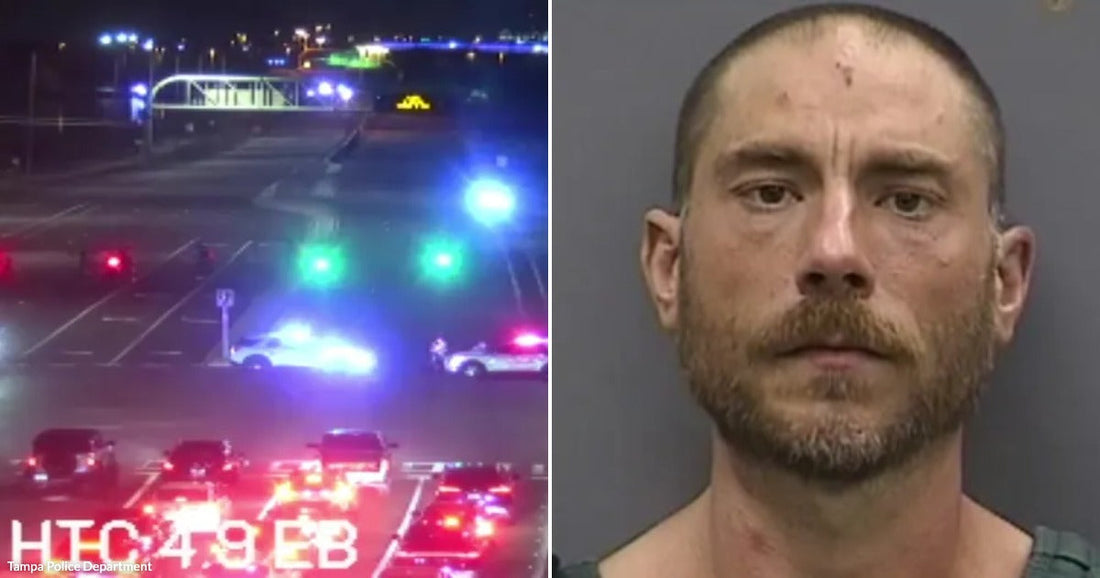
The story of a man accused of killing his dog by setting it on fire, then standing on the ledge of the Courtney Campbell Causeway in Tampa, is deeply unsettling and heartbreaking. It has drawn attention not only because of the disturbing allegations of animal cruelty, but also because it brought traffic to a standstill on a major bridge for hours while authorities worked to resolve the situation safely. This account of a dog killed in a parking lot fire and the subsequent bridge shutdown highlights how acts of violence against animals can ripple outward, affecting entire communities.
According to information from the Tampa Police Department, officers first responded Sunday evening to reports of a fire in a parking lot in the 700 block of W. Martin Luther King Jr. Boulevard. When the flames were extinguished, officers discovered the remains of a dog. Investigators said the circumstances pointed to an intentional act rather than an accidental blaze, and they quickly began piecing together what had happened in that parking lot.

Tampa Police Department
Not long after that initial response, Tampa police were called to a separate incident on the Courtney Campbell Causeway, a major roadway that connects Tampa and Clearwater. They found a crashed vehicle with no one inside. Soon after, officers located a man, later identified by police as 43-year-old Jason Larson, standing on the ledge of the causeway. According to the department’s account, he told officers that he had killed his dog, claimed he was armed, and said he would harm himself.
For anyone who has driven that stretch of road, it is easy to imagine how jarring it must have been to see emergency vehicles, flashing lights, and traffic at a standstill. The Courtney Campbell Causeway was shut down for hours Sunday night as officers worked cautiously and patiently, taking his statements about having a weapon seriously even though they had not yet confirmed whether he was actually armed. The priority at that point shifted from investigating the fire to protecting the life of a person in crisis and ensuring the safety of everyone on the bridge.

Florida 511
Police described an extended effort that lasted more than two hours before they were able to take Larson into custody peacefully. During such incidents, officers typically rely on crisis negotiation techniques, patience, and restraint. In this case, after the lengthy standoff and bridge shutdown, investigators reported that no weapon was found on him. The relief that the situation ended without physical harm to anyone likely mixed with the weight of what officers had already seen at the earlier fire scene.
Authorities say Larson now faces an animal cruelty charge in connection with the dog’s death. The allegation that a person set their own dog on fire is difficult to process for many people who consider pets to be family members. Stories of animal cruelty often provoke intense emotional responses because they confront us with the vulnerability of living beings who depend on humans for care, protection, and kindness. In this case, that sense of devastation is compounded by the manner of the dog’s death.
Although the account released by police focuses mostly on the timeline of events, it is impossible to ignore the possible presence of overwhelming personal or mental health struggles behind such a night. A parking lot fire that ends a dog’s life, followed by a car crash and a man on the ledge of a causeway talking about harming himself, paints a picture of a crisis spiraling in multiple directions at once. While the article does not provide details about his state of mind or history, it does raise broader questions about how communities respond when distress turns into danger for both animals and people.
From a community perspective, this incident touches several sensitive areas at once. There is the grief and anger many feel when they hear of an animal being intentionally harmed. There is the disruption and concern caused by shutting down a major bridge, with drivers stuck, unsure of what is happening ahead of them. And there is the reality that law enforcement officers often find themselves at the intersection of public safety, mental health emergencies, and animal welfare cases, required to make rapid decisions and then manage long, delicate negotiations in full public view.
I found it particularly striking that the same night involved two very different scenes linked by the actions of one person: a quiet parking lot on W. Martin Luther King Jr. Boulevard and a highly visible stretch of the Courtney Campbell Causeway. One moment, officers were working around a smoldering fire and the remains of a dog. Soon after, they were on a bridge, navigating a tense encounter with a man standing on the edge, speaking about what he had done and what he might still do. The emotional landscape for everyone involved, from first responders to witnesses, must have shifted rapidly from shock to apprehension to cautious relief when the standoff ended without injuries.
In the days following such an event, conversations often turn toward accountability and prevention. The animal cruelty charge described by Tampa police reflects the legal seriousness with which acts of violence against animals are treated. At the same time, many community members and advocates also look at the larger picture, asking how to better recognize warning signs of escalating behavior, how to support people in crisis before tragedies occur, and how to ensure that animals are protected from abuse. While this specific case is still unfolding in the legal system, it already serves as a somber reminder of why cruelty laws, mental health resources, and crisis response training all matter.
Stories like this are difficult to read, in part because they force us to think about suffering and harm that might otherwise feel unimaginable. They also highlight the dual responsibilities communities carry: to speak up for animals who cannot speak for themselves, and to respond with care and professionalism when someone stands on a bridge and says they want to end their own life. The events described by the Tampa Police Department on that Sunday evening show how a single series of choices can send shockwaves across a city, affecting drivers on a causeway, officers on duty, and residents who wake up to news of a dog killed in a fire and a man taken from a ledge into custody.