
Court Weighs Future Of Dog Found Bound With Duct Tape
Guest Contributor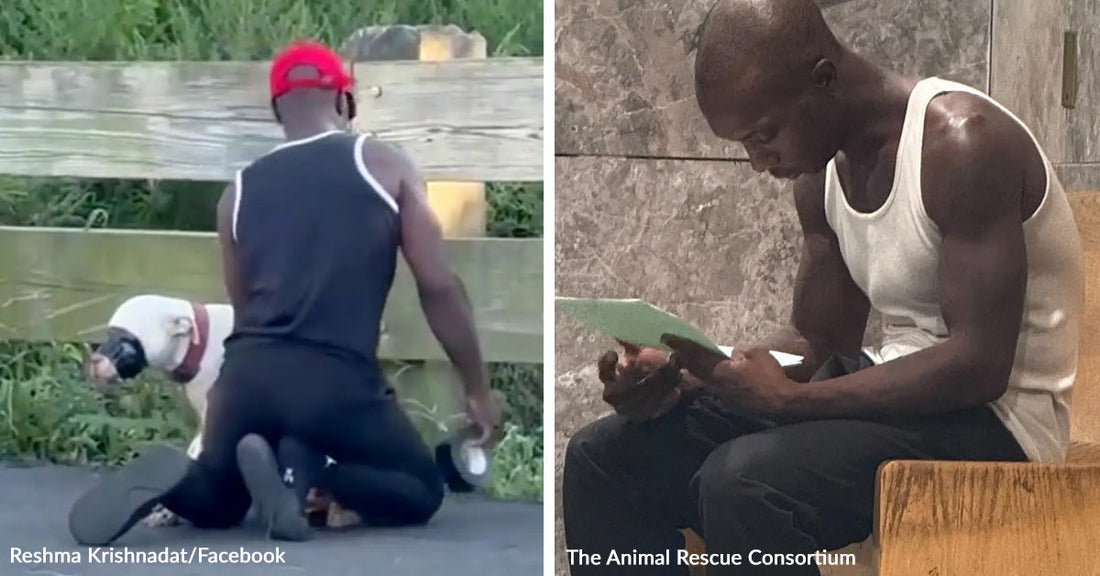
The unfolding case of a dog found duct-taped at a New York City park has ignited a powerful conversation about animal cruelty, accountability and what justice should look like for abused animals. At the center of the story is Queens resident Kristopher Fyffe, who was arrested on animal cruelty charges after a witness allegedly saw him wrapping thick duct tape around his dog’s mouth and eyes at Gwen Ifill Park. For many people following the case, the disturbing image of a duct-taped dog in a public park has become a symbol of why stronger responses to cruelty are so necessary.
According to court records cited in the original reporting, authorities said Fyffe had five dogs crammed into filthy crates in the back of a van. The animals were allegedly confined in conditions that included feces in their too-small crates and water bowls filled with urine. These details have intensified the public outcry, since the cruelty allegations extend far beyond a single moment in the park and into the ongoing care and environment the animals were kept in.

The case took another difficult turn when the fate of the seized dogs became a legal question. After their seizure, the canines were placed under the care of the American Society for the Prevention of Cruelty to Animals. One of the dogs was later euthanized due to aggression according to the ASPCA, while another was surrendered and has since been adopted out. The remaining dogs are still being cared for by the organization while the courts determine who will have legal ownership going forward.
A hearing in Queens Criminal Court was scheduled to address this question of ownership and to clarify what should happen next to the dogs still in ASPCA custody. This legal step, which may sound procedural on the surface, is critical. The outcome will effectively decide whether those animals can be permanently rehomed or must remain in limbo while the criminal case continues. The judge’s determination on legal ownership is a key piece of the broader effort to ensure the dogs’ long-term safety and welfare.
In the lead-up to the hearing, an apparent rumor began circulating that authorities might consider returning the animals to Fyffe. That idea, whether grounded or not, sparked swift outrage and a wave of social media activism. NYC Second Chance Rescue, an animal rescue organization, publicly urged supporters to show up outside the Queens court on the date of the hearing to oppose any effort to reunite the dogs with the person accused of abusing them. Their message described Fyffe as a “monster” and called on followers to make their presence and their concerns visible to local authorities.
Jennifer Brooks, president of NYC Second Chance Rescue, expressed confusion at the very notion that returning the dogs could be an option. She questioned how any arrangement might be made in favor of the defendant “given the fact that he was blatantly, in a public place, duct taping his animals.” That reaction mirrored what many advocates and social media users were expressing: a strong belief that animals who have endured cruelty should not be sent back into an environment where they could be hurt again.
Both the ASPCA and the Queens District Attorney’s office addressed the backlash directly and worked to dispel the circulating rumor. An ASPCA spokesperson stated that the organization had no intention of returning the animals, explaining that discussions about possible resolution pathways had taken place in the broader context of the case. In this instance, they emphasized that it was agreed such a pathway was not appropriate given the allegations on record. The ASPCA also confirmed that it had already conducted a security hearing to determine legal ownership of the dogs and that it was awaiting the court’s decision.
The Queens District Attorney’s office, led by Melinda Katz, took an equally firm public stance. In a statement, the office said it “categorically and vehemently” opposes returning abused animals to their alleged tormentors. Prosecutors underscored that they are actively pursuing an 11-count criminal complaint against Fyffe, with the explicit goal of preventing such an outcome. The DA’s statement framed the dogs as victims who deserve to spend the rest of their lives “in peace, far away from their alleged abuser,” highlighting that these animals, according to the complaint, had already endured “unspeakable abuse.”
I found this detail striking because it reflects a broader shift in how legal systems and communities understand animal cruelty. Instead of treating cases like this as minor or isolated incidents, officials and organizations are increasingly recognizing the seriousness of abuse and the need to prioritize the safety of the animals once they are rescued. The public response, from local rescues to individual advocates sharing updates on social media, suggests that community expectations are rising around what justice for abused animals should entail.
The incident has also raised difficult questions about how rumors and partial information can shape public perception of ongoing court cases. The swift spread of the claim that the dogs might be returned fueled online anger and calls to action, but it also prompted official clarifications that such a scenario was not under serious consideration. In this sense, the story illustrates the tension between a public that wants to act quickly to protect vulnerable animals and legal processes that often move more slowly and carefully than social media cycles.
What remains clear is that the core of this case is deeply troubling. A dog reportedly seen with its mouth and eyes bound by duct tape, multiple animals allegedly kept in unsanitary and cramped conditions, and serious skin issues documented in court papers all combine into a picture of suffering that is hard to ignore. Advocates for stronger animal cruelty enforcement see moments like this as critical tests of the system. They watch closely to see whether cruelty charges lead to meaningful consequences and whether rescued animals are ultimately placed in safe and caring homes.
As of now, Fyffe has pleaded not guilty to the charges and the criminal case remains ongoing. The court’s decision on legal ownership of the remaining dogs will be another important milestone. Whatever the outcome, the case has already intensified conversations in New York City and beyond about how to protect animals from cruelty, how to respond when abuse is documented in public, and how authorities, nonprofits and communities can work together to ensure that rescued animals are not put back into harm’s way.