
New York Moves to End Horse-Drawn Carriages After Teen Tourist’s Death Reignites Calls for Ban
Guest Contributor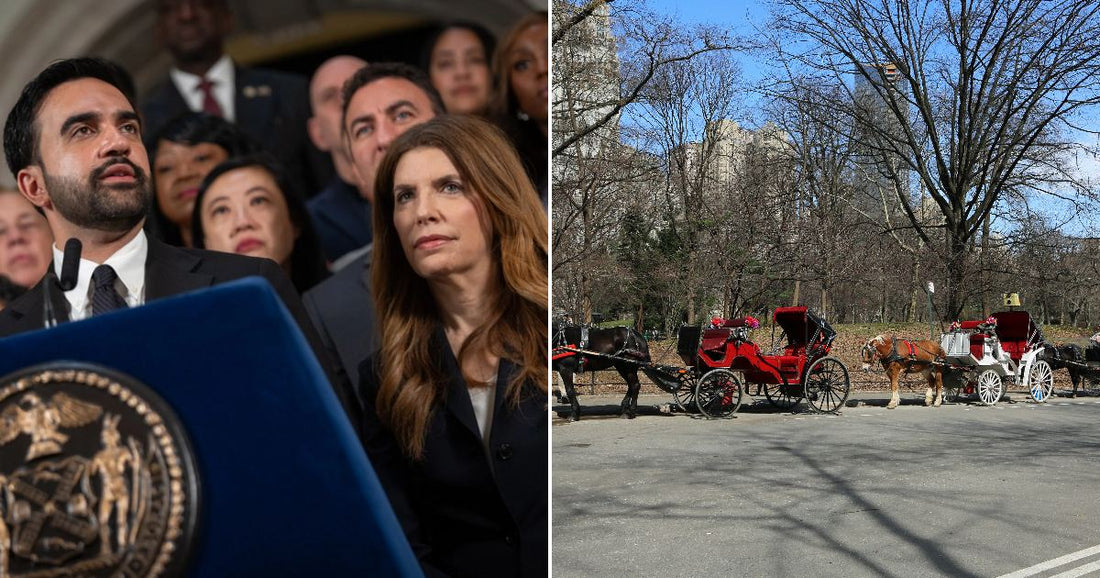
New York City’s Central Park horse-drawn carriage industry is moving toward a definitive sunset, and with it a century-old symbol of the city’s tourism culture is beginning its farewell. Under a new agreement between Mayor Zohran Mamdani and City Council Speaker Julie Menin, legislation is advancing that would abolish horse-drawn carriages by June 1, 2028. Supporters describe the measure as long overdue for animal welfare and public safety, while opponents see it as a blow to working families whose livelihoods have revolved around this deeply rooted tradition.
The proposed ban on horse-drawn carriages in Central Park did not appear overnight. For years, New Yorkers for Clean, Livable and Safe Streets, known as NYCLASS, and other animal rights advocates have argued that the horses are overworked, easily spooked, and housed in stables that do not meet acceptable welfare standards. Critics of the industry also accuse some drivers of ignoring city rules meant to protect both the animals and the public. Supporters of the carriages, including owners and drivers, strongly reject this portrayal, insisting that the horses are well cared for, that the facilities comply with regulations, and that the trade has been unfairly targeted.

City Hall suggests that the new legislation aims to bridge those competing narratives through what it calls a “just transition.” A spokesperson for City Hall, Sneha Choudhary, said the administration has worked closely with the City Council, union representatives, carriage drivers, animal welfare advocates, and community leaders to develop a path that seeks to protect workers while ending horse-drawn carriages in Central Park once and for all. That emphasis on process reflects how sensitive the issue has become, touching not only animal rights and tourism but also labor rights and family incomes.
Advocacy organization NYCLASS viewed the agreement as the culmination of a long campaign. The group has pressed two mayoral administrations to end what it characterizes as “cruel and dangerous horse-drawn carriages.” Its executive director, Edita Birnkrant, credited years of work by advocates and supporters, describing the impending legislation as a long-awaited safeguard for horses and for people navigating crowded city streets. The debate over the Central Park carriage ban has often centered on what kind of city New York wants to be in the future, and for these advocates, phasing out carriages signals a shift toward a more humane and modern approach to urban transportation and tourism.

Ed Reed/Mayoral Photography Office
A pivotal moment in the public conversation came with the tragic death of 18-year-old tourist Romanch Mahajan, who was thrown from a runaway horse-drawn carriage in Central Park last summer. According to the carriage industry’s labor union and the Central Park Conservancy, which manages the park, Mahajan is believed to be the first person to die in a carriage accident since the rides began more than 150 years ago. Yet for many, that single event demonstrated how catastrophic a carriage incident can be in an increasingly busy and crowded park.
City Council Speaker Julie Menin cited Mahajan’s death as a turning point, describing it as tragic and preventable and arguing that the status quo could no longer be defended. She noted that horse-drawn carriages have long been woven into New York City’s history, but she also called them a growing public safety liability in the context of modern Central Park. The upcoming legislation has been informally dubbed “Romanch’s Law” and is intended, in Menin’s words, to protect residents, visitors, and the horses themselves.

The legislative effort appears to have significant political traction. Councilman Chris Marte, the bill’s primary sponsor, told CNN that the measure currently has 29 co-sponsors on the City Council. He expressed confidence that the bill will secure a majority once it reaches the council floor. A spokesperson indicated that Menin is expected to bring the legislation to a vote later this month, which, if passed, would start the clock on a multiyear phase-out that ends in 2028.
One of the unresolved questions in prior attempts to restrict or ban horse-drawn carriages has been what happens to the horses themselves. According to the legislation reviewed by CNN, the current proposal includes new requirements around the animals’ futures once the industry is phased out. Horse owners would need to notify the Mayor’s Office of Animal Welfare before any transfer or other disposition of the horses. The bill also explicitly prohibits selling or transferring them for slaughter or for work in another horse-drawn business. Those provisions are intended to provide some assurance that the end of horse-drawn carriages in Central Park does not result in poor outcomes for the horses beyond the city limits.
The ban on Central Park carriage rides lands especially hard on the Transportation Workers Union TWU Local 100, which represents horse carriage drivers. The union has long worried that its members could be left behind if carriages disappear from the park. In response to rising scrutiny over recent years, union leaders say they expanded training and safety measures for drivers in an effort to address public concerns. Yet they argue these efforts have been overshadowed by political pressure to eliminate the industry.
In a strongly worded statement, Transport Workers Union International President John Samuelsen criticized the legislation as offering little meaningful economic relief for affected workers. He pointed out that the bill instructs the city to prepare a worker transition plan by April 2027, which he characterized as a late and inadequate step that focuses on measures like job fairs and counseling rather than concrete guarantees. He accused city leaders of exploiting Mahajan’s death to frame the situation as a public safety crisis and warned that immigrant families who depend on carriage income would be harmed.
In response to those concerns, negotiations between Mamdani and Menin resulted in an “industry transition framework” woven into the bill. According to Menin’s office, this framework requires the city to develop a plan that helps carriage workers move into new employment. A designated city agency would oversee that transition, coordinating opportunities across a range of departments and sectors that intersect with transportation and tourism.
The legislation reviewed by CNN indicates that potential job and training pathways could lead into agencies and industries such as the NYC Taxi and Limousine Commission, the Metropolitan Transportation Authority, NYC Transit, the Port Authority, and roles in hospitality and tourism more broadly. Although details are still to be developed, the goal is to connect carriage drivers and other workers with new forms of stable employment while the horse-drawn carriage ban in Central Park is phased into effect.
I found it striking how this debate captures several layers of urban life at once. It touches on how a city honors its past while adapting to current standards of public safety and animal welfare, and on how policy shifts can affect workers whose identities and incomes are bound up with longstanding traditions. The proposed end of New York City’s iconic horse-drawn carriages will continue to prompt difficult questions about what is gained and what is lost when a familiar symbol of a place yields to changing values.
Read more at https://www.cnn.com/2026/10/13/us/nyc-horse-carriage-ban