
Two Bloodied Bald Eagles Face Lead Poisoning and Infected Wounds After Becoming Trapped Together
Guest Contributor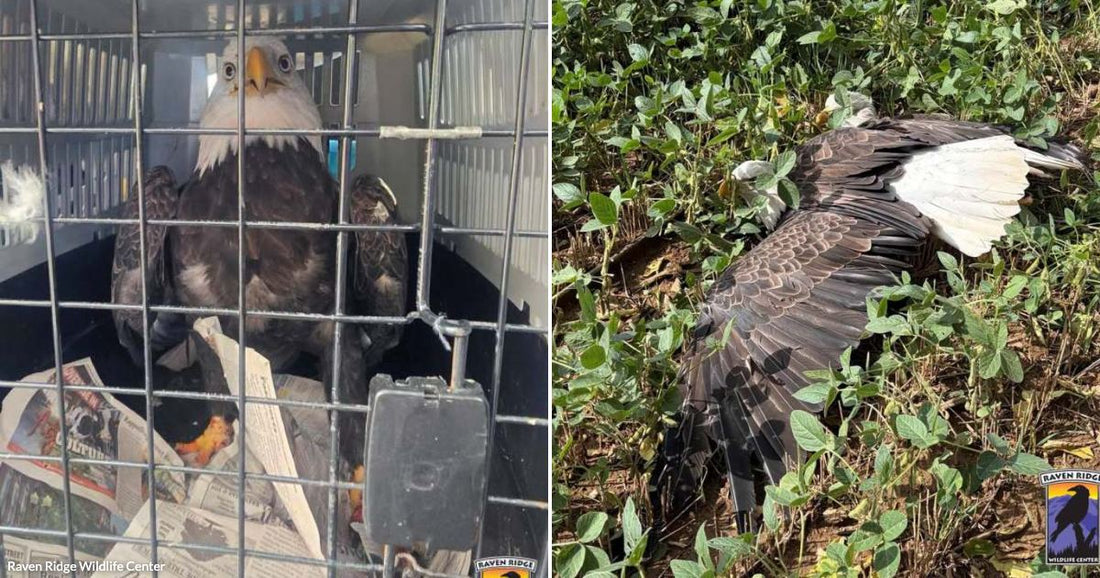
Two bald eagles locked together in a Pennsylvania soybean field might sound like a scene from a wildlife documentary, yet it unfolded in real life in Lancaster County. According to reports, a local wildlife center stepped in to rescue the birds after they were discovered entangled and unable to fly. The story of these entangled bald eagles is both unsettling and hopeful, highlighting the dangers these iconic birds face and the vital work of wildlife rehabilitators.
The incident began when a Pennsylvania Game Warden received a report that two eagles were found stuck together in an open soybean field. Recognizing how risky it can be to handle large raptors, the warden contacted Raven Ridge Wildlife Center for expert assistance. The center’s clinic manager responded directly to the scene to help with what quickly proved to be a delicate and potentially dangerous rescue.

When the responders reached the birds, they found a grim sight. Both eagles were covered in blood and unable to move. They were lying out in the open, exposed and vulnerable, with their talons so tightly entangled that they could not break free from each other. Raven Ridge reported that the team carefully separated the birds, managed them safely, and then transported them to the wildlife center for further evaluation and treatment.
At the clinic, staff discovered that the birds, one female and one male, were in poor condition. The injuries appeared to be extensive. Raven Ridge noted that the wounds might have been caused by a territorial dispute or possibly related to courtship behavior, both of which are known to lead to intense aerial clashes. In some confrontations, bald eagles lock their talons mid-air, spiraling toward the ground while still gripping one another. If they fail to disengage in time, they can crash to the earth still locked together.

Raven Ridge Wildlife Center
In this case, the center reported that the eagles not only hit the ground but also inflicted significant damage on one another. Both birds were dealing with multiple health complications, including infected wounds and signs of lead poisoning. The presence of lead poisoning adds another layer of concern, as it is a well-documented threat to birds of prey that may ingest lead fragments while scavenging on contaminated carcasses. The article did not go into detail about how severe the poisoning was for each bird, yet the fact that it was mentioned at all emphasizes how serious their condition is.
Professionals at Raven Ridge are now working to stabilize and rehabilitate both eagles. Their efforts include treating the injuries caused by the physical altercation and addressing the underlying health challenges. Wildlife rehabilitation is meticulous work that can involve wound care, antibiotics for infection, supportive fluids, and careful monitoring of behavior and appetite. While the article did not describe each step of the medical process, it made clear that the birds are receiving intensive care.

Raven Ridge Wildlife Center
Raven Ridge expressed cautious optimism about the birds’ future. In a statement, the center shared its hope that once the eagles are fully healed, they can be released back into their original territory before other eagles move into the area. That detail offers a glimpse into how important territory is for bald eagles. These birds often return to the same nesting and hunting grounds, and if a pair has to spend an extended time in rehabilitation, there is always a risk that other eagles may claim that space.
This story underscores how complex eagle behavior can be. Territorial disputes are not rare among raptors, particularly in regions where suitable nesting sites and feeding areas are highly valued. Courtship behavior can also involve dramatic aerial displays in which pairs clasp talons and tumble through the air. The incident in Lancaster County appears to be an extreme example of how such behaviors can go wrong when birds are unable to release their grip in time.
It also illustrates how human responders fit into that picture. Handling bald eagles is inherently dangerous due to their powerful beaks and talons, and specialized training is crucial for anyone who assists them. In this situation, the coordination between the Pennsylvania Game Warden and the Raven Ridge Wildlife Center meant that the eagles received prompt, skilled attention. That partnership is a reminder that conservation work often depends on cooperation between government agencies and nonprofit organizations.
The mention of lead poisoning brings another serious issue to the surface. While the article did not speculate on specific sources of contamination, lead toxicity in eagles and other raptors is widely recognized as a major conservation concern. Even low levels of poisoning can weaken birds, compromise their immune systems, and make them more susceptible to other injuries or infections. The fact that these entangled bald eagles arrived at the clinic with both traumatic injuries and evidence of poisoning shows how multiple threats can overlap for wildlife.
I found this detail striking because it shows how a single dramatic incident in a field can reflect larger patterns affecting an entire species. The image of two national symbols lying injured in a soybean field is a stark one, yet the response from rescuers and rehabilitators offers a measure of hope. Each successful rescue and release does not just help individual animals, it also supports the broader health of local eagle populations.
For people who care about wildlife, the story from Lancaster County is a powerful reminder of why rehabilitation centers exist in the first place. These facilities step in when wild animals are hurt, disoriented, or poisoned and give them a chance to recover and return to their natural lives. In the case of these bald eagles, the dedicated work at Raven Ridge may one day end with both birds soaring again over the same territory where they once clashed.
The outcome is not guaranteed, and the tone of the report stays appropriately measured, focusing on the facts of the rescue, the condition of the birds, and the ongoing treatment. Yet the hope expressed by the center that the pair might eventually be released back home carries emotional weight. If that day comes, it will mark the successful conclusion of a difficult rescue and a testament to the value of specialized wildlife care.
As this situation continues to unfold, it encapsulates how fragile and resilient nature can be at the same time. The entangled bald eagles from Lancaster County may have collided in a violent moment of instinct, but through careful human intervention, they now have a genuine chance at recovery. Their story is a sober but encouraging snapshot of modern wildlife conservation in action.
Read more at https://www.aol.com/articles/entangled-bald-eagles-rescued-pennsylvania-151325000.html