
🚨Urgent: Missile Strikes Shelter in Ukraine! Rush Emergency Aid!
Ethiopia Food Aid Suspended Amid Massive Theft, Hunger Crisis Worsens
Guest Contributor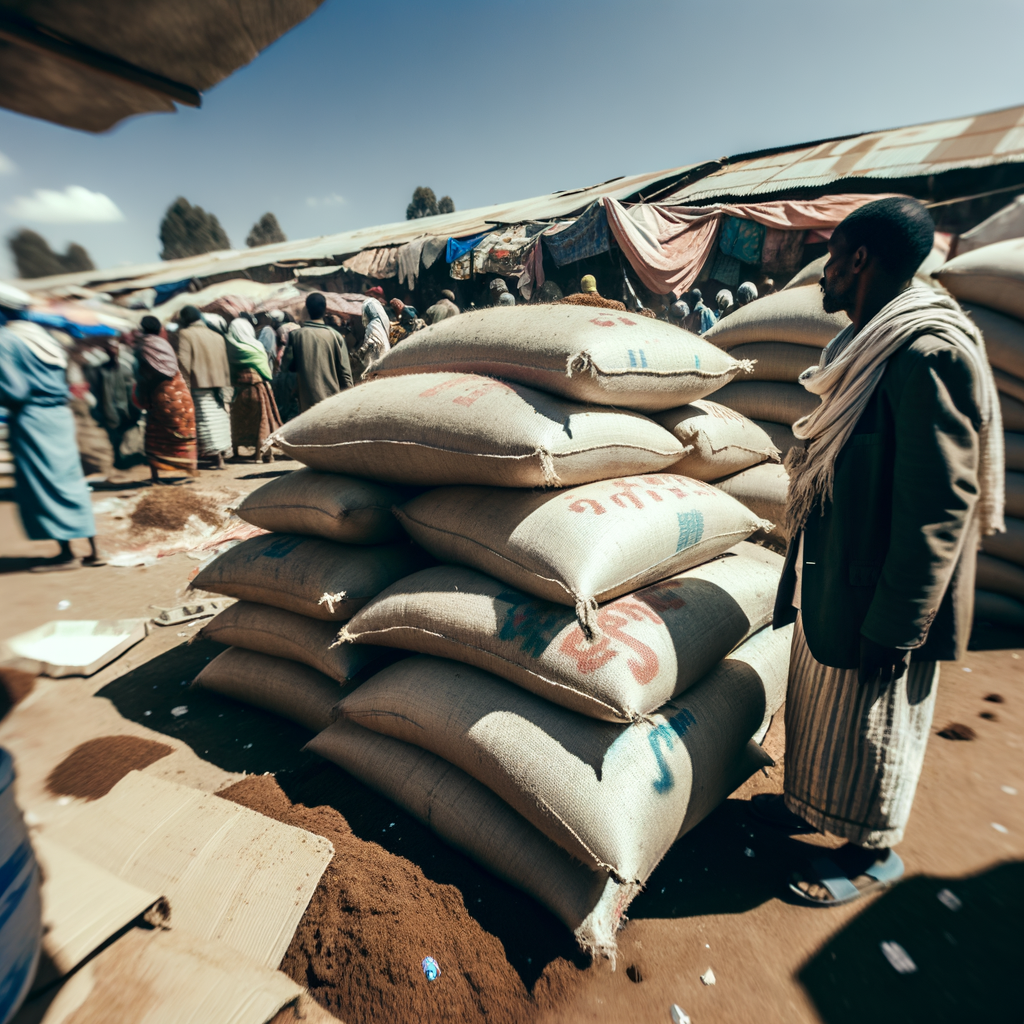
The humanitarian crisis in Ethiopia has taken a devastating turn as millions of people face renewed hunger following the suspension of international food aid. This drastic measure, taken by the United States and United Nations, comes in response to what U.S. officials describe as possibly the largest theft of food aid on record. The situation is particularly dire in the northern Tigray region, where a two-year war has already left deep scars, and where food aid remains paused amid ongoing investigations into widespread corruption and diversion of supplies.
The suspension of food aid has had immediate and heartbreaking consequences. In Tigray, where 6 million people rely on external assistance, none received food aid in May, according to a U.N. memo cited by the Associated Press. The lean season is approaching, and with Ethiopia’s harvest season concluded, the risk of mass starvation is growing. The U.N. has privately warned of “mass starvation” in remote areas, and hospitals are already seeing dramatic increases in cases of child malnutrition. In Axum, one hospital reported a 96 percent rise in admissions for malnutrition between March and April.
At the heart of the crisis is a complex web of corruption and mismanagement. The Associated Press reports that food aid, clearly marked with the U.S. flag, was found for sale in markets or stored at commercial flour mills. In one Tigray town alone, enough stolen aid to feed 134,000 people for a month was discovered. The theft is not limited to one region. Aid officials have uncovered manipulation of beneficiary lists, looting by Ethiopian and Tigray forces, and even involvement from neighboring Eritrean forces. The diversion of wheat to commercial mills has been documented at more than 60 sites across the country.
One of the most poignant voices in the AP report is that of Tesfa Kiros Meresfa, an Orthodox Christian priest who now begs for food alongside hundreds of displaced people. Living in a school compound in Tigray, Tesfa described the suffering as beyond words. “The question is a joke,” he said when asked how many meals he eats a day. “We often go to sleep without food.” His story highlights the human cost of the aid suspension and the corruption that preceded it.
For the U.S. and U.N., the theft of food aid represents not only a humanitarian failure but also a test of accountability. The U.S. has provided $1.8 billion in humanitarian assistance to Ethiopia since 2022. Now, with public trust and taxpayer funds at stake, officials are determined to overhaul the distribution system. According to Michael Dunford, regional director for the World Food Programme, the WFP is taking back control of the entire supply chain—from the moment food arrives in-country to its delivery into the hands of beneficiaries. Planned reforms include third-party distribution, real-time monitoring, and biometric registration of recipients.
The U.S. Agency for International Development (USAID) has also emphasized the need for structural changes. A senior USAID official told the AP that the Ethiopian government must be removed from the compilation of beneficiary lists and the logistics of aid delivery. While Ethiopia’s government has agreed to a joint investigation and expressed willingness to cooperate, specific reforms have yet to be implemented. The official acknowledged that the full extent of the theft may never be known, citing challenges such as war-related access restrictions and COVID-19 limitations that hindered oversight.
Historically, aid distribution in Ethiopia has been politicized. During the 1980s famine, the then-communist regime blocked assistance to rebel-held areas. More recently, aid workers have tolerated a degree of corruption, with reports of inflated beneficiary numbers and aid being siphoned off by officials. These longstanding issues have now culminated in a crisis that affects approximately 20 million Ethiopians and more than 800,000 refugees from neighboring countries.
I found this detail striking: despite the scale of the crisis, the suspension of aid has been countrywide—a rare and consequential decision. Lawmakers from both parties have expressed concern and called for greater transparency and accountability. Senator Chris Coons of Delaware noted his worry about systematic diversion of food by the Ethiopian military and government. Senator Jim Risch of Idaho emphasized the need for fundamental change, stating, “The first principle of humanitarian aid is to do no harm. From what I understand, harm has been done.”
Meanwhile, ordinary Ethiopians continue to suffer. In Samre, a town near the Tigray capital Mekele, reports cited by the U.N. indicate that at least 20 people have died of starvation. Berhane Haile, another displaced resident, summed up the grim reality: “It is a good day if we manage to eat one meal.”
The hope now lies in swift and effective reform. Until then, the cost of inaction and corruption is measured in human lives. The international community faces a critical challenge: to restore aid delivery in a way that ensures it reaches those who need it most, without falling prey to the very systems meant to support them.