
🚨Urgent: Missile Strikes Shelter in Ukraine! Rush Emergency Aid!
Family Finds Odd Mass On Beach And Uncovers A Dying Turtle Fighting Back
Guest Contributor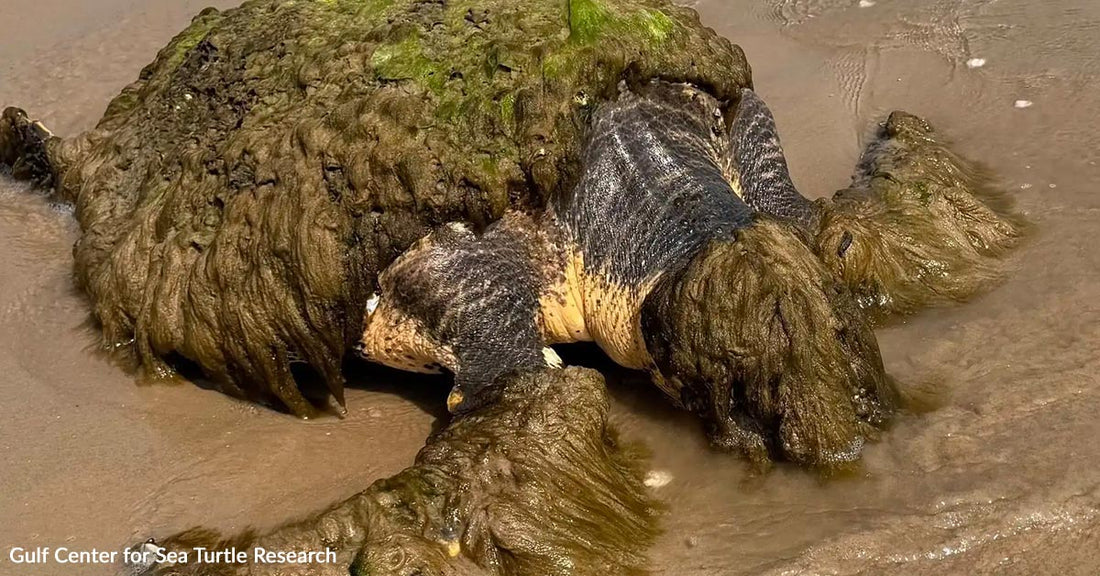
While walking along the Gulf Coast of Texas, a family encountered something that initially looked like a tangled mass of sea debris — a lump of algae and barnacles washed ashore. But as they drew closer, the reality became heartbreakingly clear. What they had discovered was a loggerhead sea turtle, barely alive, weighed down by layers of marine growth and in desperate need of help. This moment marked the beginning of a remarkable sea turtle rescue story that underscores both the vulnerability of marine wildlife and the power of human compassion.

According to the Gulf Center for Sea Turtle Research (GCSTR), the turtle was covered in a variety of organisms, including algae, acorn barnacles, gooseneck barnacles, worms, crabs, skeleton shrimp, bryozoans, and other small invertebrates. These organisms, known collectively as epibiota, often attach themselves to sea turtles that are ill or weakened. As GCSTR explained, “These sea turtles often strand with epibiota — organisms living on the surface of one another. They become heavily encrusted when they are ill and tend to move less and float at the surface more.”
In this case, the turtle’s immobility and the sheer weight of the organisms clinging to her body had pushed her to the brink. Her face, shell, and flippers were encrusted, and barnacles had even embedded themselves into her soft tissues and mouth. She was unable to swim properly and was clearly suffering. I found this detail striking — the image of a once-majestic sea creature so burdened by external growth that she could no longer function in her natural environment.
Thankfully, the family who found her acted quickly. They contacted the Gulf Center for Sea Turtle Research, whose rescue and recovery team responded without delay. The turtle was carefully transported to the center’s rehabilitation hospital, where a meticulous cleaning process began. Over the following days, the team worked to remove the harmful growth from her body, providing much-needed relief and potentially saving her life.
The process of cleaning and rehabilitating a sea turtle in this condition is delicate and requires significant expertise. The team at GCSTR not only removed the epibiota but also monitored the turtle’s health closely as she began her recovery. According to a spokesperson for the center, the turtle’s condition has started to improve. “She is doing well, eating now, and gaining weight,” they reported. Most importantly, she is now able to swim normally again — a crucial milestone for any sea turtle’s rehabilitation.
Although her journey is not yet over, the outlook is hopeful. GCSTR emphasized that she is still under close observation and will continue to receive specialized care. With time, and if her progress continues, she may one day be released back into the ocean — a powerful reminder of what can happen when people take the time to notice and respond to the needs of the natural world around them.
Sadly, this turtle’s story is not unique. According to GCSTR, it is not uncommon for sea turtles to strand in such a condition. Illness or injury can cause them to become lethargic, making them more susceptible to colonization by marine organisms. These encrustations can further debilitate the turtle, creating a cycle that is difficult to break without intervention. This makes the role of marine wildlife rescue organizations all the more vital.
Sea turtle rescue and rehabilitation is a complex, resource-intensive process. It requires not only trained personnel but also specialized equipment and ongoing funding. The Gulf Center for Sea Turtle Research plays a crucial role in this effort along the Texas coast, responding to strandings, providing medical care, and working toward the ultimate goal of releasing rehabilitated turtles back into the wild.
This story also highlights the importance of public involvement in wildlife conservation. The family who found the turtle could have walked past, mistaking her for debris. Instead, they took action, and their quick thinking may very well have saved a life. It serves as a reminder that ordinary people can make an extraordinary difference when they choose to act with care and awareness.
For those moved by this story and interested in supporting the ongoing work of the Gulf Center for Sea Turtle Research, donations can be made through their Amazon wish list. Contributions help provide the necessary resources to care for injured sea turtles and support the broader mission of marine conservation.
As this loggerhead continues her recovery, her story stands as a testament to resilience — both hers and that of the people who rallied to give her another chance. The hope is that one day soon, she will return to the sea, free from the burdens that once held her back, and continue her life as nature intended.