
A Dog Hides in the Back of a Burning Car Until Firefighters Break Through to Save Him
Guest Contributor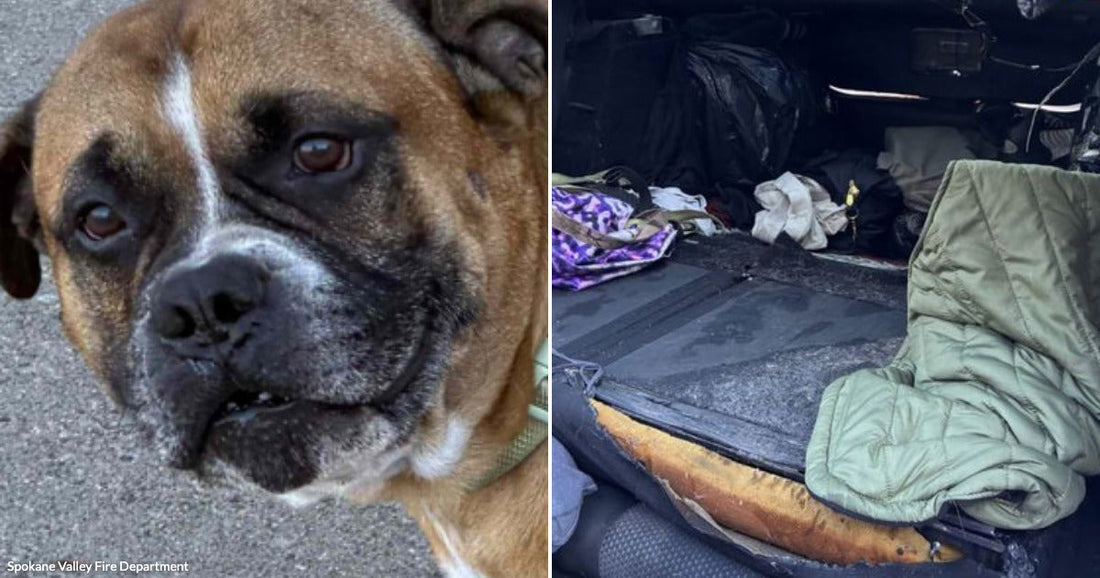
Outside a grocery store in Spokane Valley, Washington, a routine morning turned into a life-or-death emergency when a parked vehicle suddenly went up in flames. Inside that burning car was a dog. Thanks to the rapid work of local firefighters, a situation that could have ended in heartbreak instead became a story of survival and relief. For anyone who cares about pet safety or has ever wondered what happens when a dog is caught in a car fire, this rescue offers powerful lessons about quick action, smoke exposure, and just how resilient animals can be.
According to a Facebook post from the Spokane Valley Fire Department, crews from Engine 7 responded on the morning of Wednesday, Oct. 7, after receiving reports of a vehicle engulfed in fire outside a grocery store. When firefighters arrived, they found the car already heavily involved, its interior being consumed by flames. Inside that burning car was a dog whose owner and two friends were at that moment inside the nearby store, unaware that their pet was in danger.

Spokane Valley Fire Department
Officials reported that the dog had tried to escape the worst of the smoke and heat by moving as far back in the vehicle as possible. That instinctive move likely helped him survive. The department’s description paints a clear picture: the animal retreating to the rear of the car in a desperate attempt to find breathable air while the front of the vehicle burned. It is not difficult to imagine the confusion and fear that dog must have felt as the temperature rose and the smoke thickened.
Firefighters first had to knock down the flames and secure the burning vehicle. Only once the fire was under control could they safely focus on the trapped animal. When they reached him, the dog was alive but clearly in distress. The Spokane Valley Fire Department described him as being “in rough shape,” with melted whiskers and obvious signs of smoke exposure. That kind of damage is a stark reminder that even brief exposure to intense heat and smoke can have serious consequences.

Spokane Valley Fire Department
Crews immediately began treating the dog as a patient. The department reported that firefighters administered oxygen and gave him some much needed care and attention. Oxygen therapy is a standard response for animals that have inhaled smoke, and it became the central part of this rescue. The department’s update noted that after receiving oxygen and care, the dog gradually “started to perk up,” a promising sign that his body was responding to treatment.
With a little more time on oxygen, the transformation was notable. The dog went from a limp, struggling animal to one that was up on his feet and even running around. Visuals shared by the department showed the severe damage to the car’s interior, with scorched and melted surfaces that left no doubt about the intensity of the fire. Those same images showed the dog post-rescue, clearly alive and alert, offering tangible proof of how effective early oxygen support can be after smoke inhalation.
Ultimately, the story reached the outcome everyone involved must have hoped for. The dog was reunited with his owner after receiving treatment on scene. The Spokane Valley Fire Department described it as a frightening morning that ended with “the best possible outcome,” a family brought back together. Their account framed the incident as a clear example of why firefighters do the work they do, underscoring the emotional weight that comes with calls involving both human and animal lives.
Although many readers might first think about burns in a car fire, this incident highlights how dangerous smoke exposure can be for pets. As PetMD notes, oxygen therapy is the primary treatment for animals that have inhaled smoke. Experts with the University of Illinois College of Veterinary Medicine explain that smoke contains high levels of carbon monoxide. This gas can bind to the blood in place of oxygen, pushing oxygen out and making it difficult for the body to get what it needs. That internal effect can continue to worsen even after the animal is removed from the smoky environment, especially during the first 24 hours after exposure.
In this case, the firefighters’ decision to prioritize oxygen for the dog fits exactly with what veterinary experts recommend. By quickly delivering oxygen, they helped counteract the carbon monoxide exposure and supported the dog’s breathing before more serious complications could develop. The dog’s rapid turnaround from “rough shape” to active and mobile suggests the intervention came at a crucial time.
The department did not release the dog’s name or breed, nor did it share details about what caused the car to catch fire. What is clear, based on the images and the description of melted interior components, is that the flames were intense enough to cause serious damage to the vehicle. Without prompt response, the outcome for the dog would likely have been far worse. The story also points to the often overlooked reality that emergencies involving pets can unfold in everyday locations: a grocery store parking lot, a quiet street, or a familiar neighborhood stop.
This rescue also highlights how deeply communities value their local firefighters. Stories of a dog trapped in a burning car tend to resonate widely because they capture both the vulnerability of animals and the courage of those who rush in to help. Here, firefighters treated the dog as a “four-legged patient,” an expression that reflects both professionalism and compassion. That framing recognizes a growing understanding of pets as family members, whose safety and wellbeing matter greatly to the people who love them.
Beyond its immediate drama, the incident is a reminder of how quickly conditions can change for animals left in vehicles. Car fires are not as commonly discussed as issues like hot car temperatures, yet they represent another risk in environments many people consider routine. While the article did not delve into specific prevention tips or causes, it implicitly underscores the value of staying aware of potential vehicle issues and of recognizing that emergencies can unfold even during something as ordinary as a quick shopping trip.
The Spokane Valley Fire Department closed its account by reflecting on the emotional arc of the morning. What began as a terrifying scene of a burning vehicle with a trapped animal concluded with a dog on his feet, a damaged car, and a relieved owner reunited with a much loved companion. The phrase “That’s why we do what we do” encapsulates how this rescue fits into a larger mission of protecting life, whether human or animal. In the end, a dog that had sheltered in the back of a burning vehicle to escape flames and smoke walked away because trained professionals were ready, equipped, and willing to act. Read more at https://www.aol.com/articles/dog-trapped-burning-car-rescued-184117000.html