
Two Baby Elephants With Painful Pasts Begin an Unexpected Friendship
Guest Contributor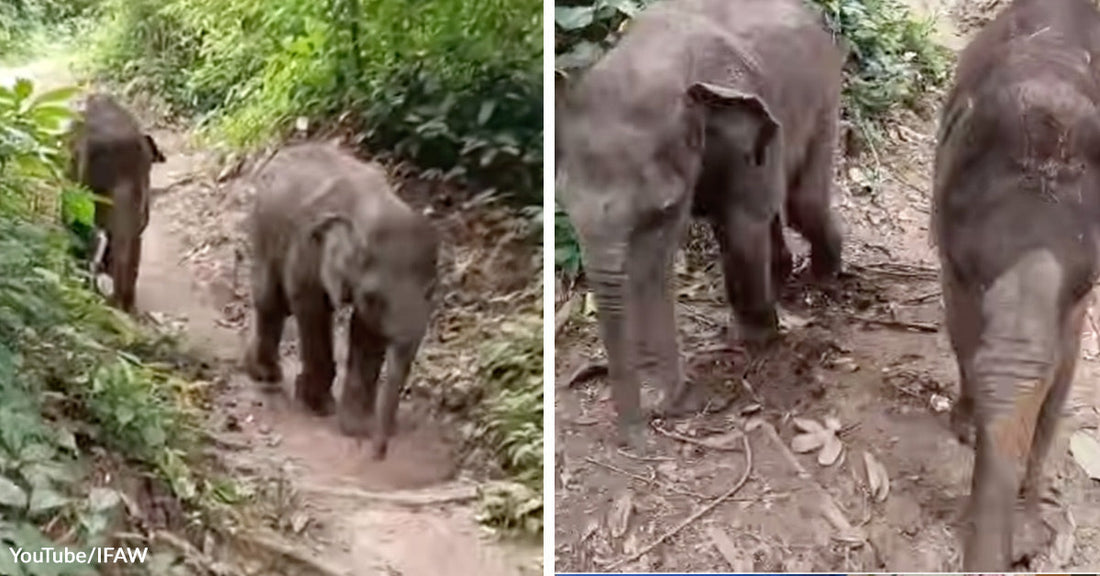
In the floodplains of Assam’s Kaziranga National Park, rescue stories often begin in moments of crisis. Severe seasonal floods can leave animals stranded, orphaned, and cut off from their herds, and that is where the Centre for Wildlife Rehabilitation and Conservation in India steps in. Among the many lives saved, the recent arrival of a tiny elephant calf named Gotonga at CWRC shines a hopeful light on wildlife rescue and the beginnings of an extraordinary friendship between two rescued elephant calves.
Gotonga’s story starts with separation and uncertainty. Rescuers found him alone, cut off from his mother and herd, with ropes still wrapped around parts of his body. Those ropes had been used to keep him from wandering into nearby trenches and wells while help was on the way, a temporary safeguard for a calf too young to understand the dangers around him. Once at CWRC, veterinary staff immediately began specialized care. The team monitored him around the clock, making sure he was stable, hydrated, and able to take in the nourishment he needed.

The first signs were promising. By the day after his arrival, Gotonga was active and alert, responding well to his milk formula. Weighing 121 kilograms at such a young age, he was larger than many elephant calves of similar age, yet his physical features suggested he was only about one month old. That combination of vulnerability and strength set the tone for his early days at the centre. It highlighted both the urgency of his rescue and the potential for a strong recovery with the right support.
For orphaned elephant calves, however, survival is never about food and medicine alone. Young elephants are intensely social animals. In the wild, they rely on their mothers, aunts, and other herd members for comfort, guidance, and learning. At a rehabilitation centre, this social bond cannot be fully replaced, but it can be gently echoed through companionship and patient care. The team at CWRC recognizes that companionship is not a luxury for these calves. It is central to their emotional stability and confidence.
Fortunately for Gotonga, companionship was close at hand. In an adjacent nursery compartment lived Monikuntal, another rescued elephant calf whose journey at CWRC had begun a year earlier. When Monikuntal first arrived in 2024, he was also a vulnerable orphan. He needed intensive care, specialized nutrition, and vigilant veterinary attention. Over time, his caregivers supported him with enrichment activities that allowed him to develop as naturally as possible, even within a rehabilitation setting.

YouTube/IFAW
Over that year, Monikuntal’s transformation was remarkable. He grew from a fragile 97 kilograms to a sturdy young elephant weighing around 228 kilograms. That growth did not simply reflect a steady diet. It represented the patient work of wildlife rehabilitation, the daily routines of feeding and monitoring, and the gradual building of trust between animal and caregiver. Monikuntal evolved into a confident, playful elephant, a living example of how rescued animals can recover and thrive when given time and expert care.
When the time came to introduce Gotonga and Monikuntal, CWRC staff followed a thoughtful process. They first placed the calves in neighboring nursery spaces, allowing them to become familiar through sight, sound, and smell. This slow introduction helped reduce stress for both animals. According to the account, the transition went smoothly. Before long, the two calves were spending most of their day together, a new pair of companions shaped by similar loss yet moving toward healing side by side.
Their days now follow a gentle rhythm. Each morning, Gotonga and Monikuntal walk into the forest with their keepers. There, they explore their surroundings, play with enrichment toys, splash in streams, and rest in the shade. These activities are far more than simple play. Exploration gives the calves a chance to practice natural behaviors. Water play helps them build strength and coordination while also cooling off in the often warm climate. Rest in the shade mimics the natural pauses that herds take during the day.
Their needs are different, and CWRC staff tailor their care accordingly. Gotonga receives milk every three hours to support healthy growth and development, a demanding schedule that underscores just how dependent young calves are on intensive human help after rescue. Monikuntal, older and stronger, is gradually transitioning to fewer feeds as his diet shifts and his independence grows. As Gotonga’s confidence increases in these new surroundings, Monikuntal is often close by, a reassuring presence in what could otherwise be a frightening and confusing environment.
For the animal care team, watching the relationship between the two calves grow has been particularly meaningful. Not long ago, Monikuntal was the anxious newcomer learning to navigate life without his mother. Today he serves as a kind of role model for Gotonga, showing that it is possible to adapt, recover, and even find comfort after profound disruption. I found this detail striking because it illustrates how rehabilitation can come full circle. The once newly rescued animal becomes part of the support system for the next arrival.
Behind this touching bond is a structured, collaborative effort. CWRC is jointly operated by the Wildlife Trust of India, the Assam Forest Department, and IFAW. The centre’s work is shaped by the understanding that every rescued elephant calf arrives with a unique story. Some calves reach the centre in urgent need of medical treatment for injuries or illness. Others require focused nutritional support, patient behavioral guidance, or simply time in a safe place to heal from the shock of losing their herd.
Gotonga’s journey is still in its early stages. Yet from his first days at CWRC, there are already clear reasons for optimism. He has experienced immediate, expert attention from veterinary staff, consistent milk feeds, and structured monitoring. Perhaps just as important, he has access to a young companion who has faced a similar path and emerged stronger. Together, these elements create the conditions for a brighter future, one in which Gotonga can grow, learn, and eventually reach the milestones that Monikuntal has already achieved.
The story also highlights a broader truth about wildlife rescue and rehabilitation. Every successful rehabilitation begins with a single act of rescue, and each rescue depends on people and institutions committed to giving vulnerable animals a second chance. Whether it is local responders helping to keep a calf safe until professionals arrive, veterinary teams providing specialized treatment, or long term caregivers guiding animals through months and years of recovery, each role contributes to that second chance.
For supporters of wildlife conservation, the friendship between Gotonga and Monikuntal serves as a hopeful reminder of what coordinated care can accomplish. In a landscape defined by seasonal floods and constant change, their growing bond stands as a quiet but powerful symbol of resilience. Today, that chance belongs to Gotonga, and right beside him walks Monikuntal, living proof of how far a rescued elephant calf can come with patience, expertise, and compassion. Read more at https://www.ifaw.org/journal/friendship-begins-two-rescued-elephant-calves-india?utm_source=chatgpt.com