
Sixty-Seven Rescued Dogs Once Trapped On A Meat Farm Begin A New Journey Of Freedom
Guest Contributor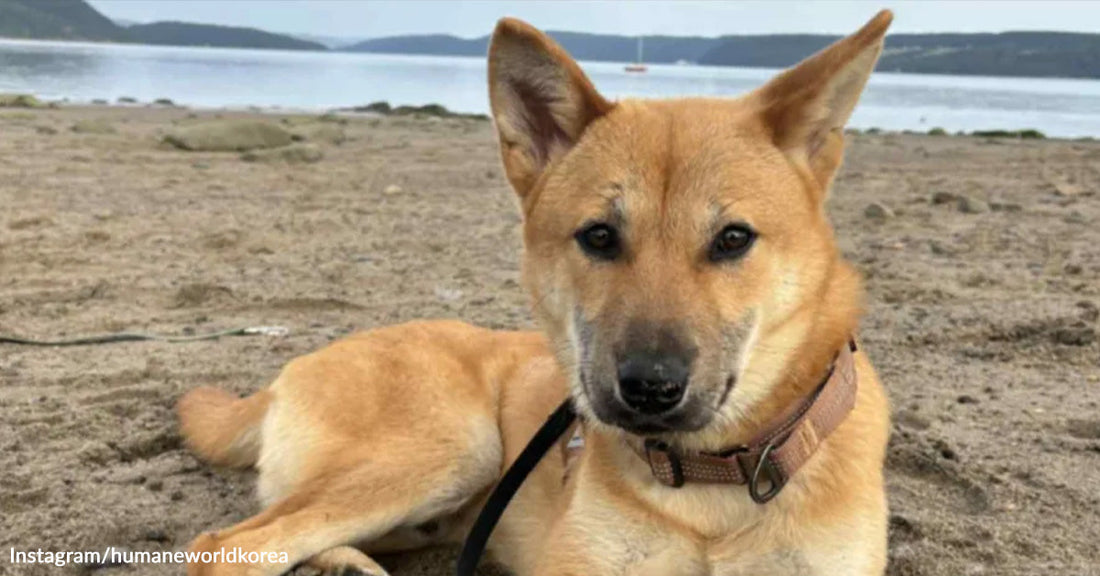
Across the world, International Dog Day is a time to celebrate the bond between humans and dogs. This year, that celebration takes on special meaning for dozens of dogs rescued from a dog meat farm in Cheongju, South Korea, who have begun new lives in Canada as beloved family companions. Their stories highlight the growing movement away from the dog meat industry and offer powerful evidence that dogs rescued from meat farms can thrive as cherished pets.
In May, Humane World for Animals Korea, the Seoul office of the international animal protection charity Humane World for Animals, rescued 67 dogs from a dog meat farm in Cheongju in Chungcheongbuk-do. The deployment drew additional attention because actor and advocate Daniel Henney joined the effort. Henney previously adopted his own dog Juliette after she was rescued by the same organization, and his presence underscored how deeply individual lives can change when animals are given a second chance.

After the rescue, the dogs were transported to specialized care and rehabilitation centers run by Humane World for Animals in the United States and Canada. There, they received thorough veterinary examinations and expert care designed to support both physical recovery and emotional healing. The organization reports that the dogs were vaccinated against rabies, distemper, hepatitis, parvo virus, parainfluenza, leptospira and canine influenza, and screened for respiratory illness as needed to comply with national and international health regulations. This structured period of stability helped prepare them for adoption and life in a home environment.
Several of the rescued Jindo dogs have since been adopted in Canada and are now settling in as much loved members of their new families. Their journeys from barren cages to warm beds and toys reflect a profound transformation. I found this detail striking because it directly counters the long standing prejudice in parts of Korean society that dogs raised on meat farms are somehow different and cannot adapt as companion animals.
The families who adopted these dogs consistently describe them as remarkably gentle and affectionate. Their shared experiences challenge the misconception that there is a separate category of "meat dogs" destined only for consumption. Instead, the dogs respond to kindness and care just as any other companion animal would. Their progress offers emotional proof that background and early hardship do not define a dog’s capacity for love or connection.
One of the most vivid stories is that of Max, now renamed Chingu. Once confined to a cage and facing slaughter, Chingu now spends his days playing with the young son in his adoptive family. His adopter, Jennifer Trudel, recalls that Chingu was initially very fearful. Over time, and with patience, he began to wag his tail, explore his surroundings and run around the home. Trudel describes how he has become a source of great joy for the entire family, a transformation that would have seemed impossible when he was still on the farm.

Instagram/humaneworldkorea
Another Jindo, formerly called Moose, now answers to the name Kimchi. Adoptive couple Paule Geoffroy and Victor Gaudreault say that Kimchi has completed their family. They look forward to all the adventures they will share with him and expressed the hope that every dog in South Korea can be offered the same second chance that Kimchi received. Their comments reflect not only gratitude for their own dog, but also a broader wish for systemic change.
Twinkle, now named Kiwi, has revealed a particularly charming trait as she adapts to her new life in Canada. According to her adopter, François Lévesque, Kiwi loves music. She responds to piano and flute playing by wagging her tail or twitching her ears, suggesting a lively curiosity about the sounds around her. Lévesque says that every day with Kiwi is full of surprises, a reminder that rescued dogs often display unique personalities once they feel safe.
Cinnamon, who now goes by Peach, has also found a permanent home filled with care. She was adopted by Chloe Emond-Lane, a staff member at Humane World for Animals Canada. Emond-Lane met Peach when she first arrived at the care and rehabilitation center and soon decided to bring her home. Peach is now living what is described as a full and happy life, surrounded by people who understand her past and are committed to her future.
Reflecting on the rescue and these adoptions, Sangkyung Lee, campaign manager at Humane World for Animals Korea, emphasizes that the transformation of the Cheongju dogs shows how inaccurate it is to claim that meat farm dogs cannot become companion animals. Lee stresses that every dog, regardless of the circumstances of birth or the environment they were raised in, has the right to happiness. The statement extends beyond dogs to a broader ethical position that all living beings deserve respect.
These individual success stories are unfolding at a pivotal time in South Korea. In January 2024, the country’s National Assembly unanimously passed a Special Act to ban the dog meat industry. When this law comes fully into effect in February 2027, it will make it illegal to farm, kill, butcher or sell dogs or dog meat for human consumption. Violations can result in up to two years in prison and fines of up to 30 million won. Government statistics from the Ministry of Agriculture estimated that at the time of the law’s passage there were 5,898 dog meat businesses across the country, including 1,537 farms, 221 slaughterhouses, 1,788 traders and 2,352 restaurants.
Public attitudes are shifting as well. Recent opinion surveys indicate that 86 percent of South Koreans have no interest in eating dog meat. At the same time, Humane World for Animals and its partners continue to document the conditions on many dog meat farms. Dogs are often kept in small, barren wire cages without proper food, water, shelter, comfort, stimulation or veterinary care, and death is typically by electrocution. Against that backdrop, the journeys of Chingu, Kimchi, Kiwi and Peach illustrate what is possible when dogs are removed from these conditions and given a chance at recovery.
Even as the dog meat ban moves toward full implementation, important questions remain. Lee notes that approximately 70 percent of dog meat farms in South Korea have already shut down or transitioned since the Special Act passed. However, there is still uncertainty about where many of the remaining dogs have gone and how those still on active farms will be protected. On International Dog Day, Lee urges both the government and civil society to share responsibility for addressing these challenges and to work together to find lasting, humane solutions for all affected dogs.
International Dog Day is intended as a global celebration, but through the lens of the Cheongju rescue it also becomes a moment of reflection. The stories of these dogs reveal a turning point in Korean society as it moves away from the dog meat industry and toward stronger protection of companion animals. For many people, seeing former meat farm dogs curled up on sofas in Canada or following children around a backyard brings home a simple truth. With care, patience and respect, dogs from any background can become family. Read more at https://www.humaneworld.org/en/news/international-dog-day-dogs-rescued-cheongju-dog-meat-farm-begin-new-lives