
Breeder Abandons Golden Puppies Before They Could Even Stand
Guest Contributor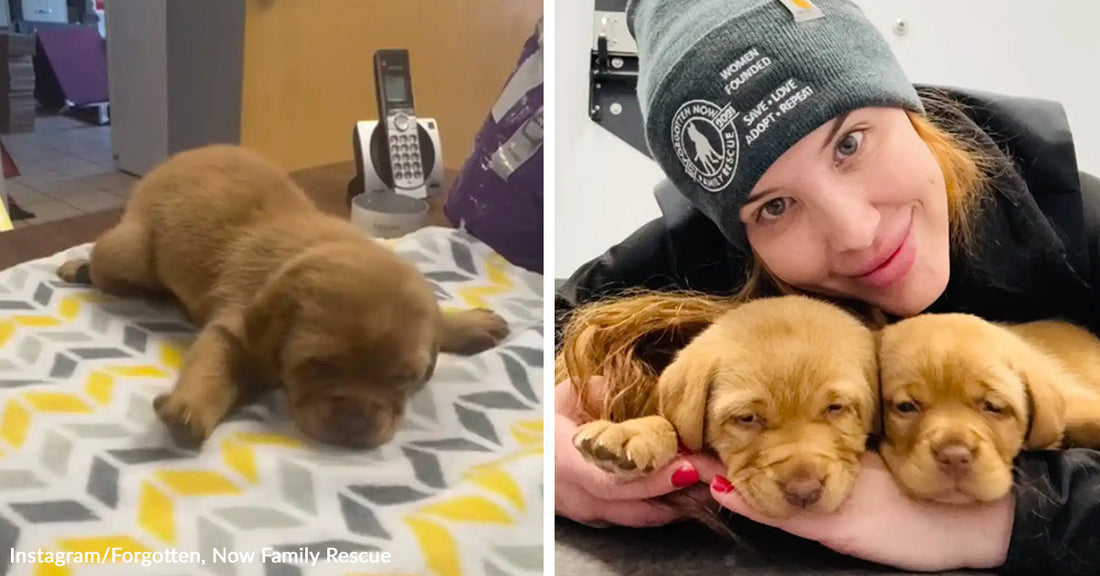
When a rural shelter in North Carolina called Forgotten, Now Family Rescue about two golden retriever puppies who could not stand or walk, the story could easily have ended in quiet heartbreak. Instead, it turned into a powerful example of what patient rehabilitation, compassionate rescue work, and a second chance can do for animals who have been discarded. These were full-bred golden retriever puppies, the kind typically advertised as “perfect family dogs,” yet these particular golden retriever puppies were considered worthless because they had swimmer puppy syndrome.
The shelter staff explained that the puppies, later named Blanche and Dorothy, had been abandoned by a breeder because of their condition. Swimmer puppy syndrome, often shortened to “swimmers,” affects the way a puppy’s legs develop. Instead of standing underneath the body, the legs splay out to the sides, leaving the puppy stuck on its belly, paddling its limbs in a motion that resembles swimming on the floor rather than walking. Without intervention, this condition can severely limit mobility and quality of life.

According to the account, the breeder saw no financial value in puppies who could not walk and left them at the shelter instead of providing care. The shelter team was unsurprised. They had encountered similar stories before, where vulnerable puppies were abandoned once it became clear they would require extra time, money, and effort. The emotional impact on staff and rescuers is real. They understood that while these puppies may have been dismissed as “worth $0” in one environment, they carried tremendous worth in another, where compassion is the guiding principle.

That different environment was exactly what founder Chrissy Elder has been working to create through Forgotten, Now Family Rescue in Charlotte, North Carolina. Her organization exists to offer abandoned animals the second chance they otherwise might never receive. When she heard about Blanche and Dorothy, she did not see a medical challenge to avoid. She saw two young lives that deserved a chance to heal, grow, and eventually run like other dogs.
The report notes that Elder had worked with swimmer puppy syndrome before. She had fostered and rehabilitated multiple “swimmers” and had seen them go from scooting helplessly across the floor to running, playing, and living active lives. That experience gave her hope that Blanche and Dorothy could have the same outcome. She believed that with consistent physical therapy, assistive devices, and patience, the puppies would one day move freely on their own.
Once Elder brought the puppies home, a careful treatment plan began. For dogs with swimmer puppy syndrome, timing and consistency often matter as much as the specific exercises. The account describes a combination of physical therapy, water therapy, and brace support to help correct the puppies’ posture and strengthen their limbs. Physical therapy helps train muscles and joints into proper alignment. Water therapy allows puppies to practice movement with reduced pressure on their joints, making it easier and less painful to learn new patterns of motion. Braces offer structural support so that developing bones and muscles can gradually shift into healthier positions.
What is especially striking in this story is that healing was happening on both sides. Elder herself was still recovering from surgery when she took Blanche and Dorothy into her care. While the puppies leaned on her for guidance, structure, and touch, she leaned on them for comfort and emotional support. The account describes them as excellent cuddle buddies, providing warmth and closeness during her own post-operative recovery. In that sense, this was not simply a story of a rescuer helping animals. It was also a story of animals helping a human through a vulnerable period by simply being present and affectionate.
As days and weeks passed, the changes in Blanche and Dorothy were dramatic. The report explains that the puppies gradually learned to straighten their legs and support their own weight. With the support of exercises and braces, they moved from lying flat to sitting upright and then to standing. From there, each small improvement built on the last. Once they could stand steadily, they tentatively took steps. With practice and encouragement, those steps turned into playful trots.
Eventually, Blanche and Dorothy reached the milestone that Elder had anticipated from the beginning. They began to run. The transition from sliding on their bellies to bounding on all four paws is not only a medical achievement, it is an emotional one. Watching animals who were once unable to stand now racing around a yard or room sends a clear message that conditions like swimmer puppy syndrome do not have to define a dog’s future. Many “swimmer” puppies, when given early and consistent care, can go on to live joyful, active lives as cherished family members.
According to Elder’s account, Blanche and Dorothy progressed incredibly well through their rehabilitation. Their mobility improved to the point that she anticipated they would be ready for adoption within a matter of weeks. That next step represents another important part of the rescue journey. It is not enough to stabilize or medically treat animals. For rescues like Forgotten, Now Family Rescue, the ultimate goal is to find safe, loving homes where each animal can thrive long term.
Finding the right homes for dogs who have needed special care requires thoughtful matching. Potential adopters must be ready to provide ongoing support as needed and to understand that these dogs may carry both physical and emotional histories. The story notes that Elder is determined to secure the perfect homes for Blanche and Dorothy, places where they will not be viewed as “former swimmer puppies” but simply as beloved companions.
Throughout the process, Elder describes fostering Blanche and Dorothy as an honor. Her reflections circle back to the core reason her rescue exists. These puppies were once easily discarded by someone focused only on their perceived monetary value. In the rescue’s care, however, they are treated as family. This shift in perspective is central to animal welfare efforts everywhere. It highlights the difference between seeing animals as products and seeing them as sentient beings with needs, feelings, and the potential to form deep bonds with humans.
This story of two golden retriever puppies and their journey from abandonment to running freely is also a reminder of the many animals in shelters and rescues at any given time. While not every dog faces a condition like swimmer puppy syndrome, many arrive in need of medical care, patience, or simply time to trust again. Organizations like Forgotten, Now Family Rescue work every day to bridge the gap between those needs and the people who are willing to meet them.
For those who feel moved by stories like Blanche and Dorothy’s, there are many ways to support such work. Adopting from shelters and rescues, fostering animals who are in transition, volunteering time, or donating supplies and funds all contribute to building the kind of safety net that saved these puppies’ lives. Even simple acts like sharing uplifting rescue stories can help potential adopters see past labels or perceived imperfections and recognize the resilient, loving animals behind them.
Blanche and Dorothy’s transformation from immobilized “swimmer” puppies to energetic runners captures the heart of why rescue organizations exist. It shows what can happen when animals are seen as worthy of care, no matter how they begin. The relationship between Elder and these golden girls reflects a mutual healing journey, one where both human and dogs gained strength, comfort, and hope. Their story stands as a quiet but powerful testament to compassion in action, and to the belief that being forgotten in one place does not have to be the end of the story. Read more at The Dodo