
What Looked Like Wool In The Weeds Turned Out To Be A Life In Danger
Guest Contributor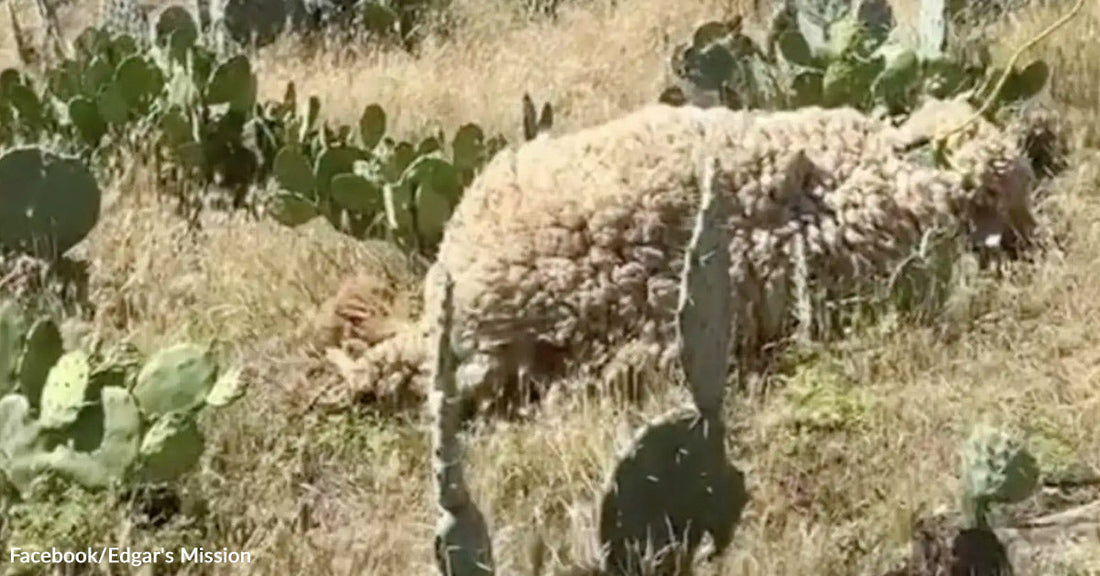
At first glance, the crumpled shape in the middle of a cactus field in Victoria, Australia looked like nothing more than a discarded pile of wool. The landscape was rough and unwelcoming, scattered with hardy plants and watched over by rangers who knew just how unforgiving this environment could be. As they scanned the hilly terrain, the rangers noticed a flock of sheep moving slowly across the land. These sheep had once lived on a farm, but had since been released into the wild, left to fend for themselves in conditions they were never meant to endure. Among them lay one motionless body, barely distinguishable from the scrub around her. This was the beginning of Mellow’s rescue story, a quiet but powerful example of animal sanctuary work and the impact of a single act of compassion.
When the rangers drew closer, they realized that the apparent pile of wool was in fact a sheep whose fleece had grown so heavy and matted that she could no longer rise. Her body was pressed into a thicket of cacti, and the elements had taken their toll. Flies had found a wound on her right flank and were making it worse, turning an already desperate situation into a life-threatening one. This heartbreaking scene reflected what can happen when domestic animals are left to survive alone without care, shearing, or shelter. The rangers might not have known how long she had been there, but they understood she did not have much time left without serious intervention.

Recognizing that the collapsed sheep needed urgent help, the rangers reached out to local animal experts. Their call connected them with Five Freedoms Animal Rescue, and soon, rescuer Manfred Zabinskas was on the scene. He approached the distressed sheep with caution and care, aware that her suffering was already extreme. To move her safely and limit her fear and pain, he sedated her before transport. This gentle approach allowed him to stabilize her and prepare her for the next step, which involved a partnership with another organization dedicated to farm animal rescue.
Team members from Edgar’s Mission, a farm sanctuary committed to providing lifelong care to rescued animals, joined the effort. They examined the sheep’s injuries and made arrangements to bring her back to their sanctuary. Given the urgency of her condition, they had to focus their immediate energy and resources on this single sheep rather than the entire flock. It was a difficult but necessary decision, as prioritizing the most critical case often means the difference between life and death. At the same time, they did not lose sight of the rest of the flock. Edgar’s Mission stayed in contact with the local council to discuss how to help the other sheep and explore possible long-term solutions for their welfare.
Once safely in the care of Edgar’s Mission, the sheep received a name that reflected both her demeanor and her spirit. Rescuers called her Mellow, a choice that the sanctuary later explained suited her perfectly. Although Mellow’s body showed clear signs of pain and neglect, her expression held what the team described as a quiet and undeniable gentleness. It was a kind of calm resilience that even the harsh landscape and her ordeal could not erase. This detail struck me as a poignant reminder of how animals can carry both suffering and serenity in the same gaze.
The next stage of Mellow’s journey involved a transformation that many people associate with sheep rescue stories. Her overgrown fleece, once a burden that trapped dirt and moisture and contributed to her collapse, needed to be removed. Sanctuary staff carefully sheared away the heavy coat that had weighed her down and exposed her skin to further harm. This was not a cosmetic change but an essential part of her recovery. Without regular shearing, domestic sheep can accumulate dangerously thick wool. It becomes difficult to move, attracts parasites, and can hide injuries. In Mellow’s case, removing the matted fleece was the first real step toward comfort and healing.
As the wool came off, a different sheep began to emerge. Free from the massive, dirty coat that had concealed her body and added to her distress, Mellow looked lighter in every sense. The sanctuary team could more easily assess and treat the wound on her side, addressing the damage that flies had worsened while she lay helpless in the field. They provided medical care and a safe space where she no longer had to compete with the harsh realities of the open landscape. This process of careful tending allowed Mellow to move from survival mode to recovery.
Mellow’s story highlights why farm animal rescue work remains so important. Sheep like her are domestic animals who rely on humans for basic care. When they are released or abandoned in environments that do not meet their needs, what may appear at first as freedom often turns into hardship. The sight of a flock of sheep grazing on open land can seem peaceful from a distance, yet Mellow’s experience underlines the hidden risks. Without humans to monitor health, manage injuries, and shear their fleece, many of these animals struggle quietly until they can no longer go on.
The cooperation between the rangers, Five Freedoms Animal Rescue, and Edgar’s Mission also shows how multi-step collaboration makes a difference. Each group played a distinct role, from noticing something was wrong, to providing emergency sedation, to offering long-term sanctuary care. For those interested in animal welfare, this kind of coordinated approach shows how effective support often requires a network rather than a single hero. It also reinforces the idea that kindness can be deeply practical. In this case, compassion looked like phone calls, sedatives, transport logistics, veterinary treatment, and the patient work of shearing away a painful, unnecessary burden.
Stories like Mellow’s resonate because they capture the contrast between vulnerability and resilience. A sheep who once lay immobile in a cactus field became a living example of what timely intervention and dedicated sanctuary care can achieve. The transformation of that “pile of wool” into a recognized individual with a name and personality invites readers to look more closely at animals who are often seen as anonymous members of a flock. It invites reflection on how human choices affect domesticated animals, whether through responsible care or neglect.
As Mellow continues to heal at Edgar’s Mission, her journey offers a gentle yet powerful message. Even in harsh places and difficult circumstances, there is room for compassion that changes an animal’s life completely. Her rescue is one of many that remind us how seeing an animal as an individual can turn a heartbreaking discovery in a cactus field into a story of relief, recovery, and hope.