
🚨Urgent: Hurricane Isaias Smashes Into the Gulf Coast! Rush Emergency Aid!
Finland Orders Google to Stop Work After Hundreds of Hectares of Forest Disappear
Guest Contributor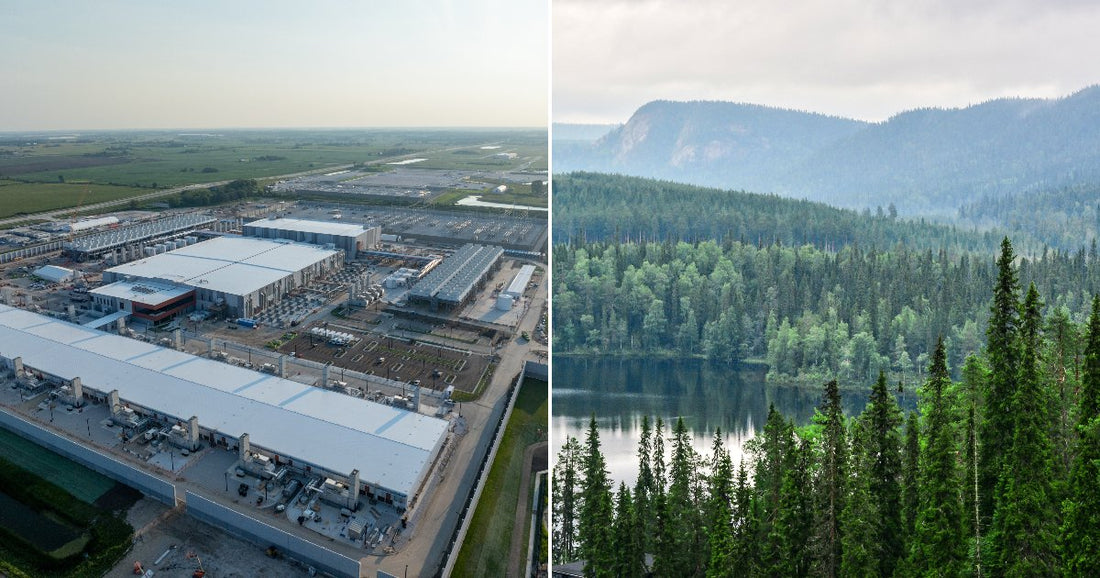
Google’s rapid expansion of its cloud and AI infrastructure has collided with environmental protections in Finland, where authorities have ordered the company to temporarily halt work on two new datacentres. The situation highlights an increasingly urgent question for the digital age: how to balance the booming demand for datacentres with the need to protect local ecosystems and uphold environmental law. For anyone following datacentre development and environmental impact assessment debates, this case in northern Finland is both instructive and concerning.
The projects at the heart of the dispute are planned datacentres in Muhos and Kajaani, part of a €13bn project spanning multiple sites in northern Finland. These facilities are intended to help meet huge global demand for space to house online infrastructure, from cloud computing to AI workloads. Yet according to Finnish officials, the pace and scale of site preparation outstripped the legal requirement to assess what all this construction would mean for the local environment.

The Finnish Licensing and Supervision Authority, known as LVV, has stepped in with a clear directive. It ordered Tuike Finland Oy, the company representing Google, to immediately suspend preparatory work that significantly alters the environment at both sites until the required environmental impact assessment is completed. LVV set a hard deadline: the work must stop by 23 October at the latest, and Google must submit a written explanation by the following Wednesday.
At the core of the dispute is the environmental impact assessment process, or EIA. In many countries, including Finland, the EIA is designed to identify, analyze and mitigate potential environmental damage before large projects go ahead. Tommi Muilu, who leads LVV’s environmental department, explained that in the authority’s view, the extensive measures already taken on the sites clearly fall within what the EIA process is meant to evaluate. He cited tree removal, stripping of topsoil and the construction of site roads as examples of activities that change the environment and can cause impacts that must be properly assessed.

The scale of the forestry work already carried out is significant. It emerged that Tuike Finland Oy had felled 330 hectares of forest in Muhos before the assessment was complete. In Kajaani, logging has taken place across just under 200 hectares. For context, 330 hectares amounts to more than 800 acres, an area that can encompass large, continuous stretches of forest. According to the Finnish Association for Nature Conservation, the cleared areas are so heavily altered that the Muhos site is no longer recognisable as a forest.
Tapani Veistola, the association’s chief operating officer, described the Muhos site in stark terms, saying it is “not a forest any more” but “a sand area.” He framed the situation not as a one-off mistake but as evidence of what appears to be a systemic problem. In his view, the malpractice across two separate sites suggests deeper issues in the way projects are being rushed forward in response to strong market demand for datacentres in Finland.

The Finnish Association for Nature Conservation blames the oversights partly on an “overheated” market, where the race to secure locations for datacentres is intense and timelines are compressed. Veistola pointed to two interrelated pressures. On one side are companies moving as quickly as possible to capitalise on demand for datacentre capacity. On the other side are small municipalities that may lack the expertise or resources to scrutinise projects at the pace and scale currently unfolding.
From a regulatory perspective, LVV has laid out the immediate consequences if Google does not comply. The authority has stated that it will consider enforcement proceedings and a fine should the company fail to halt the work or adequately address the issues it has raised. The environmental impact assessment itself is still in progress and is expected to be completed later this year, but LVV maintains that the preparatory measures already taken are too substantial to continue without that assessment in place.
Google, for its part, has acknowledged the seriousness of the concerns. In a public statement, the company said it understands the issues raised and admitted that it had fallen short of its own high standards. It stated that it would study the LVV’s findings and follow the authority’s guidance. Google also said it believed it had acted in good faith under Finland’s Forestry Act and had carried out nature surveys and measures intended to protect high-value areas on the sites.
The company pointed to its longer term landscaping and biodiversity plans as part of its response. These include tree planting across 130 hectares at Muhos. While this is a sizable area, it is still notably smaller than the 330 hectares that have already been logged there. The effectiveness of such restoration efforts often depends on careful planning, long time horizons and ongoing monitoring, all of which will likely be scrutinised closely by environmental groups and regulators as the projects move forward.
The situation in Finland illustrates how datacentre construction, which often takes place far from public view, can have very visible local effects. Transforming forests into build-ready land typically involves clearing vast areas, removing topsoil and building new roads to handle heavy equipment and future facility traffic. When that development proceeds faster than environmental oversight, tensions are almost inevitable.
The “overheated” market for new datacentres in Finland, as described by the Finnish Association for Nature Conservation, is a reminder that the digital services people rely on every day have real physical footprints. The competition to build and operate these energy intensive facilities is intensifying as companies race to support streaming, cloud computing and particularly AI applications. This case suggests that regulatory frameworks and local capacity to enforce them must keep pace with that growth.
I found the contrast between Google’s stated intention to protect biodiversity and the description of the Muhos site as “a sand area” particularly striking. It encapsulates the broader challenge of aligning sustainability commitments with what happens on the ground. As the EIA proceeds and LVV continues its oversight, the Finnish projects may become a test case for how large technology companies and regulators can reconcile speed, economic opportunity and the protection of local environments.
How the story evolves will depend on several factors: the findings of the ongoing environmental impact assessment, the measures Google is prepared to take to restore and protect the affected areas, and whether municipalities and national authorities adjust their processes to better manage future waves of datacentre proposals. For now, the order to halt work serves as a clear signal that, even in a competitive and fast moving market, environmental rules apply and must be respected before landscapes are changed at scale. Read more at https://www.theguardian.com/technology/2026/oct/06/google-datacentres-finland-temporary-halt-environmental-impact-assessment