
Thirty-Five Hounds Were Rescued From Deplorable Conditions As Remains Were Found
Guest Contributor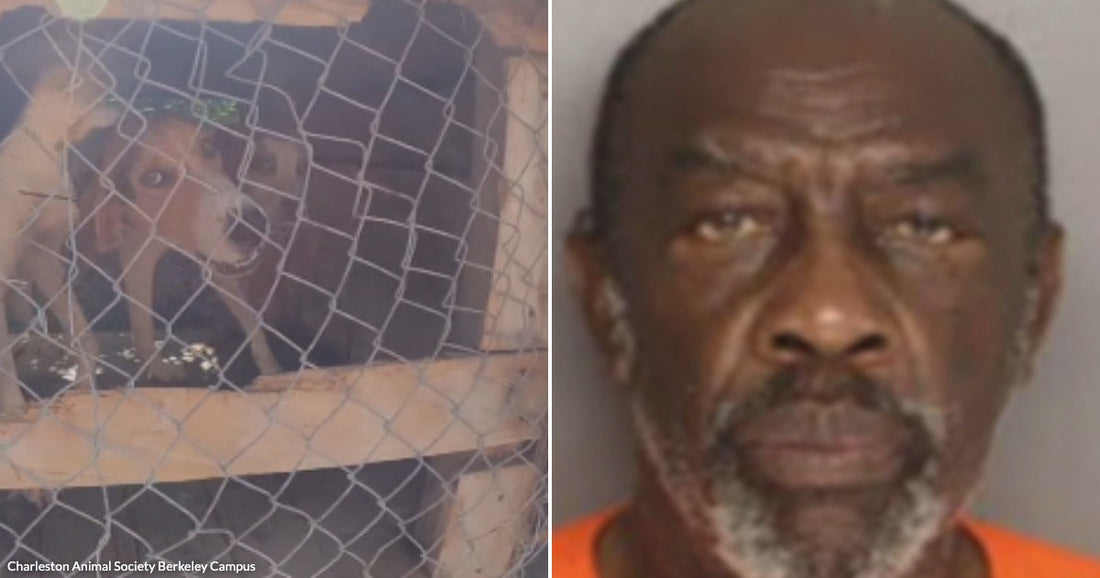
The packed courtroom in Goose Creek, South Carolina, told its own story. Rows of people in red shirts, many holding images of rescued dogs, gathered to witness the latest step in a long-running animal cruelty case that has devastated advocates and galvanized calls for change. As the animal cruelty case moves toward trial, many say it represents far more than a single defendant or a single property. It has become a symbol of the urgent need to strengthen animal cruelty laws in South Carolina.
The man at the center of this case, 78-year-old Loney Leroy Garrett, faces 74 animal cruelty charges following the July 2025 seizure of 35 dogs from his Goose Creek property. Investigators described the animals’ living conditions as deplorable. The dogs were reportedly confined in filthy, urine-soaked crates and denied access to clean food and water. The remains of four other dogs were later discovered buried on the same property. These details, which advocates and investigators have repeated over the past year, continue to haunt those who worked on the rescue and those who have followed the case closely.

When the hearing convened this week, Garrett was scheduled to appear. He did not show up. Despite his absence, the judge ruled that the animal cruelty case will proceed to a jury trial, expected to begin in late October or early November. For many in attendance, that decision marked a critical step toward what they describe as accountability and justice for the rescued animals.
Outside the courthouse, more than 40 women stood shoulder to shoulder, dressed in red. Advocates explained that the color symbolized two things at once. It represented a “code red” status for local shelters that are pushed to their limits by severe animal cruelty cases, and it stood for the blood shed by animals who did not survive. Many of the red shirts displayed photographs of rescued hounds and other dogs, a visual reminder of the living beings at the heart of the legal process.
Independent animal rescuer Jennifer Gillentine was among those who turned out. She described the gathering as an effort to stand up for animals that cannot speak for themselves. Gillentine argued that current laws do not provide strong enough consequences for people convicted of animal cruelty. She called for harsher penalties, a registry of offenders, and what she described as more serious jail time in response to repeated abuse. One of the hounds on her shirt had once lived at Garrett’s property. She recounted that three such dogs came to her home after the 2025 rescue, and said that Garrett was not supposed to own animals at that time based on prior charges.

Charleston Animal Society Berkeley Campus
The 2025 case did not emerge from nowhere. Advocates emphasized that this was not the first time Garrett’s property had been at the center of an animal cruelty investigation. In 2013, authorities seized animals from the same location and reported finding the remains of approximately 200 animals. Garrett was arrested and ultimately served a period of prison time and probation. Animal welfare supporters now argue that the earlier outcome, which included reduced or dismissed charges, was not sufficient to deter future neglect or to prevent him from owning animals again.
This history is one reason many advocates describe the current trial as a turning point. Representatives from the South Carolina Animal Welfare Alliance and the Charleston Animal Society attended the hearing and spoke about the broader implications. Casey Brazil, an advocate with the South Carolina Animal Welfare Alliance, pointed to the long timeline between the initial 2013 arrest, the July 2025 re-arrest, and the current pretrial stage. She said the process has taken too long and that quicker responses and resolutions would better protect animals from ongoing suffering.

Charleston Animal Society Berkeley Campus
Brazil also noted that South Carolina has consistently ranked among the bottom states in national evaluations of animal protection laws. In her view, that ranking reflects outdated policies and insufficient enforcement tools. She argued that it is time to update and clarify statutes so that cruelty cases can be prosecuted more effectively and so that penalties meaningfully reflect the severity of the harm involved.
The Charleston Animal Society, which assisted in the rescue and care of the 35 dogs in 2025, has taken a similar position. Representative Aldwin Roman explained that the Society’s first priority was to remove animals from danger. Many of the rescued hounds have since moved into foster or adoptive homes where they can heal and build new lives. Roman added that the organization is also focused on prevention, working so that large-scale seizures like the one in Goose Creek become less common. He expressed concern that prior legal outcomes did not include measures that would have stopped further incidents.

Charleston Animal Society Berkeley Campus
For many advocates, legislative reform is now inseparable from the facts of the case. They point to proposals such as Riley’s Act, which would update and specify standards of care and shelter for animals across the state. The idea behind such a bill is that clearer standards create more effective enforcement. If the law spells out exactly what constitutes adequate shelter, nutrition, and veterinary care, authorities can more readily intervene before neglect escalates into tragedy.
Another central goal is the creation of a statewide database tracking animal cruelty convictions and allowing for future bans on animal ownership for certain offenders. Advocates like Brazil argue that if such a system had been in place after the 2013 case, it might have prevented the 2025 rescue in Goose Creek and the suffering of yet another group of dogs. By barring individuals with serious convictions from owning animals in the future, they hope to reduce the likelihood of repeated abuse.

Charleston Animal Society Berkeley Campus
Proposals also include more training for law enforcement and animal control officers, stronger standards of care that clearly define neglect and cruelty, and tougher penalties for those convicted. Supporters believe these measures would not only punish wrongdoing but also serve as a deterrent that could avert future cruelty cases. I found this detail striking because it shows how a single case, tragic as it is, can become a catalyst for examining an entire system and pressing for structural reform.
Those who gathered in Goose Creek stressed that their work is not about reliving the trauma of what happened at one property, but about making sure similar situations are less likely to unfold anywhere else in the state. Their presence in red outside the courthouse symbolized grief, urgency, and a call for transformation. Many said they were encouraged by the strong turnout, interpreting it as a sign that South Carolina communities are increasingly ready to support stronger animal protection laws and to hold repeat offenders accountable.
As the animal cruelty case moves toward trial in late October or early November, advocates from groups like the Charleston Animal Society and the South Carolina Animal Welfare Alliance plan to continue monitoring the proceedings. They say they will also keep working at the state level for clearer statutes, better enforcement, and a legal framework that reflects the value society places on preventing unnecessary suffering. For the people who showed up in Goose Creek, the trial is a step toward justice for 35 rescued dogs and a test of how seriously the state is prepared to treat animal cruelty in the years ahead. Read more at https://abcnews4.com