
Injured Bald Eagle Is Found Along a Road Until Police and Neighbors Rush to Help
Guest Contributor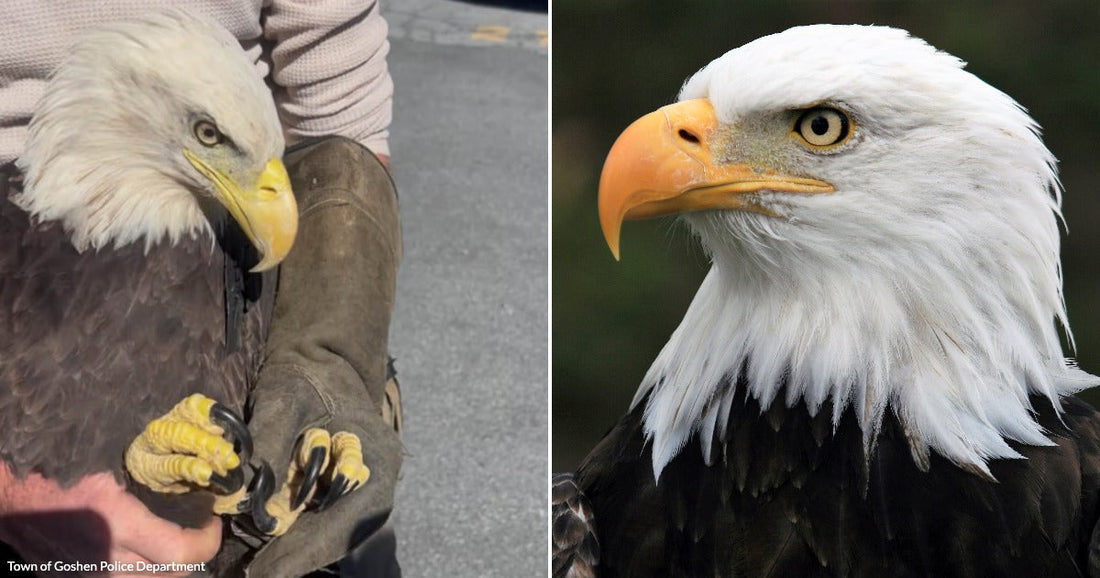
An injured bald eagle rescued in Goshen has captured the attention of wildlife lovers across the Hudson Valley, and for good reason. It is not every day that a driver spots a bald eagle along the roadside, lets alone one in distress, and helps set in motion a careful, coordinated response that gives the bird a real chance at recovery. This recent bald eagle rescue in Goshen highlights how quick thinking, community cooperation, and clear guidance from wildlife experts can make all the difference for an endangered symbol of American wildlife.
According to information shared by the Goshen Police Department, the story began when a passing driver noticed a female bald eagle injured along the road. Instead of driving past or attempting to handle the bird directly, the driver immediately contacted police. That single decision respected both the bird’s safety and public safety, while also ensuring the situation was handled according to the special rules that protect bald eagles. In a world where people often feel unsure about what to do when they encounter wildlife in trouble, this driver’s calm response set exactly the right example.

When officers from the Goshen Police Department arrived, they quickly confirmed that this was not just any injured wild bird, but a bald eagle in need of urgent help. Police later shared photos of the bird on social media, and the images show a powerful animal suddenly made vulnerable. Even while grounded and hurt, a bald eagle remains a formidable raptor with sharp talons, a strong beak, and a wide wingspan. That is one reason special protocols exist for handling these birds. Protective laws and ethical guidelines both emphasize that only authorized or trained individuals should attempt to capture or transport them.
The officers were not alone in their efforts. Nearby residents stepped in to help, working with police to keep the eagle safe, calm, and away from additional hazards until expert help could arrive. The department followed the specific protocol that applies to bald eagles, which includes minimizing stress on the animal, maintaining a safe distance when possible, and coordinating with licensed wildlife professionals. It becomes a quiet kind of teamwork: officers managing the scene, neighbors offering assistance, and a network of rehabilitators and veterinarians prepared to step in once contacted.

Town of Goshen Police Department
A local bird rehabilitator soon responded to the scene. This person, trained in handling and caring for injured birds, transported the eagle to a veterinarian for treatment. From there, the bird would be assessed for the nature and extent of its injuries and receive appropriate medical care, such as stabilization, imaging, and supportive treatment. The Goshen Police Department has expressed hope that the eagle will recover fully and eventually be returned to the wild, released back into the same area where she was found. That goal, a return to the open Hudson Valley sky, is central to modern wildlife rehabilitation.
I found this detail striking because it reflects a broader philosophy in wildlife care. The priority is not just to save an individual animal, although that is deeply important, but to restore it to a life that is as natural and independent as possible. For a bald eagle, that means soaring, hunting, and nesting in the wild, not living indefinitely in captivity unless absolutely necessary for the bird’s survival or welfare.
This event also serves as a useful reminder that the best way to help an injured wild bird is often to avoid direct contact and reach out to people who know exactly what to do. Wildlife experts advise that the public should never try to handle an injured bald eagle or any other large bird of prey on their own. The New York State Department of Environmental Conservation urges people to leave injured wildlife where it is and call a DEC regional office, an Environmental Conservation Police Officer, or a licensed wildlife rehabilitator for further guidance. That recommendation applies across the state and is rooted in both human safety and animal welfare.
These guidelines matter for health reasons as well. DEC specifically recommends that people avoid contact with sick or dead birds because of the risk of avian influenza. Even when a bird appears only injured, not sick, it is wise to exercise caution. Children and pets should be kept away from any wild bird that seems hurt, disoriented, or unusually calm. A bird may react unpredictably out of fear or pain, and physical contact can put both people and animals at risk of scratches, bites, or exposure to disease.
At the same time, stories like the Goshen bald eagle rescue offer an encouraging look at how communities can coexist with wildlife. In many parts of New York, including the Hudson Valley, bald eagle sightings have become more frequent as conservation efforts have helped the species recover from historic declines. Each successful rescue and release supports that positive trajectory and reminds residents that their actions can directly support local ecosystems. Simply choosing to report an injured or distressed animal, rather than approaching it or ignoring it, can be a powerful act of stewardship.
The mood around this particular rescue has been hopeful rather than grim. Police expressed optimism about the eagle’s chances at recovery, and many community members responded with encouragement and gratitude once the story and photos were shared online. In an era when much environmental news can feel daunting, a single bald eagle brought safely off the roadside and into veterinary care offers a small but meaningful point of light. It shows what can happen when people recognize the importance of native wildlife and trust the professionals trained to protect it.
In the end, this injured bald eagle in Goshen received exactly what any wild animal in distress deserves compassionate attention, appropriate caution, and expert care. The driver who noticed her, the neighbors who helped, the officers who followed protocol, and the rehabilitator who transported her all played vital roles. For residents across the Hudson Valley and beyond, the story provides both inspiration and a clear takeaway. If you ever cross paths with an injured wild bird, especially a powerful raptor like a bald eagle, keep your distance, keep others safe, and call the professionals who can give that animal its best chance to heal and eventually return to the sky.
Read more at https://wpdh.com/bald-eagle-recovery-goshen-police/