
Injured Owl Sits Helpless in Traffic Until Residents Flag Down a Police Officer
Guest Contributor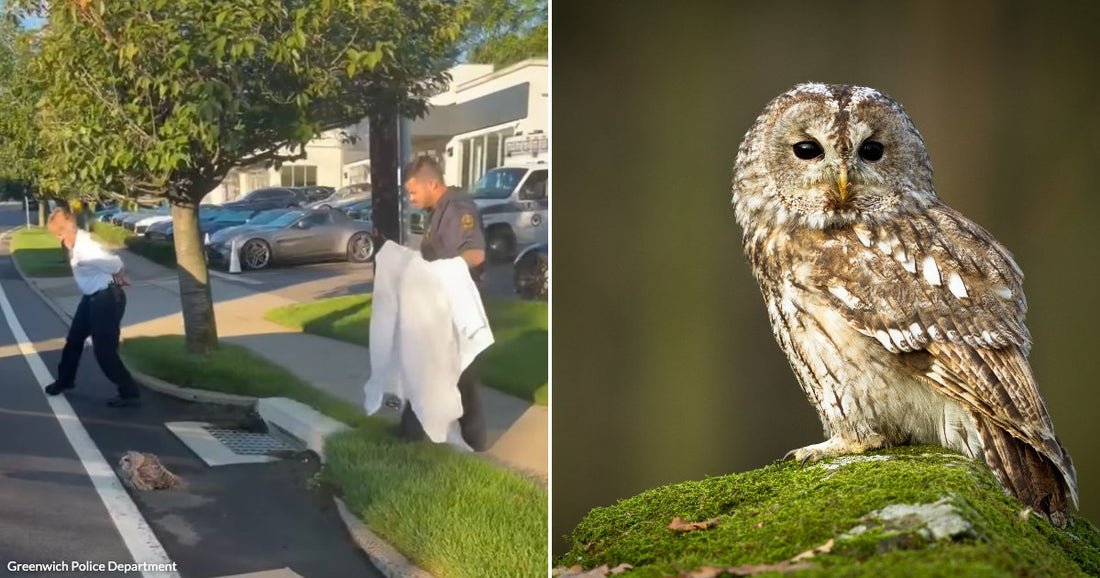
In Greenwich, Connecticut, a seemingly ordinary afternoon on West Putnam Avenue turned into a quiet reminder of how closely community and wildlife are intertwined. Drivers near the 270 block were met with flashing lights, an officer directing traffic, and a small, injured owl at the center of it all. This brief encounter between Greenwich police officers, concerned residents, and a vulnerable bird illustrates how everyday people can play a role in protecting local wildlife.
According to a post from the Greenwich Police Department, the incident began when residents spotted a small owl in the roadway and realized something was seriously wrong. The bird appeared injured and unable to get itself safely out of harm’s way. Rather than drive past or simply hope for the best, they chose to act. They flagged down Officer Huestis, who responded by immediately blocking traffic on West Putnam Avenue, protecting both the owl and passing motorists from a potentially dangerous situation.

That decision to halt vehicles on a busy stretch of road was crucial. It prevented the owl from being struck again and gave officers space to work. In urban and suburban areas like Greenwich, animals that find their way onto roads often do not get a second chance. Here, a combination of vigilance and quick thinking created a different outcome, at least in the short term. It also underscored how public safety can extend beyond people to include the creatures that share the environment.
The department reports that MPO Izzo then stepped in to secure the owl. Approaching any wild animal, even a small owl, requires caution, patience, and respect. Injured wildlife can be frightened and unpredictable, and improper handling can worsen their condition. Working carefully, Izzo was able to gain control of the bird so that it could be moved without further harm. Officer Shaw assisted by helping place the owl into a box for transport, an improvised solution that gave the bird a dark, contained space, which can help reduce its stress.

The entire rescue was captured on video and shared on the Greenwich Police Department’s Facebook page, where viewers could see officers clustered near the 270 block of West Putnam Avenue, moving deliberately as they guided traffic and tended to the owl. For residents scrolling through their social feeds, the images showed a familiar street, flashing patrol car lights, and a small, vulnerable shape on the pavement. Moments like these often resonate because they highlight a kind of quiet care that can sometimes go unnoticed in public safety work.
Once the owl was secured, officers transported it to Wildlife in Crisis in Weston. The nonprofit rehabilitation center has been operating since 1988 and, according to its website, has cared for more than 100,000 animals over the decades. It treats more than 200 species of native birds, mammals, reptiles, and amphibians, serving as a regional safety net for creatures that are injured or orphaned. That includes animals impacted by car strikes, habitat disruptions, and other hazards that come with life in proximity to human communities.
The specific species of the owl was not identified in the initial report. Police described it only as “a small owl,” and as of Tuesday afternoon the bird’s condition remained unclear. This uncertainty is a reminder that even with prompt help, wildlife rescues do not always end with a complete recovery. Rehabilitation professionals at places like Wildlife in Crisis evaluate injuries, provide medical care when possible, and determine whether an animal can be released back into the wild. Outcomes depend on the nature and severity of the trauma, the species’ needs, and how quickly the animal received assistance.
What stands out in this incident is not only the response from local officers but also the role of the residents who first saw the owl in the roadway. Their decision to get involved, instead of passing by, set everything else in motion. The Greenwich Police Department publicly thanked these individuals, noting that helping the town’s wildlife is viewed as part of the job. That simple acknowledgment underscores a broader idea: public safety and community well-being can include advocacy for animals that cannot speak for themselves.
For those who live in areas like Greenwich, seeing wildlife near roads, parks, and neighborhoods is part of daily life. Owls, hawks, songbirds, small mammals, and reptiles all navigate the same spaces people use to commute, shop, and exercise. Sometimes their paths cross in dangerous ways. Car strikes, window collisions, and encounters with pets can leave animals injured and disoriented. In that context, knowing how to respond can make a real difference.
When residents encounter a situation similar to what unfolded on West Putnam Avenue, safety for people remains the top priority. It is important not to stand in traffic or attempt risky maneuvers in the roadway. If it is safe to do so, observing the animal from a distance, avoiding direct contact, and contacting local authorities or a wildlife rehabilitation center is generally the most responsible approach. Wildlife professionals and trained responders have the experience and tools needed to minimize stress on the animal and reduce risks to people.
Organizations such as Wildlife in Crisis exist specifically to handle these kinds of emergencies. Based in Weston at 44 Indian Valley Road, the center is open daily, providing a place where injured or orphaned native animals can receive specialized care. Their work spans many species and situations, from birds affected by severe weather to mammals displaced by construction. They represent the next step after the kind of on-the-ground assistance offered by officers in the Greenwich owl rescue.
I found this particular story striking because of how modest yet meaningful it is. There were no dramatic speeches or elaborate preparations, just a small group of people refusing to ignore a distressed animal in a busy roadway. The officers’ response, the residents’ quick call for help, and the handoff to an established rehabilitation center formed a simple chain of care. Each link in that chain was necessary to give the owl a chance.
In a time when news often focuses on conflict or crisis, scenes like the one near the 270 block of West Putnam Avenue offer another kind of narrative. They show everyday compassion, a willingness to pause the rush of traffic for a fragile life, and a recognition that local wildlife is part of the community’s shared environment. Whether the owl ultimately recovers or not, the response reflects a commitment to stewardship that many people value, even if they rarely see it up close.
Stories like this one from Greenwich encourage residents anywhere to stay observant, act responsibly, and support the organizations and professionals who care for injured wildlife. A few minutes of attention on a busy road can translate into a second chance for an animal that might otherwise be overlooked. In this case, a small owl on West Putnam Avenue received that chance, carried carefully from the pavement to a place dedicated to its recovery and well-being. Read more at https://greenwichbeacon.com