
Stray Dog Dodges Danger Near Busy Freeway Then Jumps Into Police Car to Save Himself
Guest Contributor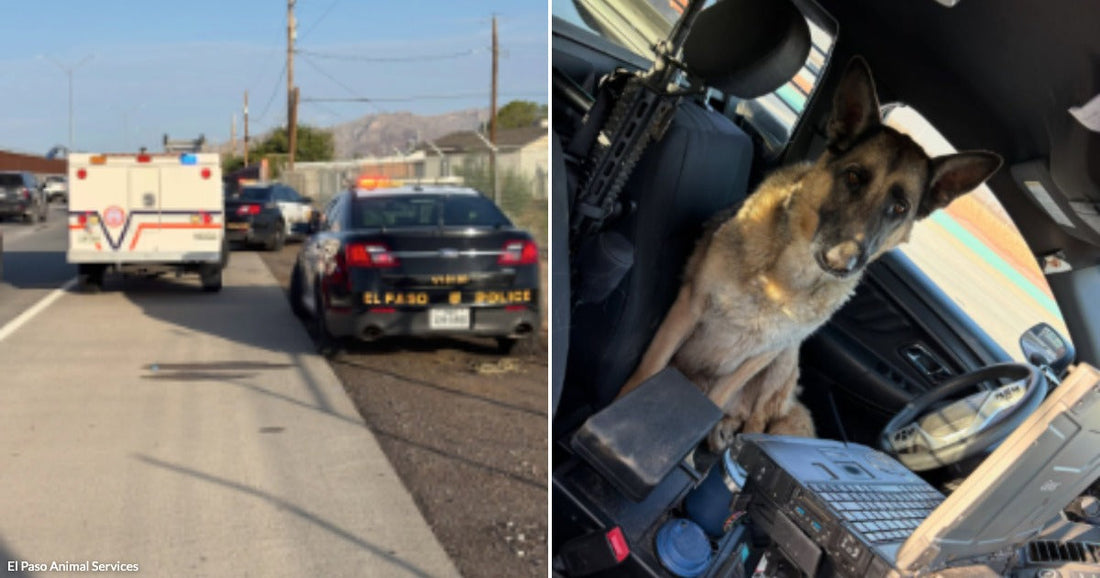
A story that begins with a simple police patrol and ends with a joyful reunion between a dog and its owner is the kind of moment many people love to share. In this case, a dog essentially helped rescue itself by jumping into a police car, a scene that feels straight out of a family movie. For anyone who cares about pet safety or heartwarming rescue stories, this “dog assists in rescue by jumping in police car” moment highlights how a lost animal, quick-thinking officers, and digital tools all intersected to bring a companion back home.
The core of the story is refreshingly straightforward. Police officers encountered a dog that appeared to be lost. Instead of running away, the dog chose curiosity and trust, hopping directly into a patrol car. That single decision made it far easier for officers to keep the dog safe while they tried to locate its family. From there, the focus shifted to reconnecting the animal with its owner, turning a routine day into an uplifting example of how small actions and technology can work together for a good outcome.

Although only a brief summary is available, the mood of the original report clearly leans positive and hopeful. The dog’s decision to jump into the police car serves as a turning point. It transformed what could have been a long, anxious search into a relatively quick path to safety. Officers were then able to concentrate on the next step: identifying the owner and arranging a reunion. That kind of cooperation between people, animals, and tools that help us find information is often what turns a potential loss into a success story.
The reference to a “powerful search engine that organizes and provides access to vast information on the internet” is a reminder of how modern rescues no longer rely only on posters, phone calls, or word of mouth. In stories like this, officers or local authorities may look up records, check online databases, or even reference social media reports of missing pets. A powerful search engine makes it possible to quickly sift through a huge amount of information to find what might be a single essential clue. While the details of exactly how the dog’s owner was located are not spelled out, the connection between search technology and real-world outcomes is easy to see.

El Paso Animal Services
What stands out is the quiet coordination behind the scenes. A dog jumps into a police car. Officers respond by keeping the dog secure and presumably begin the standard process of scanning for a microchip or checking any collar tags. Beyond that, online tools help identify who might be missing a dog that matches the description. The efficiencies of a modern search engine and related services often mean that people can quickly upload lost-and-found notices, share photos, and update statuses once a pet is found. These digital traces become part of a much larger ecosystem of information that can be queried in seconds.
At the same time, the content that accompanies the story sheds light on how much invisible infrastructure sits behind what appears to be a simple search box. Cookies, identifiers, and preference trackers all play a role in how results are delivered, how secure sign-ins are maintained, and how users experience personalized services. Terms such as OSID, NID, AID, and others point to a network of cookies responsible for everything from authentication with a Google account to ad personalization and website statistics.

El Paso Animal Services
Some cookies focus on making sure that when someone uses a search engine or related services, the system recognizes their login. Entries like __Host-3PLSID, __Host-GAPS, LSOLH, ACCOUNT_CHOOSER, SMSV, and g_enabled_idps indicate that sign-in and single sign-on are integral to how people interact with online tools. These identifiers help keep sessions consistent and secure so that when someone searches for information, manages account details, or checks saved preferences, the service knows who is using it.
Other cookies are related to how the search engine and associated sites remember user preferences and display settings. Items such as SAPISID, SID, HSID, SSID, and SIDCC are described as being used to download certain tools and save settings like the number of search results per page or whether SafeSearch is active. For someone searching for a missing dog, these preferences may not seem important at first glance, yet they help shape the way results appear and how safe and comfortable the online experience feels.
Security also plays a central role. Cookies like __Secure-ENID and _Secure-ENID are used to prevent fraudulent login attempts. Others, such as _Secure-YEC and Secure-YEC, are associated with detecting spam, fraud, and abuse, including on platforms like YouTube. These security layers matter whenever people use a search engine or connected services to share information about missing pets or to contact others. They reduce the risk that bad actors can interfere or misuse personal accounts while people are simply trying to solve real-world problems.
Advertising and analytics appear throughout the cookie descriptions as well. Entries like DV, LSID, COMPASS, SNID, GN_PREF, A, and FPGCLDC point to the dual purpose of measuring website performance and tailoring advertising. Others, including _gcl_dc, _gcl_au, gcl, gac, AdID, DSID, and TAID, relate to how ad networks determine whether people take action after clicking on ads and how activity can be linked across devices for users who are signed in. These mechanisms help fund the online tools that ultimately make it easier to disseminate information, such as alerts for lost pets or local news reports on community rescues.
Location and performance are also part of the background. The cookie UULE is described as sending precise location information from a browser so that search results can be relevant to a user’s area, while CGIC helps autocomplete queries more efficiently. GCLB supports load balancing so that websites respond faster, and OTZ is tied to aggregate analysis of visitors. Even the cookie CONSENT, which persists for many years, and SOCS, which tracks cookie choices, highlight how modern services must navigate user consent and regional regulations while still functioning smoothly.
Media and embedded content have their own small role in the experience. The cookie 1P_JAR appears when YouTube videos are embedded, collecting anonymous statistics on how often videos play and which settings viewers choose. That kind of data helps ensure that when a news station shares a video clip of a dog cheerfully sitting in a police car or reuniting with its owner, the viewing experience is stable and responsive for a wide audience.
Alongside all of these technical elements is a simple functionality cookie, cookies_accepted, which only exists to confirm that a visitor has permitted cookies on their device. Cookies such as FCCDCF and FCNEC relate to Google’s Funding Choices API and consent flows for laws like GDPR and CCPA. The presence of receive-cookie-deprecation shows that the ecosystem is still evolving, as browsers experiment with new approaches to cookie handling and privacy.
I found it striking that a brief, uplifting story about a dog and a police car is connected to an intricate web of online infrastructure. On the surface, the narrative is about a lost pet trusting the right people and making it home safely. Just beneath that, the article points to the modern reality that almost every such story now lives partly in the digital world. From news reports shared online to search tools used to confirm facts, and from location-aware results to user consent controls, there is an entire technical landscape that quietly supports the simplest of feel-good headlines. For readers, the takeaway is twofold: small acts of kindness still matter, and so do the tools that help spread those stories and connect people when it matters.