
Tiny Dachshund Survives 529 Days Alone on an Island Before Tearful Reunion With Owners
Guest Contributor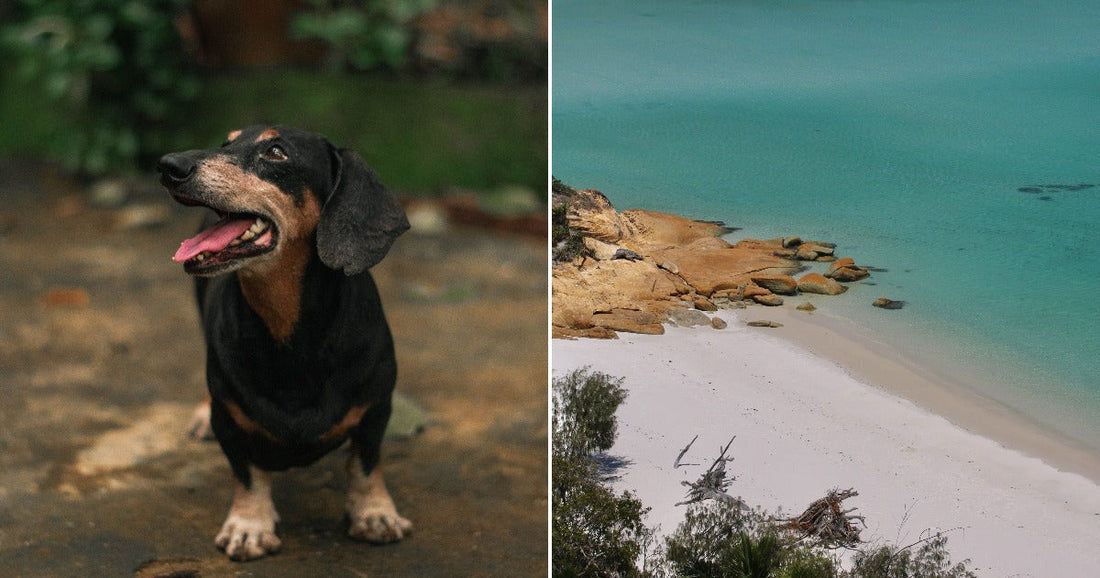
Every so often a story appears that feels like a small miracle in an ordinary world. The reunion of Valerie, a miniature dachshund who survived 18 months alone on Kangaroo Island in Australia, is one of those rare tales. It blends relief, amazement, and quiet admiration for an animal that somehow turned from pampered pet into resilient survivor. This is not just a lost dog story. It is a detailed account of persistence, community effort, and the powerful bond between people and their animals that can endure even after 529 days apart.
According to reports, Valerie disappeared in November 2023 while her owners, Georgia Gardner and her partner, Josh Fishlock, were holidaying on Kangaroo Island off the coast of South Australia. They had left her safely enclosed at their campsite while they went fishing. Sometime during that outing, Valerie escaped from her pen and vanished into the island’s rugged landscape. Despite searching, the couple had to make the painful decision to leave the island without her and return to their home in Albury in New South Wales.

Kangaroo Island is known for its wildlife and natural beauty, not for tiny domestic dogs fending for themselves. The idea of a miniature dachshund lost on an Australian island sounds almost unreal, which is part of why this story has resonated so widely. Those early days likely held a mix of hope and worry for Gardner and Fishlock, but as weeks turned into months, the odds of Valerie returning must have seemed impossibly slim.
Yet the story did not quietly fade. Volunteers from Kangala Wildlife Rescue, a not for profit service on the island, began noticing a small and unusual canine presence in the local wilderness. In March, more than a year after Valerie disappeared, volunteers spotted what they described as a distinctive addition to the island’s animal community. Trail cameras eventually captured images of a dog investigating a trap, evidence that she was still alive and roaming the area.
Rescue teams escalated their efforts. Kangala Wildlife Rescue volunteers put in an estimated 1,000 hours of searching and traveled roughly 5,000 kilometers across the island trying to safely capture her. That kind of dedication shows the depth of compassion behind this reunion. Their mission was not a quick search but a sustained campaign over rough terrain and long days, reflecting strong commitment to both animal welfare and the hope that this particular dog could one day make it back home.

On April 25, those efforts finally paid off. Valerie was trapped and found to be in remarkably good condition, considering she had been living like a feral animal for 529 days. When she was lost, she weighed about 4 kilograms. At the time of her capture she weighed 6.8 kilograms, or about 15 pounds. Observers speculated that she survived by scavenging road kill and animal droppings, a stark contrast to the typical diet of a small family pet.
What surprised many was not only that she survived but that she appeared to have thrived. Kangala Wildlife Rescue director Jared Karran said that after seeing footage of her on camera he was taken aback by how small she was in real life. The idea that a dog of such modest size had managed to navigate the dangers of the wild for a year and a half struck him as almost unbelievable. I found this detail striking because it highlights the gap between what we assume a pet can endure and what some animals are actually capable of when forced to adapt.
When Gardner was finally reunited with Valerie on Kangaroo Island, the emotional release was immediate. As the owner later recounted, Valerie ran directly toward her without hesitation. The dog’s tail wagged, her familiar happy sounds filled the air, and she wiggled with obvious joy. Gardner said she simply held Valerie and cried. It is easy to understand that reaction. After so much uncertainty and such a long separation, that instant recognition between human and animal reveals how strongly their connection had persisted despite the long absence.
In addition to being a powerful emotional moment, the reunion also marked the start of a careful transition. Gardner explained that she has been working with a dog behaviorist to help Valerie adjust from an outdoor survival lifestyle back to the routines and expectations of home. Valerie had essentially lived as a wild animal for more than half her life, since she is now almost 3 years old. A thoughtful reintroduction is crucial, not only to help her feel secure but also to make sure that behaviors learned in the wild do not create challenges in a domestic setting.
One notable decision is that Valerie will remain on a raw food diet, given her “incredible condition” at the time she was found. The idea is that the nutrition that helped her stay strong on the island might similarly support her health as she returns to regular life. The balance between honoring what sustained her survival and reestablishing a household routine illustrates how nuanced animal care can be following such an extraordinary experience.
Valerie’s story does not end on Kangaroo Island. Gardner and Fishlock plan to drive her back to their home in Albury, where an extended family of animals is waiting. She will be reunited with rescue cat Lucy and cattle dog Mason and will also meet a new dachshund, Dorothy, who joined the household after Valerie was lost. It is easy to imagine the careful introductions and gradual bonding that will unfold as Valerie learns to share space with this new group of companions.
This reunion has several natural points of resonance. For people drawn to uplifting animal rescue stories, it provides a vivid example of what coordinated volunteer efforts can accomplish. For pet owners, the tale of a miniature dachshund surviving 18 months on an Australian island demonstrates how deeply animals can imprint on their people, showing no hesitation when finally reunited. For those interested in animal behavior, the way Valerie adapted to a feral existence and then began transitioning back to domestic life with the support of a behaviorist and a considered diet is a case study in resilience.
More broadly, this event underscores the role that local wildlife organizations and volunteers play in communities. Without Kangala Wildlife Rescue’s patience, surveillance efforts, and extensive searching, Valerie’s journey might have ended very differently. Their 1,000 hours in the field and thousands of kilometers traveled reflect a level of dedication that often does not make headlines yet changes outcomes in quiet but profound ways.
Stories like this also invite reflection on how people respond to long odds. Gardner and Fishlock initially had to leave the island without their dog, a moment that must have been heartbreaking. Yet the continued work of volunteers, the sighting of a small dog on camera months later, and the final capture show how persistence can turn a seemingly closed chapter into a new beginning. Valerie’s survival for 529 days alone, her healthy condition, and her immediate recognition of her owner together create a narrative that feels almost cinematic, yet every detail reported comes from careful observation on the ground.
As Valerie settles back into life in Albury with Lucy, Mason, and Dorothy, her story will likely remain a touchstone for everyone involved, from her family to those who tracked her across Kangaroo Island. It is a reminder that even after long separations and daunting circumstances, reunions are sometimes still possible, especially when compassion, time, and community commitment come together in a shared effort.