
Family Watches Helplessly as Beloved Dog Is Dragged 650 Feet Out to Sea Before a Miracle Rescue
Guest Contributor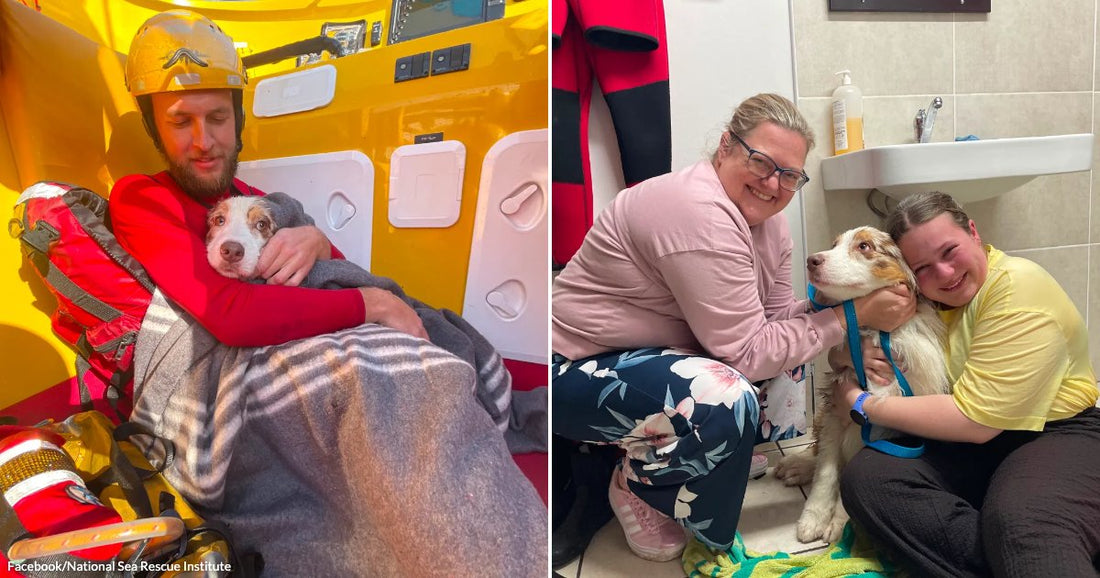
When a family dog named Bean was swept out to sea off Pollock Beach in Gqeberha, South Africa, what could have been a heartbreaking tragedy turned into a story of quick thinking, teamwork, and an emotional reunion that his family will never forget. This real life dog rescue at sea highlights not only the bravery of emergency responders, but also the enormous value of simple safety steps like making sure pets wear collars and up to date identification tags.
Earlier this month, emergency responders in Gqeberha received urgent reports of a dog struggling in the ocean near Pollock Beach. Witnesses had watched in alarm as Bean, an Australian Shepherd, drifted farther and farther from shore. Initial observations estimated that he had been pulled more than 650 feet offshore, battling waves and fatigue as he tried to stay afloat.

At the same time, a duty crew from the National Sea Rescue Institute, or NSRI, was nearby on a routine training exercise. Because they were already on the water, they were able to respond quickly when NSRI’s Emergency Operations Center relayed the call for help. The crew immediately launched a rescue craft and deployed rescue swimmers, treating the report of a dog in distress with the same urgency they would bring to any life in danger.
NSRI rescuers were not the only ones who mobilized. Lifeguards joined the effort as conditions unfolded offshore, adding another layer of expertise to the developing situation. A bystander also headed into the water on a rescue board, doing what they could to help keep sight of the struggling dog until official responders could safely reach him. It became a coordinated, multi group effort anchored by a shared goal: get Bean out of the water and back to safety.

Facebook/National Sea Rescue Institute
According to a news statement from NSRI, when the rescue craft arrived at the scene roughly half a kilometer from shore, an NSRI rescue swimmer entered the water to reach Bean directly. The swimmer secured the exhausted dog and brought him safely aboard the rescue craft. It is a simple sentence, but it represents a moment of intense effort and risk in choppy open water. I found this detail striking because it captures how rescuers are prepared to prioritize an animal’s life with the same care and seriousness that they bring to human rescues.
Once Bean was on the boat, the crew focused immediately on his condition. NSRI reported that Bean appeared hypothermic after his time in the cold ocean. To help him recover, rescuers wrapped him in blankets, and the rescue swimmer used their own body heat to warm the shivering dog. The team then transported him to the NSRI Gqeberha rescue station, where warming procedures continued. It was a thoughtful, methodical response that treated Bean not simply as a lost pet but as a vulnerable patient.

Facebook/National Sea Rescue Institute
Back on land, the mystery of who Bean belonged to was solved quickly thanks to a simple but critical detail. A contact number on his collar allowed responders to identify and reach his family. Once they were notified, his owners headed straight to the rescue station, where they were reunited with their dog in a scene described as emotional. The NSRI statement captured the relief of everyone involved when Bean was finally back in his family’s arms, safe and alive after such a dangerous ordeal.
NSRI’s recap of the incident helps fill in what happened before Bean was swept away. The organization reported that Bean is believed to have broken free of his leash during an afternoon walk and then plunged into the ocean. As his owners and bystanders tried desperately to retrieve him, a rip current caught him and carried him farther out to sea. Rip currents are powerful channels of fast moving water that can pull even strong swimmers away from shore, and they are a known hazard at many beaches around the world. In Bean’s case, that invisible force turned a playful, impulsive jump into the waves into a life threatening emergency.

Facebook/National Sea Rescue Institute
This sequence of events holds a powerful reminder for anyone who spends time at the beach with a dog. Even a well loved, closely watched pet can end up in trouble in a matter of seconds when natural forces like rip currents are involved. Bean’s story underscores how quickly a simple walk can change course, and how dependent we can be on the readiness and skill of rescue teams when that happens.
At the same time, the successful outcome of this sea rescue for a dog shows how everyday precautions can make an enormous difference. In this case, Bean’s collar and the contact information attached to it were essential. Without them, he might have been taken to a shelter or veterinary clinic while his family searched, terrified and uncertain, for news. Instead, a quick phone call led directly to a joyful reunion. The NSRI noted that his adventure serves as a reminder to dog owners everywhere to keep collars and tags updated, since they can turn a frightening separation into a story with a happy ending.
After all the excitement, NSRI reported that Bean returned safely home, where he enjoyed a warm shower and began recovering in the care of his owners. It is a gentle, domestic image that contrasts with the drama of being pulled half a kilometer offshore in open ocean. One moment he was being cradled on a rescue craft, wrapped in blankets; not long after, he was back in familiar surroundings, with people who love him making sure he was comfortable.
Beyond the immediate relief, stories like Bean’s highlight the interconnected roles of beachgoers, lifeguards, and organized rescue services. Bystanders raised the alarm and tried to help. Lifeguards responded from shore. NSRI’s crew, already out for routine training, turned practice into real world action, deploying a rescue craft and trained swimmers to bring a distressed animal to safety. It is a quiet example of community and preparedness working together, and a reassuring reminder that in many coastal regions, dedicated teams are ready to respond not just for humans in crisis, but for animals as well.
For anyone living with pets, Bean’s big adventure carries a few simple but meaningful lessons. Keep leashes secure and be mindful of local water conditions, especially where rip currents are possible. Make sure collars fit properly and that ID tags include current contact details. These habits are easy to overlook on a casual afternoon walk, yet they can shape the outcome when something unpredictable happens. In Bean’s case, those details, combined with the courage and skill of rescuers, turned a frightening day at Pollock Beach into a story of survival, gratitude, and the deep bonds between people and their animals.
Read more at https://www.goodgoodgood.co/articles/south-africa-national-sea-rescue-dog