
Skin And Bones Dog Left Chained In Woods Finally Gets Her Chance
Guest Contributor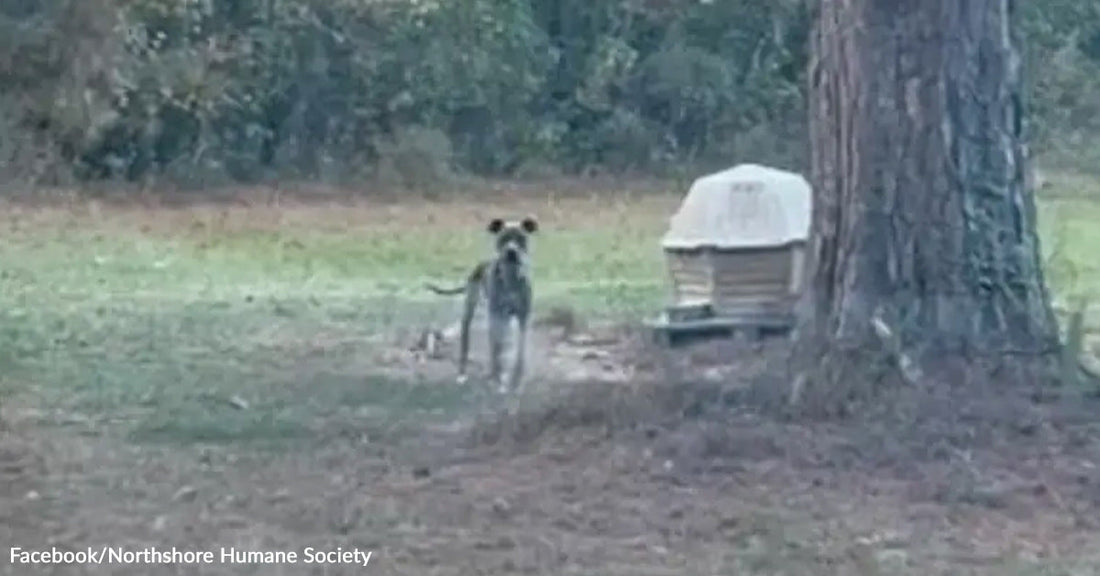
Hidden along a quiet back road in rural Mississippi, a group of friends out for a weekend hike stumbled onto something they never expected to find. Near an abandoned mobile home, surrounded by scattered trash, they spotted what looked like a small, gray figure tethered to a pine tree. As they drove closer, they realized the heartbreaking truth: a skin and bones dog with floppy ears and blue-gray fur had been chained to the tree and left to fend for herself. This chance encounter would become a powerful animal rescue story that changed one dog’s life forever.
The scene in front of them told a clear story of neglect. The dog, later named Draven, had no food or water within reach. A doghouse sat nearby, but the chain attaching her to the tree was too short for her to reach even that minimal shelter. Her frail body was covered in flies, and she appeared exhausted yet alert, as if holding on for help that had not yet come. In that moment, the hikers were confronted with a stark choice between walking away or stepping in.

Knowing there were no humane societies in the immediate area, the group contacted local police to ask what they should do. According to the guidance they received, they were instructed to knock on the door of the abandoned-looking mobile home, and if no one answered, to return after 24 hours and knock again. It was a protocol designed to respect property and ownership, yet the friends could see that time was the one thing this skeletal dog did not have.
They knocked. No one came. The silence from inside the mobile home contrasted with the desperate situation outside. Reluctantly, the hikers followed the instructions as best they could in the moment. They continued on their planned hike, but Draven’s image stayed with them. When they finished and hurried back, they found the dog exactly where they had left her. Still alone. Still chained. Still without food, water, or warmth as the temperature began to drop.
Despite everything she had endured, Draven greeted them with joy. She wagged her tail vigorously and leapt toward them as far as the chain would allow. Her trust in people, even after such apparent neglect, speaks to the incredible resilience some animals display. I found this detail striking, because it illustrates how hope can survive even in very harsh conditions.
Faced with the reality that leaving her there overnight could be life-threatening, the friends made a difficult but compassionate decision. They reached out to an adoption counselor they knew at Northshore Humane Society in nearby Louisiana, described the situation, and decided to take a risk. They gently unfastened Draven from the tree, helped her into their car, and drove her toward safety. On that ride, Draven’s relief was immediate and unmistakable. She licked her rescuers, wiggled her whole body with excitement, and then settled as if understanding that, for the first time in a long while, she was safe and warm.
Once at Northshore Humane Society, a clearer picture of her condition emerged. Staff members quickly saw that she was extremely dehydrated and dangerously underweight. Mikaela Martin, events and marketing coordinator for the organization, shared that Draven weighed just 39 pounds, roughly half of what would be healthy for a dog her size. Vets estimated that she was about four years old and had delivered several litters in the past. Her body reflected a long history of hardship and overuse, layered on top of starvation.
The medical team immediately began careful treatment. They administered fluids to combat dehydration and tested her for heartworms, a common and serious condition in many neglected dogs. Slowly, they introduced food so they would not overwhelm her weakened system. Draven’s recovery involved slow feedings and close monitoring, which is a standard approach when a dog has been severely malnourished for an extended period of time. Each meal, each vet visit, and each weigh-in became a small step toward reclaiming her health.
As her physical strength returned, Draven’s personality emerged even more clearly. Staff at Northshore Humane Society noted that she remained gentle, outgoing, and eager for affection. According to Martin, Draven stayed friendly toward people and other dogs alike. For many, this forgiving nature is one of the most moving aspects of rescue dog stories. She had, in Martin’s words, been “done so wrong,” yet she did not respond with fear or aggression. Instead, she offered trust.
Over the following weeks, Draven transformed. Her blue-gray coat began to shine, and her frame filled out as she gained weight. At each check-in, she inched closer to a healthy size. She eventually moved into a foster home, where her caregivers could offer more one-on-one attention and help her adjust to life as a companion dog rather than a chained animal left outdoors. The foster family’s report was glowing, describing a dog who was sweet, adaptable, and eager to connect with people.
After about three months, Draven’s story reached a turning point. An older gentleman met her and felt an immediate bond. He chose to adopt her, giving her the stable, loving home she had always deserved. Martin shared that the affection was mutual and that Draven adored her new person. When she left Northshore Humane Society, she weighed 51 pounds, a far cry from the 39-pound frame that had once been chained to a pine tree. She departed not only stronger and healthier, but also surrounded by care.
Draven’s journey from an abandoned mobile home yard to a warm living room captures many key themes in animal welfare. It shows how everyday people, simply out on a hike, can become unexpected rescuers. It highlights the critical role of organizations like Northshore Humane Society, which step in to provide medical treatment, behavioral support, and a path to permanent adoption. It also underscores the resilience and capacity for trust that so many dogs retain, even after serious neglect.
Stories like Draven’s can remind communities to remain attentive to animals in distress and to support shelters and humane societies that provide essential services. Even a single phone call, a ride to a clinic, or a temporary foster placement can be the turning point in an animal’s life. Today, Draven is living proof that timely intervention, professional care, and a compassionate adopter can together transform a “skin and bones” survival story into one of genuine recovery and belonging. Read more at https://www.thedodo.com