
🚨Urgent: Missile Strikes Shelter in Ukraine! Rush Emergency Aid!
Historic Coast Guard Rescue of SS Pendleton During 1952 Nor’easter
Guest Contributor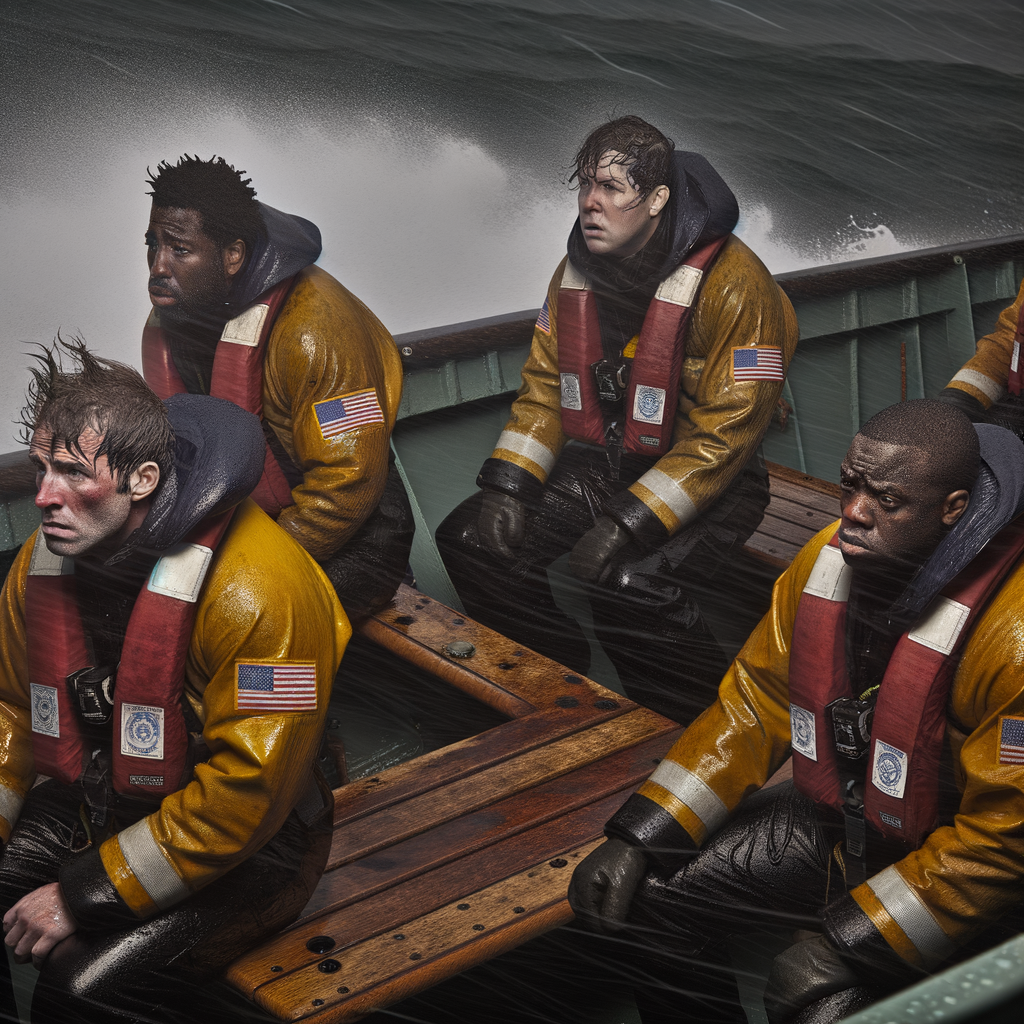
In the heart of a brutal nor’easter on February 18, 1952, the U.S. Coast Guard executed one of the most daring small-boat rescues in its history. The SS Pendleton, a T2 oil tanker, had split in two off the coast of Cape Cod, Massachusetts, leaving 33 crew members stranded in the stern section. The rescue that followed, led by Boatswain's Mate First Class Bernie Webber, is remembered as a testament to courage, seamanship, and sheer determination. This historic event remains a powerful chapter in maritime rescue history and a defining moment for the U.S. Coast Guard.

The Pendleton disaster unfolded amid the fury of a nor’easter that battered the Massachusetts coastline. The tanker broke apart just a mile offshore, its bow and stern separating violently. The captain and seven crewmen were in the forward section, which soon drifted out of sight and was never seen again. The remaining 33 men clung to the stern, which remained precariously afloat atop a sandbar. According to Michael Tougias, author of “The Finest Hours,” the crew faced the terrifying possibility that no one even knew they were there.
Compounding the crisis, another tanker, the Fort Mercer, had also broken apart about 20 miles away. Unlike the Pendleton, the Fort Mercer managed to send a distress call, drawing a significant rescue response that included five Coast Guard cutters, a Navy vessel, and a reconnaissance plane. Thirty-eight of the 43 crew members aboard the Fort Mercer were rescued. The Pendleton, by contrast, had no time to signal for help. It was only when radar operators detected multiple large objects in the water that the scope of the disaster became clear.
With most Coast Guard resources committed to the Fort Mercer, a small crew from the Chatham Lifeboat Station was hastily assembled to investigate the Pendleton. Bernie Webber led the team aboard the CG 36500, a 36-foot wooden motor lifeboat designed to carry no more than 16 people. Accompanying him were Petty Officer Third Class Andrew Fitzgerald and Seamen Richard Livesey and Ervin Maske. As they launched into the stormy sea, they were met with waves reportedly reaching up to 60 feet high.
Webber later described his initial fear in a 1967 radio interview. Facing towering waves and violent winds, he questioned whether to proceed. One wave struck with such force it lifted the CG 36500 into the air, shattered its windshield, knocked Webber off his feet, and destroyed the vessel’s only compass. Despite these setbacks, the crew pressed on, navigating by instinct and limited visibility.
Fitzgerald, tasked with operating the boat’s searchlight, was thrown across the deck by another wave but miraculously landed safely. Later, he risked further injury by crawling into the cramped engine compartment to restart the waterlogged motor, burning his back in the process. These acts of bravery underscored the crew’s resolve to reach the Pendleton and bring its stranded sailors home.
When the CG 36500 finally located the stern of the Pendleton, Webber realized just how close they had come to colliding with it in the darkness. The next challenge was to rescue the crewmen perched high above the sea. The Pendleton’s survivors lowered a rope ladder over the side, and one by one, they began to descend. Some leapt into the lifeboat, while others were pulled from the frigid water. Webber maneuvered with precision, despite the storm’s fury and the boat’s lack of proper navigation tools.
In a vessel built for 16, Webber and his crew managed to squeeze in 32 survivors. Tragically, one crewman fell and was lost during the descent. Moments after the last man was aboard, the stern of the Pendleton rolled and sank, disappearing into the sea. Webber later recalled the eerie sight of the ship’s lights vanishing as it slipped beneath the waves.
For their extraordinary efforts, Webber, Fitzgerald, Livesey, and Maske were awarded the U.S. Coast Guard’s Gold Lifesaving Medal. Their actions are still celebrated as one of the greatest small-boat rescues in Coast Guard history. The CG 36500, now preserved as a museum boat, stands as a tribute to their bravery and the lives they saved.
I found this detail striking: the CG 36500 had no compass, no windshield, and no guarantee of success—yet its crew pressed forward, driven by duty and determination. Their story is not only a remarkable feat of seamanship but also a reminder of the risks taken by those who serve at sea.
This historic rescue continues to inspire, a vivid example of heroism in the face of overwhelming odds. It highlights the Coast Guard’s enduring commitment to saving lives, even when the sea itself seems determined to resist.