
Dog Stops at Every Open Door Because She Still Needs Permission to Feel Safe
Guest Contributor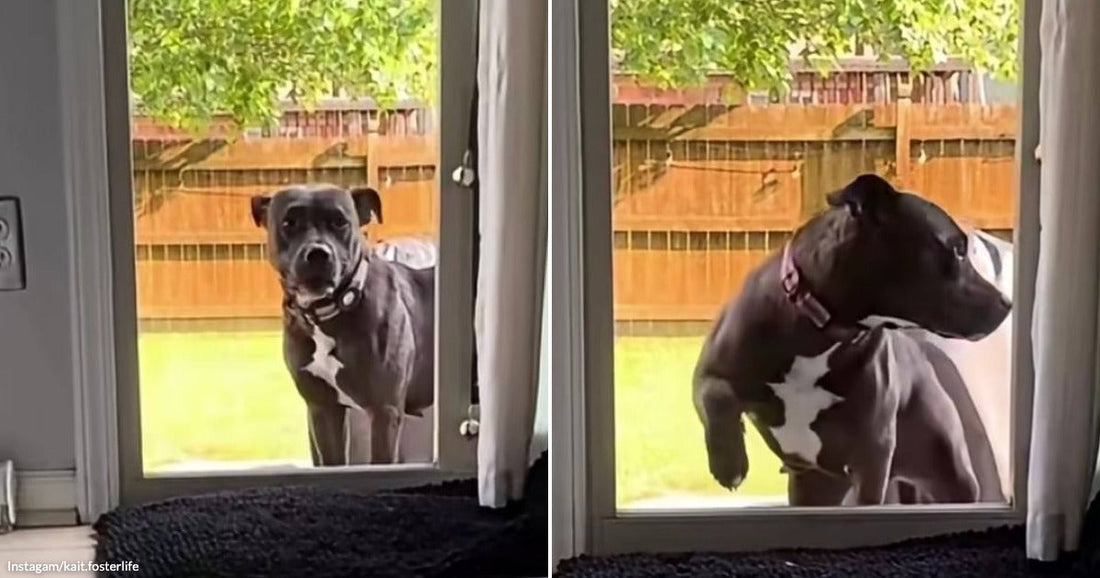
For a rescued dog named Faith, the simple act of walking through an open door became a powerful symbol of trust, healing, and second chances. Her story, shared in a short Instagram video and later described in detail, shows how a foster dog’s hesitation at the door can reveal a lifetime of learned boundaries. It also illustrates how patient, compassionate care can transform a dog that once lived outside into a family companion who finally understands she is safe inside a home.
Faith’s journey began long before that emotional clip was filmed. According to the account, she had reportedly spent around a year and a half without being allowed indoors. For roughly 1.5 years, a door did not represent comfort, warmth, or family life. It was simply a barrier. In that context, her slow approach to the open doorway at her foster home speaks volumes about what she had likely experienced and what she still needed to unlearn. This is the kind of detail that helps people better understand the emotional world of rescue dogs.

In the video, Faith stands just outside the open front door of her foster home, watching the humans waiting quietly inside. The threshold separates two different lives. Behind her lies a past where she was kept outside and excluded from the heart of a household. Ahead of her is a future where a foster family is ready to treat her as part of the home. She does not rush in. Instead, she pauses, looks around carefully, and seems to study the space and the people who are now inviting her in.
That hesitation reveals a foster dog learning that the rules have changed. The foster family does not tug on a leash or pull her forward. They simply wait. The report describes how Faith advanced in small steps, stopping several times as she surveyed her surroundings and watched the people who were now her caregivers. Her body language suggested a dog still processing a new reality. She had an open door in front of her, yet appeared unsure if she was truly allowed to cross it.
This moment captures a common experience for nervous rescue dogs entering a house for the first time. For dogs that have been kept outdoors, porches and thresholds can feel like invisible barriers. Even with kindness on the other side, habit and past restrictions can create a powerful mental block. Faith’s foster dog behavior at the door illustrates how deeply those early rules can take root. It is not that she did not want to be with her people. Instead, it seems she needed time to believe that the invitation was genuine and permanent.

Instagam/kait.fosterlife
Eventually, after studying the scene, Faith takes those final small steps. The report notes that she finally crosses the threshold entirely under her own power. No one pushes or coaxes her aggressively. Her foster family allows her to make the decision when she is ready. That detail is significant because it shows how giving dogs autonomy can build trust. When Faith steps into the house, she is not just obeying a command. She is choosing to enter a space that once felt off-limits.
The emotional impact of that moment becomes clearer when considered alongside her past. After spending so much of her life outside, not being allowed indoors, she needed time to understand that this home was different. The foster family’s patience gave her the chance to observe, process, and slowly shift her expectations. When Faith finally walked into the house, it was not a dramatic leap but a cautious, meaningful crossing that signaled the beginning of a new chapter.

Instagam/kait.fosterlife
Viewers of the video responded strongly to this scene, recognizing that a foster dog stopping at the door can represent deep emotional processing. Comments highlighted the complexity of watching a dog like Faith make sense of kindness after a difficult past. One person remarked that there is something uniquely wonderful about seeing rescue animals discover love. That reaction acknowledges the joy of watching an animal start to trust humans again, while also hinting at the sadness of what they likely endured before.
Another viewer suggested that Faith’s “little brain and heart” were processing this new access. That description aligns with what many behavior experts say about transition periods for rescue or foster dogs. When a dog is suddenly given freedoms that were previously denied, there can be confusion alongside relief. Faith’s careful pacing at the door illustrates this duality. She wants to move forward, yet she also checks and rechecks that this offer of shelter and safety is real.
A third comment summed up the mixed feelings many people experience when they see rescue stories like this. The viewer said they felt both love and hate: love for the triumph of Faith’s progress, and hate for the cruelty that led to her being excluded from a home for so long. This reaction reflects a wider public response to rescue narratives. There is deep appreciation for the individuals and families who open their homes, as well as frustration that such situations arise in the first place.
Faith’s story also underscores how crucial foster homes are in the rescue process. Shelters can provide safety and basic needs, but a home offers an environment where a dog can slowly rebuild trust, learn routines, and experience everyday family life. By letting Faith move at her own pace, her foster family gave her something she may never have had before: the freedom to explore an indoor space without fear of being punished or pushed out.
This kind of patient, gentle introduction can influence a dog’s long-term behavior. When a foster dog learns that doors are not barriers but gateways to comfort, that experience can help them adjust more easily to a permanent home later. Faith’s careful first steps across the threshold may look small on screen, but they represent a major psychological shift. Inside that house, she has the chance to associate human companionship with warmth, safety, and consistency.
Stories like Faith’s resonate because they reveal how resilience and kindness can intersect in very ordinary settings. An open door, a quiet room, a family waiting on the other side: these images speak to the possibility of change for animals who have known exclusion. Watching Faith pause, think, and then finally walk through the door reminds people that healing often unfolds in small, patient moments. Her journey from outside looking in to inside as part of the family offers a hopeful example of what can happen when humans give a dog the time and space to realize she truly belongs.