
Shelter’s Most Shut Down Dog Finally Starts To Trust
Guest Contributor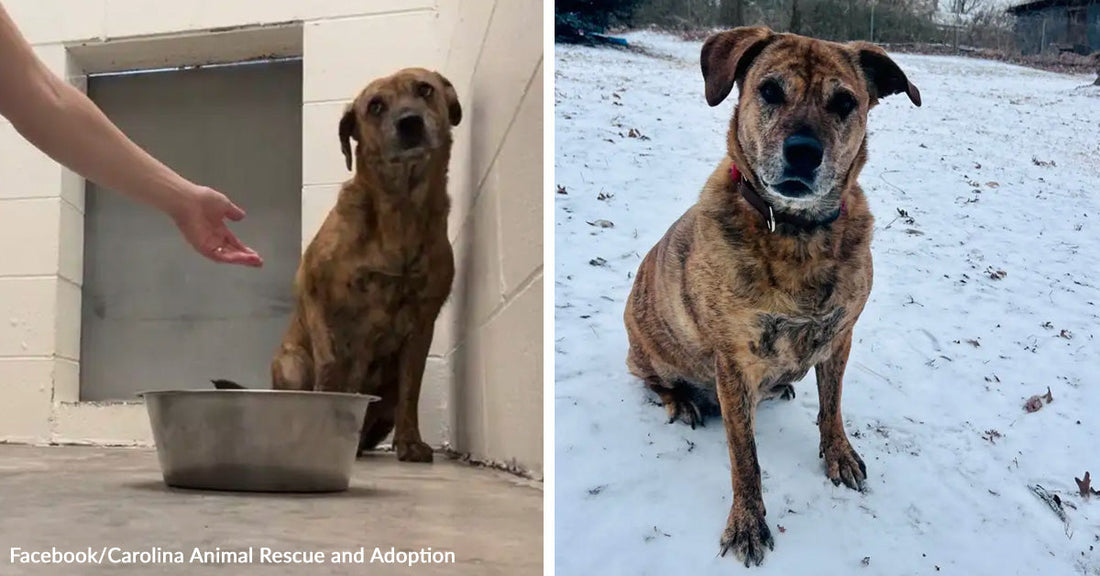
When a dog arrives at a shelter hiding in the corner of her kennel, staff members know they are meeting more than just a shy animal. They are meeting a story they will likely never fully understand. That was the reality for Tuna, the North Carolina dog who became known at her shelter as “the most shut down dog” they had ever seen. Her journey from cowering in fear to rolling joyfully in the grass is a powerful example of how love and patience can transform a deeply traumatized animal, and it is one of those rare rescue stories that feels both heartbreaking and profoundly uplifting.
Tuna came to Carolina Animal Rescue and Adoption, or CARA, in April 2024 after being picked up in rural North Carolina. Staff quickly discovered that “life hadn’t been kind to Tuna,” as the original report put it. Her body was riddled with BB pellets, and she was full of milk, suggesting she had recently been nursing puppies. No puppies were ever found in the area where she was rescued. Vets estimated she was around 8 years old, with severely worn-down teeth and signs that she had given birth to many litters. From the first day, it was clear she had survived a hard life, likely as a breeding dog who had been neglected or worse.

Emotionally, Tuna was just as injured as she was physically. The shelter’s manager, Estela Ruiz, described how Tuna refused to let anyone near her. When staff tried to approach, she would attempt to bite or lunge, then retreat to face the wall and shut the world out. She spent her days turned away from people, seemingly unable to believe that anything good could come from human contact. I found this detail striking because it captures the way long-term fear can become a dog’s whole reality, not just a reaction to a moment.
For many shelters, dogs like Tuna represent some of the hardest and most meaningful work in animal rescue. The staff knew that helping a fearful rescue dog like Tuna trust again would not happen overnight. Instead of forcing interactions, they began a slow, structured process to earn her trust. About a week after Tuna arrived, CARA team member Sonja Lowry noticed a coworker sitting quietly in Tuna’s kennel, gently tossing treats in her direction. Lowry joined them, and together they started closing the distance, tossing treats a little closer each time so Tuna would need to take a few steps forward to claim them.
Even with this careful approach, progress was slow. Tuna eventually came close enough to take treats near the people in her kennel, but she still refused to be touched, and leashing her was out of the question. Staff even tried a fake human hand to see if she might accept a bit of contact that way, but she made it clear she was not ready. Lowry later wrote in a Facebook post that Tuna was the most shut down dog she had ever seen, a statement that highlights just how deep Tuna’s fear ran.
The turning point came not during a planned training session, but because of a medical emergency. Several months into her stay, Tuna developed intestinal issues that required a full veterinary exam and radiographs. To keep everyone safe, staff had to muzzle her before she was sedated. It was a tense, necessary step. Yet something important happened once the sedation began to take effect. As Ruiz explained, when Tuna was finally muzzled and they sat with her waiting for the sedation to kick in, they were able to safely offer her real, gentle petting and belly rubs for the first time. That brief period, with Tuna partially relaxed and the risk of biting removed, created a window for her to feel human touch without having to defend herself.
The team believes this moment was a breakthrough. After that experience, Tuna began to open up to a small group of regular caregivers, especially Lowry. It was as if that one safe interaction helped reset her expectations of what humans might do. From there, they could slowly begin working on practical skills that had once seemed unthinkable for such a fearful dog. Leashing and walking her took time, but they did not rush. With each small success, Tuna’s confidence grew, and so did her bond with the people she now trusted.
In the weeks that followed, Tuna transformed from a dog who would not make eye contact into one who looked forward to daily routines. She started greeting Lowry at the shelter each morning through her kennel window, tail wagging, often with a stuffed toy in her mouth. She began taking those stuffies on her walks, almost like comfort objects she could proudly carry. Lowry described how Tuna’s personality started to shine through, calling her a “silly girl” who would flop down in the grass and roll across the yard, determined to get as dirty as possible on every walk. For anyone who has watched a traumatized animal relax enough to play, it is easy to understand how meaningful that sight must have been.
As Tuna’s world expanded, so did the possibilities for her future. One day, Lowry learned that an adoption application had come in for Tuna. She felt understandably protective after investing so much time and care. Over the next several months, though, she watched that prospective adopter, a woman named Morgan Katz, drive over an hour repeatedly just to visit Tuna. Katz understood that adopting a formerly shut down shelter dog would require patience and time. It took about three visits before Tuna allowed Katz to touch her, but Katz kept coming back, saying she simply could not get Tuna off her mind.
Lowry later said that seeing how much Katz loved Tuna and how willing she was to earn her trust was good for her heart. It validated all the slow work the shelter had done, and it suggested that Tuna’s next chapter would be as gentle as she deserved. Eventually, Tuna went to Katz’s home on a foster-to-adopt basis this past February. That trial run was a success. Almost exactly two years after her rescue, Tuna officially left the shelter for good and joined Katz’s household as a permanent family member.
Today, Tuna lives in a peaceful home with a fenced-in yard and her own dog bed in the living room. Lowry has visited several times and reported that Tuna is settling in beautifully. Katz shared that she did everything on Tuna’s terms, a thoughtful approach that often makes all the difference with dogs who have survived trauma. Tuna now gets excited when Katz comes home, and she watches her closely when she has to leave, as if making sure this person, unlike others from her past, is really coming back. Katz believes Tuna understands that it is her house now.
For the people who followed Tuna’s story, her transformation is more than a single happy ending. It is a reminder that even dogs who seem unreachable can rediscover joy if they are given consistent care, safety, and time. Lowry summed it up simply: she wanted everyone to know that love can change the life of a dog. Tuna had every reason to give up on humans after the horrors she lived through, most of which no one will ever fully know. Yet surrounded by patient shelter staff, and eventually by an adopter willing to move at her pace, she learned that hands can bring comfort instead of pain, that walks can be fun instead of frightening, and that a quiet house can be home.