
Lonely Golden Retriever Finds an Unlikely Best Friend in the Duck Who Helps Him Heal
Guest Contributor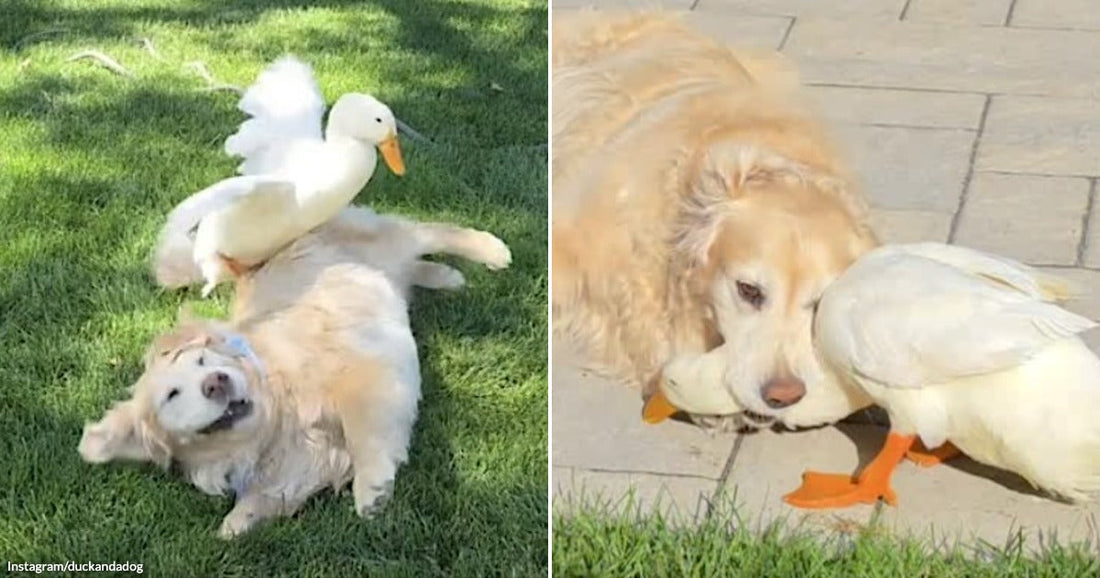
Some animal friendships feel like they were scripted for a feel-good movie. The unlikely bond between a golden retriever with epilepsy and a duck from a Long Island elementary school is one of those stories, and it has all the gentle charm of a quiet miracle. What began as a temporary favor for a local school turned into an emotional support duck story that brightened an entire household and seemed to help a beloved dog rediscover her joy.

Instagram/duckandadog
The story centers on Tori and her husband, Justin Cannarelli, who own a garden center in Brookhaven, a suburb on Long Island. When an elementary school needed someone to take in a duckling that had hatched in a classroom, the couple volunteered, expecting nothing more than a short-term adventure and perhaps a fun attraction for their business. They named the duck Louie and imagined he might bring a little extra charm to the garden center, a living mascot who might amuse customers for a while.
Tori later shared with CBS’s Steve Hartman that she never imagined she would actually own a duck, let alone keep him long term. The plan was simple and temporary. Louie would stay with the Cannarellis for a bit, entertain visitors at the store, then move on if it became impractical. Instead, it quickly became clear that Louie was not just another addition to the garden center. He was a much better fit for their home life, and that decision turned out to be unexpectedly life changing for their golden retriever, Barley.
Barley had already been through a difficult chapter by the time Louie arrived. About two years earlier, the then seven-year-old golden retriever began suffering seizures. Veterinarians diagnosed Barley with epilepsy and put her on medication to stop the seizures. The medicine worked in the way that mattered most. The seizures stopped, which was a huge relief for the family. Yet the side effects were heartbreaking. The once lively, sunny dog became tired and withdrawn.
Tori described how the shift in Barley’s behavior weighed on everyone. The dog who used to radiate classic golden retriever exuberance seemed to dim almost overnight. They saw her sleeping much more than before, moving slowly, and appearing mopey rather than excited. The family worried that this new subdued version of Barley might be permanent, since she would need the medication for the rest of her life. As Tori explained to the Washington Post, it felt like Barley had lost her “goldenness” along with her fun and spunk.
Amid that concern, Louie the duck entered their world. At first, his presence was just a novelty. He had a clear outdoor pen, sheltered from the wind and equipped with a small pool for swimming, a simple but thoughtful setup that allowed him to settle into the Cannarelli home. No one expected him to play a significant role in Barley’s emotional life. He was, after all, a duck living with a family dog in a suburban setting, not a trained therapy animal.
Yet what happened next suggests that companionship itself can be a form of healing. Barley began visiting Louie’s enclosure every morning, drawn to the new arrival with a curiosity that quickly turned into affection. The two animals, separated by species and temperament, began to negotiate a shared routine. They started playing together, engaging in gentle wrestling and lighthearted roughhousing that looked, to outside observers, like the beginnings of genuine friendship.

Instagram/duckandadog
They also demonstrated a quiet comfort around each other that spoke to a deeper bond. Barley and Louie would occasionally steal bites of each other’s food, an endearing habit that would be familiar to anyone who has watched pets work out their own rules. The visible barriers between dog and duck did not seem to matter much. What emerged instead was a kind of easy companionship that made sense to them, even if it surprised just about everyone else.
According to Tori, the transformation in Barley once Louie settled in was striking. The dog started to come back to herself. The listless demeanor that had cast a shadow over her days gave way to tail wags and visible smiles. Barley began showing personality again. The dullness that had seemed to be the price of seizure control was replaced by playfulness that coexisted with her medical reality.
In a lighthearted nod to this shift, Tori began referring to Louie as Barley’s emotional support duck. While that phrase is playful rather than clinical, it captures what many people recognize in their own lives: the profound impact that animal companionship can have on emotional well-being. The presence of a new friend, especially one who brings constant silliness and novelty, can alter the mood of an entire home. That appears to be what happened in the Cannarelli household.
The joy Louie brought was not limited to Barley. By all accounts, the duck infused the home with an almost endless stream of humor and delight. There was Louie’s waddling personality, his daily routines, and his unconventional antics. This steady flow of light moments seemed to ripple outward, lifting human spirits as well. As the atmosphere in the home grew lighter and more playful, Barley’s demeanor changed alongside it. It is difficult to isolate exactly which part of this environment made the difference, but the timing of Louie’s arrival and Barley’s resurgence are closely linked in the family’s telling.
The Cannarellis’ story has now reached a wider audience, helped in part by coverage on CBS and in the Washington Post, as well as the pair’s presence on social media. People can follow Louie and Barley’s daily adventures on Instagram, where their interspecies friendship continues to charm viewers. Many who encounter their story see it as a reminder that healing does not always arrive in expected forms. Sometimes it waddles in on webbed feet and takes up residence in a backyard pen.
I found this detail striking: the family initially thought they were solving a small, practical problem for a school that needed a home for a duckling. In the process, they discovered that their act of kindness would loop back to help them in a very personal way, improving their dog’s quality of life and brightening their own days. It highlights how acts of care, even when they seem small or short term, can have unexpectedly deep effects.
Stories like this one fit within a broader pattern that many pet owners recognize. Whether it is a dog and a duck, a cat and a rabbit, or a person and an animal companion, relationships across species can carry real emotional weight. While scientists continue to study the exact mechanisms of how animals support human mental health, the everyday evidence appears in homes like the Cannarellis’ when a once-drooping golden retriever starts wagging her tail again because a new friend showed up.
The friendship between Louie the duck and Barley the golden retriever also speaks to how resilience can sometimes be sparked by surprise. There was no elaborate therapy plan, only a family saying yes to a duck that needed a place to live. Out of that choice came a story of renewed energy, revived personality, and a reminder that comfort can come from the most unexpected corners of life.