
His Grandma No Longer Recognized Family Until a Baby Doll Sparked a Precious Moment
Guest Contributor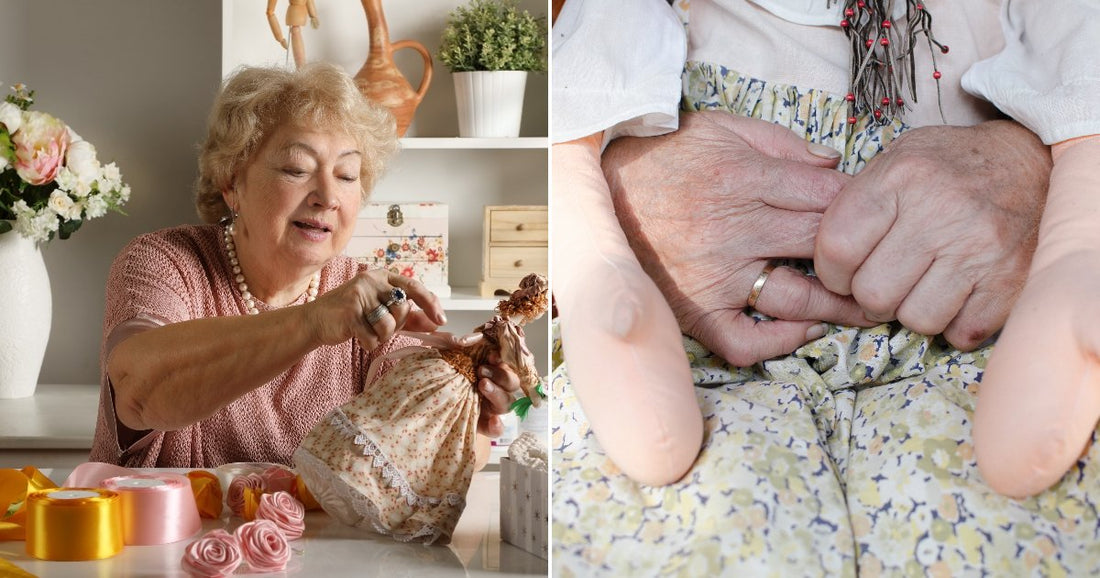
How can something as simple as a lifelike baby doll bring comfort to a person living with dementia? The story of Grandma Alice and her grandson Chris Stewart offers a powerful glimpse into how dementia therapy dolls can soothe, reassure, and even briefly reconnect memory care residents with the people they love.
According to the original report, Chris grew up very close to his grandmother, Alice. His mother was a single parent who often traveled for work as a flight attendant, so Grandma Alice became his steady source of care at home. She was the one who stepped in, watched over him, and helped anchor his childhood. As time passed, though, Alice began misplacing everyday items and repeating questions, early signs that something was not right.

Eventually, Chris’ mother told him what was happening. She explained that Alice was suffering from dementia and asked him to be patient, knowing that the changes they were seeing were not intentional. As Alice’s condition progressed, the family faced a heartbreaking decision. Chris’ mother chose to move Alice into a memory care community where she could receive the support and supervision she now needed. Like many families in similar situations, they did their best to balance safety and dignity, comfort and independence.
Chris went on to build his own life in Boise, Idaho, with a career in radio and real estate. He visited home often, but each trip brought more evidence of Alice’s decline. At one point, his mother shared that Alice no longer recognized anyone and that confusion had made her frightened and angry. These are familiar challenges for many families coping with dementia. When recognition fades and the person’s inner world feels fragmented, daily life can become distressing for them and for the people who love them.

On one visit, Chris and his mother decided to bring a baby doll to Alice in the memory care center, hoping it might offer some comfort. They placed the doll in her hands and told her, “Her name’s Susie.” In a moment that Chris would never forget, everything shifted. Alice’s eyes seemed to clear. A smile slowly tugged at her lips. She looked at him and exclaimed, “Chris! It’s wonderful to see you!” For a few precious moments, it felt as if the grandmother he remembered had returned.
This experience stayed with him. Some time later, while scrolling through Facebook Marketplace, Chris noticed a listing for three realistic baby dolls priced at 200 dollars each. The dolls immediately reminded him of Alice and that brief, beautiful connection they had shared with the help of little Susie. These were not just toys to him. They represented a way to reach people living in memory care who might be scared, agitated, or lonely.

He purchased all three dolls and decided not to keep them for himself. Instead, he shared his grandmother’s story online and offered the dolls to any local memory care facility that could use them. The reaction was swift. Responses came in quickly and within days each doll had a new home in a Boise area care community. Staff soon began telling him about noticeable changes among the residents who received them. They described calmer moods, more focus, and moments of joy that had become rare.
Hearing these responses, Chris felt called to do more. He set up a fundraiser on TheGoodNetworkOrg.org with a goal of 3,000 dollars. That amount, he believed, would be enough to provide at least one dementia therapy doll to every local memory care facility. He also mentioned the effort to a local TV anchor, which helped raise awareness of the project and its purpose. The community stepped up in a big way. Instead of 3,000 dollars, Chris ended up raising more than 10,000 dollars for the cause.
The impact has been tangible. At The Pointe at Meridian memory care facility in Boise, each of the 10 residents now has a doll of their own. The director, Karen Zanelli, shared that these dolls help residents remain calm and alert. That observation fits with what many care professionals have seen: for some people with dementia, holding a baby doll can reduce anxiety, offer a sense of responsibility, and rekindle familiar nurturing instincts.
Chris has described the dolls as filling a void that dementia can create. When cognitive changes strip away roles that once gave life meaning, such as parenting, working, or caring for others, a person may feel unmoored. A lifelike baby doll cannot solve the underlying disease, yet it can restore a feeling of purpose. Residents cradle, comfort, and care for their dolls as if they were real infants, engaging in deeply familiar behaviors that can feel both soothing and empowering.
I found this detail especially striking: in the story of Grandma Alice, the doll did not just calm her. It seemed to briefly open a door between her inner world and the reality around her, long enough for her to say her grandson’s name and share a genuine smile. Families affected by dementia know how extraordinarily meaningful a moment like that can be. It is not a cure, and it may not last long, but it can bring enormous emotional relief.
The broader lesson from this story is that seemingly small interventions can carry immense emotional power. A therapy doll is not a high-tech device or a complex medical tool. It is simple, familiar, and rooted in human connection. For some residents in memory care, dolls can ease agitation, support more peaceful daily routines, and create opportunities for staff and family members to interact with them in gentler, more positive ways.
The article also highlights the role that one person’s compassion can play in improving life for many others. Chris started with three dolls and a heartfelt social media post. That modest beginning has grown into a project that now brings comfort to residents across multiple Boise facilities. Each time he hears another story about a resident relaxing, smiling, or reconnecting while holding a doll, he is reminded of Alice and the brief return of the grandmother he once knew so well.
As the number of people living with dementia continues to rise, stories like this one underscore the importance of creativity, empathy, and community support in memory care. Not every approach works for every person, but efforts that prioritize dignity, comfort, and emotional security can make a real difference. For some residents, a doll in their arms is more than an object. It is a source of calm, a focus for their attention, and a reminder that they still have something to give and someone to love.