
Microplastics May Be Changing the Color of a Huge Stretch of the Pacific Ocean
Guest Contributor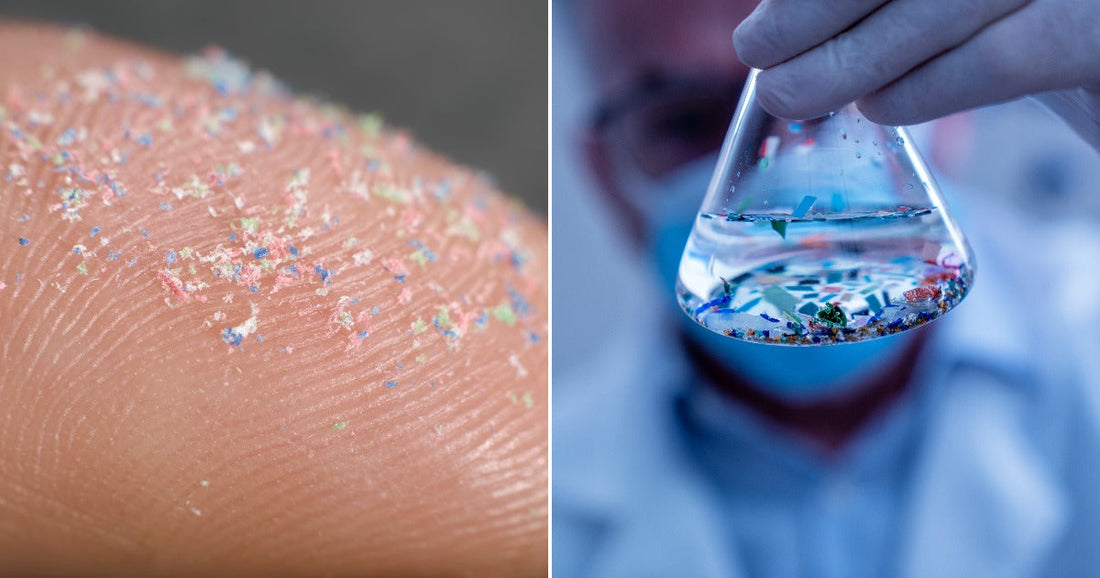
Far from any coastline, between Hawaii and California, the Great Pacific Garbage Patch is quietly changing the very color of the ocean. Over the past two decades, satellite data show this vast region becoming noticeably bluer and greener, shifting toward a strange cyan hue. According to new research, growing concentrations of microplastics in this massive gyre of marine debris may be responsible, a finding that adds a new and unsettling dimension to how plastic pollution is reshaping the seas.
This area of the Pacific is often imagined as floating islands of bottles and bags, but scientists stress that this picture is misleading. The Great Pacific Garbage Patch is more accurately a sprawling soup of plastic fragments. It contains everything from discarded fishing nets to food and drink packaging, yet much of it has been broken into microplastics so small that many cannot be seen with the naked eye. The study behind this latest discovery focuses not on what people can see from a boat, but on what satellites detect from space, and what that reveals about the ocean’s changing optical fingerprint.

Researchers from the University of Bergen in Norway set out to close a scientific gap. Experts have long understood that the color of the ocean reflects what is in the water, including phytoplankton and suspended particles. However, the specific role of microplastics in altering ocean color had not been carefully quantified. Ocean optics researcher Dan Koestner and his colleagues wanted to know whether microplastics could leave a detectable signal in satellite imagery, and if so, what that signal might look like over time.
To answer this, Koestner began in a surprisingly tangible way. He created “smoothies” from plastic waste, blending and processing plastics to mimic the small particles that dominate polluted ocean regions. He then tested how these mixtures interacted with light, using controlled lighting and lasers to measure how microplastics scatter and reflect different wavelengths. These experiments yielded a spectral fingerprint, a distinct pattern in the way microplastics affect blue and green light.

Armed with this lab data, the scientists turned to space. They analyzed 20 years of satellite observations of the Great Pacific Garbage Patch from 2002 to 2022. The results showed a significant brightening in the blue and green wavelengths of light compared with surrounding waters. The combination of those changes would make the sea surface appear more cyan, at least from a satellite perspective. According to the study, this brightening was not random. It aligned closely with what the team would expect to see if microplastics were present in large amounts.
Still, the researchers did not stop at correlation. They ran simulations to explore different possible explanations for the color shift. Natural variability in phytoplankton communities was one candidate. Phytoplankton often drive seasonal and regional changes in ocean color, and changes in their abundance or composition can affect how blue or green the water appears. Yet when the team modeled these biological changes, they did not fully match the distinct cyan pattern emerging in the satellite data.

It was only when they added plastics into their simulations that the probability of the observed color change rose dramatically. Study author and PhD candidate Shea Cheatham noted that the analysis revealed a particular spectrum of light that microplastics tend to produce, one that aligned with what satellites were seeing in and around the Garbage Patch. According to the researchers, these results suggest that microplastics are a likely driver of the observed brightening, though they are careful to emphasize that further work is needed to confirm this definitively.
The next step is both straightforward and challenging. To prove that the cyan color change is directly and exclusively caused by plastics, scientists need direct measurements from the water itself. That means traveling to the Great Pacific Garbage Patch, collecting samples, and comparing on-the-spot optical data with satellite readings. Such expeditions are time consuming and expensive, especially in remote ocean regions, which is part of why satellite detection techniques are so appealing.
If confirmed, this work could offer a powerful new tool for monitoring plastic pollution. Microplastics are notoriously difficult to measure. Traditional methods often involve sampling seawater with nets, filtering it, and painstakingly counting or analyzing particles in a lab. This process is laborious and can capture only a snapshot of a particular place and time. A satellite-based approach would not replace these methods but could complement them by giving a broader picture of where microplastics accumulate and how concentrations change across seasons and years.
The stakes are high. Scientists estimate that up to about 13 million metric tons of plastics flow into the ocean each year, yet only a small fraction has been found floating at the surface, roughly 250,000 tons. Researchers describe this discrepancy as the “missing plastic paradox.” One reason for the gap is that larger items fragment into smaller and smaller pieces, eventually becoming microplastics that are hard to detect and track. Study authors note that there is still significant uncertainty about where all of this plastic ends up and how it moves through marine ecosystems.
What is clear is that microplastics can cause harm on many levels. They can be ingested by marine animals and then travel up the food chain, eventually reaching seafood on human plates. They can also absorb and transport pollutants, potentially introducing contaminants into organisms and food webs. In addition, the study notes that microplastics may interfere with processes related to the movement and storage of carbon in the ocean, although the complexities of those interactions are still being explored.
Over the last decade, the ability to detect plastics with satellites and drones has improved significantly, but microplastics remain a special challenge. They are tiny, often widely dispersed, and tend to be mixed with phytoplankton and natural debris. Marine biologist Richard Thompson, who was not involved in the research, points out that picking out a plastic-related signal from such a complex background is extremely difficult. This is why the new findings are important. If microplastics can be tracked indirectly through distinct changes in ocean color, that approach could offer a faster and more cost-efficient alternative to counting pieces one by one at the surface.
There is a stark, almost symbolic element to this work. The ocean’s color has long been a visual shorthand for health and purity, a deep blue expanse that many associate with untouched nature. The idea that accumulating plastic debris might now be tinting that blue into cyan at a basin scale is unsettling. Koestner suggests that if microplastics are building up to the point where they can alter ocean color itself, that should be understood as a serious warning sign of how far plastic pollution has progressed.
Ultimately, this research does not introduce a new problem so much as provide another lens through which to see an existing one. Plastic pollution has already been documented on beaches, in deep sea sediments, and in marine life. Now it may be visible from orbit not simply as larger floating objects but as a subtle change in hue across thousands of square kilometers. For those working to measure and reduce plastic in the environment, being able to detect that change from space could become a crucial part of understanding the true scale of the issue and how it evolves in the years ahead. Read more at https://www.cnn.com/2026/11/05/climate/great-pacific-garbage-patch-changing-color-microplastics-pollution