
Hundreds of Hidden Baby Deer Are Being Saved From a Deadly Spring Threat By Drones
Guest Contributor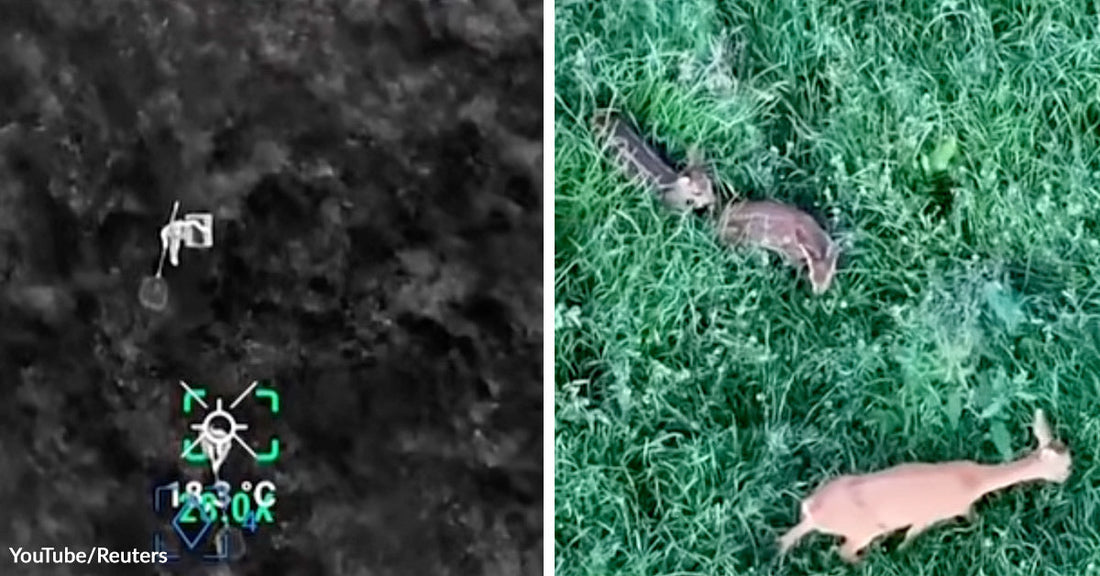
In the quiet meadows of Bavaria, an unusual partnership is taking shape between cutting-edge technology and vulnerable wildlife. A local rescue group is using thermal imaging drones to find and save fawns hidden in tall grass before tractors and mowing machines begin their work. This gentle, practical use of drone technology is preventing tragic mower deaths and turning what was once a heartbreaking springtime routine into a story of hope. For anyone interested in drones for good, wildlife protection, or innovative farming solutions, this project offers a powerful glimpse of what is possible.
Across Germany each spring, thousands of baby deer are unintentionally killed by agricultural equipment. Fawns are born with a survival instinct that works beautifully against natural predators but fails completely against heavy machinery. When they sense danger, they do not run. Instead, they freeze and press themselves into the grass, relying on their camouflage. Farmers moving quickly through large fields often have no chance to spot them. What appears to be an empty meadow can conceal many living, breathing animals holding perfectly still.

For the Bavarian volunteers of Rehkitz-Rettung Mangfalltal, this reality used to mean long, exhausting days walking shoulder to shoulder through fields before mowing season began. The group, founded in 2020, set out to search meadows on foot, hoping to locate fawns, baby hares, and ground-nesting birds before the tractors arrived. It was a labor of love, but it was also extremely time-consuming and limited by how many people could physically walk the land at dawn.
That changed when the organization began using thermal imaging drones to scan the fields from above. Equipped with specialized cameras, these drones can detect tiny differences in temperature. A fawn’s small, warm body shows up clearly against the cooler background of early-morning grass. Instead of hoping to spot a brown-and-white body hidden in shadows and vegetation, rescuers now look for distinct heat signatures that stand out on the drone’s display.

YouTube/Reuters
The results have been dramatic. In earlier years, the group was able to rescue only about 10 to 15 fawns each season. Since integrating drone technology into their workflow, that number has soared to between 300 and 350 fawns saved every year. The scale of their impact has transformed. The same dedication and compassion now reach far more animals, simply because a drone can cover in minutes what used to take a team of volunteers hours to search on foot.
The devices in use include DJI drones with thermal cameras and artificial intelligence features that help operators detect wildlife with greater accuracy. In one case study, Rehkitz-Rettung Mangfalltal used a DJI Matrice 4 Series drone to carry out their field searches. Flying at an altitude of around 80 to 100 meters, pilots scanned the meadows from above, watching their screens for small, bright spots signaling a living animal in the grass. The drone’s precision positioning controls allowed them to hover directly over a heat source, verify it with a visual camera, and confirm whether it was a fawn or another creature in need.

YouTube/Reuters
Once the drone identifies a heat signature, its location is recorded with remarkable precision. The drone’s GPS can pin each spot with centimeter-level accuracy. That pinpointed position is shared instantly with the ground team, who head directly to the marked location instead of searching blindly. In practical terms, this means volunteers spend far less time wandering through fields and far more time ensuring that individual animals are safely removed from danger.
The process does not end with the detection. The German case study includes a video step-by-step guide that walks viewers through the entire fawn rescue operation. It explains how the drone pilots plan their flights, how they interpret what they see on the thermal camera, and how they coordinate with ground teams. It also covers what to do once a fawn is found, from gentle handling to safe temporary relocation so that its mother can return once mowing is complete. This careful attention to procedure reflects a respect for the animals’ well-being as well as for the farmers’ needs.
One striking aspect of this project is how it reframes the role of drones in public imagination. Many stories about drone use focus on conflict, surveillance, or commercial deliveries. Here, the technology is quite literally life-saving. The same principles that allow drones to inspect power lines or survey disaster areas are now being applied to protect silent, unseen creatures hidden below. It is a clear, tangible example of how drones can be a force for compassion as well as efficiency.
This initiative also highlights how technology can strengthen the relationship between farmers and wildlife advocates. Farmers want to protect their fields and their machinery, but many also care deeply about the animals that share their land. When groups like Rehkitz-Rettung Mangfalltal arrive with thermal imaging drones and a coordinated rescue plan, they offer a practical solution that respects both agriculture and animal life. Knowing that meadows have been carefully scanned before mowing allows farmers to proceed with confidence, aware that hidden fawns and other vulnerable animals have been given a chance to survive.
Drones supporting animal rescue are not limited to open fields and fawn searches. Other stories show drones being used to monitor coastlines, assist swimmers in distress, or help locate landmines so they can be safely removed. In the Bavarian example, the technology simply fits the landscape perfectly. Wide, grassy meadows, early-morning cool air, and the tiny warmth of concealed bodies all combine to create conditions where thermal cameras are highly effective. The careful planning, responsible flying, and close cooperation with local communities bring it all together.
I found the scale of the change especially striking. Moving from a dozen rescues each year to hundreds is not just a small improvement. It suggests that many lives were previously lost simply because no feasible method existed to search so thoroughly. Drone-assisted wildlife rescue will not eliminate every risk to young animals in agricultural regions, but it clearly reduces one of the most preventable dangers.
As the volunteers of Rehkitz-Rettung Mangfalltal continue their early-morning flights over misty Bavarian fields, every bright spot on their screens represents a chance to rewrite the story of springtime in those meadows. Where there might once have been silent losses, there are now carefully planned rescues and safe returns to the wild. It is an inspiring reminder that when people combine compassion, cooperation, and technology, even the smallest lives can benefit in very real and measurable ways. Read more at https://www.goodnewsnetwork.org