
🚨Urgent: Missile Strikes Shelter in Ukraine! Rush Emergency Aid!
How Wearable Health Tech Helped Detect Casey Cattie’s Cancer Early
Guest Contributor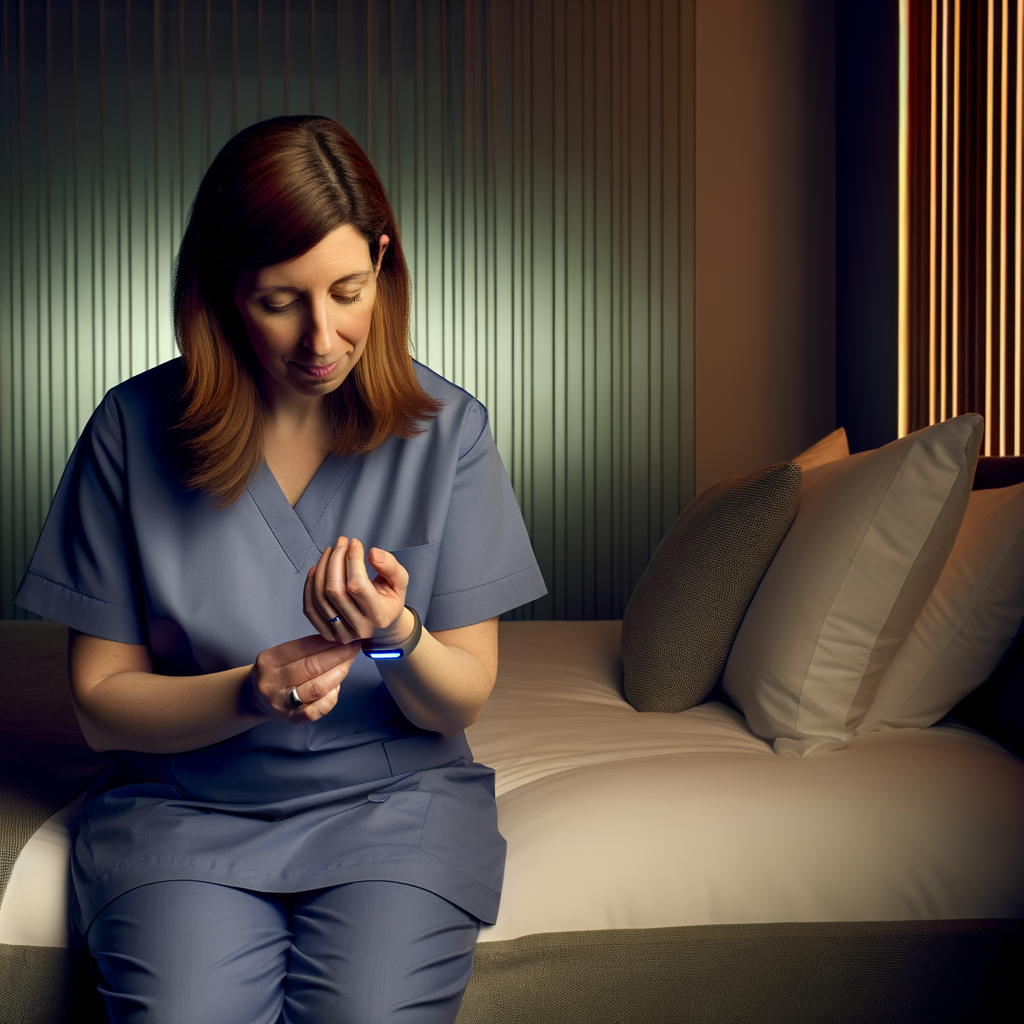
When Casey Cattie, a 30-year-old pediatric nurse from Philadelphia, began experiencing drenching night sweats last August, she didn’t immediately suspect something serious. But her wearable device did. The Oura Ring, which she wore to track her menstrual cycle and overall health, repeatedly alerted her that she was showing signs of major illness. While she initially dismissed the warnings, assuming hormonal fluctuations or other benign causes, her symptoms persisted and worsened. This story of wearable technology detecting illness before traditional medical diagnostics underscores the growing role of smart devices in personal health monitoring.
Wearable health tech detecting illness is one of the key takeaways from Cattie’s journey. Despite visiting multiple doctors and undergoing extensive testing—including bloodwork, a colonoscopy, and an endoscopy—no one could pinpoint the cause of her night sweats and low-grade fevers. Her iron levels were low, but otherwise, results appeared normal. Even a hematologist oncologist expressed low suspicion of cancer due to the absence of enlarged lymph nodes, a common sign of lymphoma. Yet, the Oura Ring continued to flag concerning changes in her temperature patterns.

According to the article, Cattie’s condition took a dramatic turn during a trip to Iceland to celebrate her 30th birthday. While walking around Reykjavik, she felt unusually winded and struggled to breathe, despite being at sea level. As her symptoms escalated, she found herself unable to walk even short distances without stopping to catch her breath. Eventually, she sought emergency care and was diagnosed with a massive pleural effusion—over a gallon of fluid had accumulated in her chest, making it difficult to breathe. Doctors in Iceland suspected cancer and recommended further testing upon her return to the United States.
Back home, Cattie’s condition deteriorated again due to recurring fluid buildup. A PET scan and lymph node biopsy confirmed Stage 4 Hodgkin lymphoma, a form of cancer that originates in white blood cells and often spreads through lymph nodes. She began chemotherapy while still hospitalized and is now more than halfway through a 12-round treatment plan involving both chemotherapy and immunotherapy. Despite the seriousness of her diagnosis, recent scans have shown promising results—her tumors, once widespread throughout her chest, lungs, esophagus, and spleen, have cleared significantly.
I found this detail striking: the Oura Ring had picked up on physiological changes months before doctors could find any evidence through conventional testing. This raises important questions about the role of wearable devices in early illness detection. Michael Snyder, Ph.D., head of Stanford’s Center for Genomics and Personalized Medicine, explains that while wearables may not always provide perfectly accurate temperature readings, they can detect shifts from a person’s baseline. These deviations, even when subtle, can be early indicators of illness. Snyder likens this to a car’s check engine light—it may not specify the problem, but it signals that something is wrong and warrants investigation.
Wearable tech detecting cancer is a concept still in its early stages, but stories like Cattie’s suggest its potential. Devices like the Oura Ring and Apple Watch are already adept at monitoring heart rate and sleep patterns. Research from Snyder’s team has shown that wearables can detect respiratory infections such as COVID-19 before symptoms appear, based on changes in heart rate and other metrics. While these tools cannot diagnose conditions or determine their cause, they can alert users to seek medical advice when something seems off.
Cattie’s experience also highlights the importance of self-advocacy in healthcare. Despite reassurances from multiple specialists, she continued to pursue answers because she felt something was wrong. “I went eight months with doctors who missed my diagnosis,” she said. “If you have a gut feeling something is wrong, you need to trust that gut feeling.” Her story serves as a compelling reminder that while medical professionals are essential, patients must also listen to their own bodies and persist when concerns go unresolved.
Now on leave from her job due to the immunosuppressive effects of chemotherapy, Cattie continues to wear her Oura Ring. It still detects mild signs of illness following treatment, aligning with how she feels physically during those periods. Her case demonstrates how wearable health monitoring can complement traditional care, especially when symptoms are vague or intermittent. Although these devices are not diagnostic tools, they can provide valuable data that encourages earlier medical evaluation.
Hodgkin lymphoma, according to the American Cancer Society, is expected to affect around 9,000 people in 2025. It is more common in young adults but can occur at any age. Symptoms often include fever, night sweats, and swollen lymph nodes, though some cases, like Cattie’s, may present more subtly. Treatment typically involves a combination of chemotherapy, immunotherapy, radiation, or targeted therapy, depending on the stage and spread of the disease.
Cattie’s journey from unexplained night sweats to a Stage 4 cancer diagnosis—and her wearable device’s role in alerting her early on—offers a powerful example of how technology and intuition can work together in managing health. Her hope is that others will be inspired to advocate for themselves and take persistent symptoms seriously, even in the face of medical uncertainty.