
Dog Plunges 60 Feet Into the Sea and Somehow Survives the Fall After Daring Rescue
Guest Contributor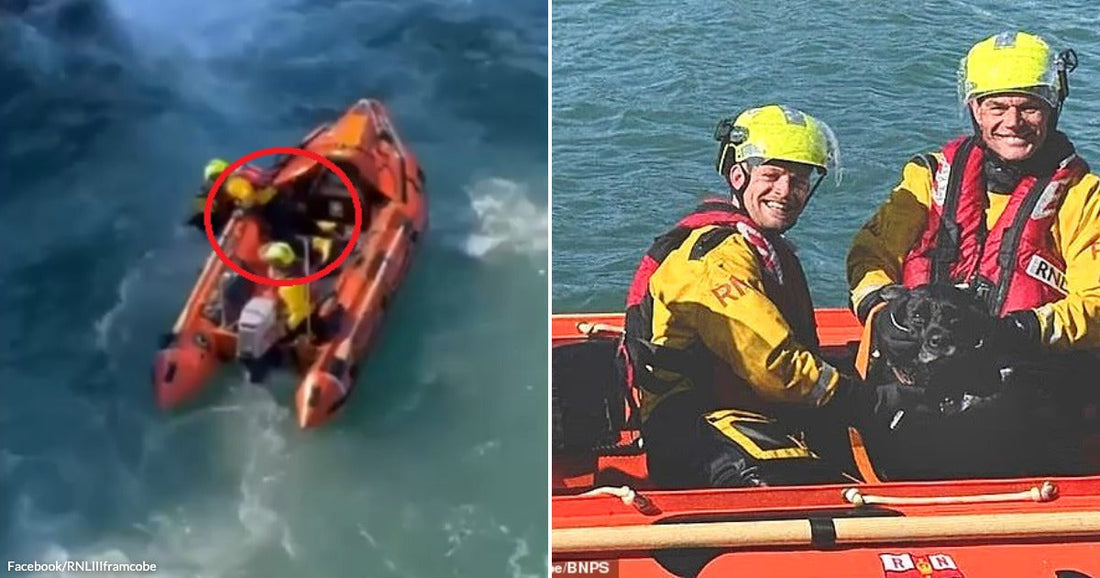
In a dramatic coastal rescue that captured the attention of bystanders and animal lovers alike, a pet Labrador named Bailey was saved after plunging 60 feet from a cliff into the sea off Ilfracombe in Devon. What began as a frightening accident on a coastal path turned into an uplifting story of teamwork, quick thinking, and the strong bond people feel with their animals. The scenes of the stranded pet Labrador being brought safely back to shore highlighted both the dangers of the coastline and the dedication of the Royal National Lifeboat Institution crews.
According to reports, Bailey, a black Labrador, had been walking along a clifftop path with her owner, Chris Carter, when she slipped her collar. She had been spooked by another dog along the path and in the confusion lost her footing. The fall sent her tumbling roughly 60 feet down the cliffs into the choppy water below. In the chaotic moments that followed, Bailey managed to clamber out of the sea onto nearby rocks, but the powerful waves and hazardous terrain left her stranded with no clear way back to safety.

Her owner raised the alarm while watching from above, unable to climb down the dangerous cliff face to reach her. Coastguards responded and tried initially to approach Bailey from the top of the cliff. The lower section of the cliff was cut away, however, and the sharp drop and unstable ground quickly made that route impossible. The situation underscored how treacherous coastal cliffs can be even for trained responders, and it illustrated why emergency services so often urge the public not to attempt risky rescues themselves.
With the route from above ruled out, attention turned to the sea. A crew from RNLI Ilfracombe deployed their inshore lifeboat and navigated as close to the jagged rocks as they safely could. The conditions were difficult. The sea was rough, the waves were strong, and the rocks formed a challenging barrier between the lifeboat and the stranded dog. Two crew members focused on keeping the vessel safely off the rocks, continually judging distance and swell so that they would not be pushed onto the cliff face.

Facebook/RNLIIIframcobe
At that point, lifeboatman Richard Woolmer entered the water to reach Bailey. Woolmer, a self-employed builder who volunteers as crew and is 51 years old, later explained that he felt well prepared for the task in spite of the conditions. He has two Labradors of his own and said that he was comfortable around dogs and happy to go to her. He could not see Bailey immediately because the cliff was cut away at the bottom, but he soon heard her bark echoing across the rocks.
Woolmer described the sea as very rough with many rocks around him, which meant he had to rely on careful judgment and experience. He enjoys sea swimming and stated that he had full confidence in the rest of the crew. Without that trust he would not have put himself at risk in such challenging circumstances. Drawing on what he called the physical side of his background, including years of rugby, he picked a route between the rocks, using a large V-shaped gap as a natural channel through which he could swim and then clamber up to where Bailey was standing.

Facebook/RNLIIIframcobe
Once he reached the ledge, he took a moment to reassure the frightened Labrador and build a bit of trust. He and Bailey quickly made friends as she allowed him to approach and handle her. Bailey was wearing a harness, which proved crucial. Woolmer used the harness to secure and guide her so that she would not slip or panic as they headed back towards the lifeboat. He then called back to the crew that they were coming, giving them a clear signal to prepare for their return through the swell.
Holding Bailey carefully, Woolmer swam away from the rocks and back towards the inshore lifeboat through the stormy sea. The two waiting crew members maintained their position as close as they safely could and then helped haul both rescuer and dog aboard. For a moment, the focus was simply on ensuring that everyone was securely on deck and clear of the cliffs. Onlookers watching from the clifftop erupted in cheers as they saw Bailey reunited with people who were bringing her back to her relieved owners.
Back on shore, Bailey’s ordeal finally began to ease. She was taken to a local restaurant, where she reportedly recovered enough from the shock to enjoy some toast as a small comfort after such a frightening plunge. Her owners later contacted the RNLI to express their deep gratitude to the lifeboat crew who had saved their beloved dog. They shared that Bailey was fine, although subdued and exhausted, yet still had enough energy to accept her snack, a small but telling sign of her resilient Labrador spirit.
An RNLI spokesperson explained that the lifeboat had gone as close to the rocks as possible, with one of the three crew members swimming the rest of the distance while the others maintained control of the vessel. The description emphasized how coordinated the rescue had to be. The crew member then climbed up to reach Bailey, grabbed hold of her, and swam back with her in his arms. Both were helped back onto the boat before making the short journey to the lifeboat station, where Bailey was finally reunited with her family. The sequence of events painted a clear picture of both the risks and the professionalism involved in such animal rescue efforts at sea.
RNLI Helm Stuart Carpenter used the incident to remind the public about critical safety advice. He restated that the RNLI is a charity dedicated to saving lives at sea and that crews will always launch to animals in difficulty if doing so prevents owners from putting themselves in danger. His guidance was clear. If someone sees a person or a pet in trouble near the water, they should not try to rescue them directly if it involves serious risk. Instead, they should call 999 and ask for the Coastguard, allowing trained teams with the right equipment to respond safely.
This cliff fall Labrador rescue showed both how quickly an everyday walk along the coast can turn hazardous and how vital organizations like the RNLI are in responding when things go wrong. It also highlighted the special connection many people feel with their dogs. I found it striking how a combination of professional skill, practical training, and simple affection for animals came together in one focused moment as Woolmer swam toward Bailey. From the tension on the cliff edge to the cheers when she reached the lifeboat, the story was a reminder of how relief and gratitude can follow even the most frightening of coastal emergencies when people work together calmly and safely.