
Reptiles Are Found Packed Inside Taped Pillowcases and Weeks Later Eight Tiny Lives Emerge
Guest Contributor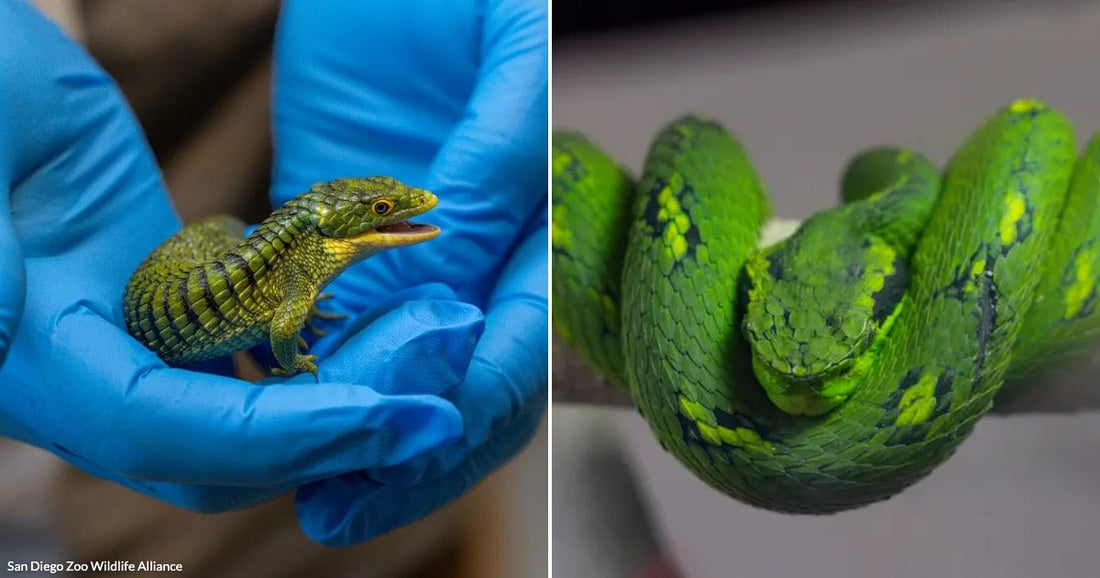
The recent story of eight lizards born at the San Diego Zoo after a major wildlife seizure at the border carries a complex mix of relief, concern, and cautious hope. At its center is an attempted wildlife smuggling operation intercepted at the San Ysidro Port of Entry, where officials discovered dozens of reptiles hidden inside a vehicle. The incident underscores the persistent threat of illegal wildlife trade while also highlighting the role accredited zoos and conservation institutions can play when animals are rescued from such conditions.
According to the San Diego Zoo Wildlife Alliance, authorities uncovered a large number of animals packed inside pillowcases that had been knotted closed and sealed with tape. Some of these pillowcases reportedly held between 15 and 20 reptiles at a time. Among the animals seized were 60 Abronia lizards, four venomous yellow-blotched palm pit vipers, a baby crocodile, and an indigo snake. The scale of this discovery reveals the extent to which wildlife smugglers are willing to crowd animals into confined spaces, risking suffocation, stress, and severe injury in the pursuit of profit.

The arrival of the seized reptiles at the San Diego Zoo marked the beginning of an intensive effort to stabilize and care for them. Abronia lizards are particularly striking animals, and their story has become a focal point of this case. These lizards, known in the broader conservation community as part of a group that includes several threatened species, face escalating pressures from habitat loss and illegal collection. That 60 Abronia lizards were found together in rough conditions suggests a significant attempt to funnel them into an illicit market, where they would likely be sold to collectors who may never know the circumstances of their capture.
The birth of eight Abronia lizards at the zoo in the wake of the seizure offers a surprising and hopeful twist to a troubling situation. While the source report does not detail the exact timeline or husbandry steps that led to the births, the fact that offspring have arrived at all suggests that at least some of the seized animals are stable enough to reproduce under professional care. I found this detail striking because it reflects how quickly life can persist and adapt even after a traumatic journey through the illegal wildlife trade.

San Diego Zoo Wildlife Alliance
The inclusion of four yellow-blotched palm pit vipers in the seizure further illustrates how traffickers are dealing in species that are both specialized and potentially dangerous. Venomous snakes transported in pillowcases inside a vehicle do not pose a risk only to the animals, but also to anyone handling them without proper training or equipment. The baby crocodile and indigo snake round out a group that represents a cross-section of reptile diversity, each with unique environmental needs and each poorly served by being forced into cramped, taped bags.
When wildlife traffickers transport animals in such a manner, the animals may be subjected to extreme temperature fluctuations, dehydration, and crushing weight as they are piled together. The source content notes that some pillowcases held up to 15 or 20 reptiles, an arrangement that would make injuries or suffocation likely. In many similar seizures worldwide, a tragic number of smuggled animals do not survive long enough to reach professional care. That these particular reptiles were discovered in time and transferred to the San Diego Zoo for evaluation and support is a relatively fortunate outcome within a deeply unfortunate context.

San Diego Zoo Wildlife Alliance
The San Diego Zoo Wildlife Alliance’s involvement shows why accredited institutions are often called upon when wildlife smuggling cases are uncovered. These organizations have access to specialized veterinary teams, climate-controlled habitats, and the knowledge required to care for everything from delicate arboreal lizards to venomous snakes and sensitive crocodilians. In cases like this one, the immediate priority is to treat injuries, address dehydration and malnutrition, and reduce stress as much as possible. Only after the animals are stabilized can staff begin to consider long-term plans, whether that involves continued care on site, placement in other accredited facilities, or, where appropriate and legal, eventual return to habitats that are safe and suitable.
The birth of eight Abronia lizards in this setting does more than add to the population in human care. It suggests that with rapid intervention and science-based care, at least some individuals rescued from trafficking operations can transition from crisis survival to the next generation. For conservationists, each successful birth in a protected environment is a chance to learn more about the species’ reproductive biology and behavior. It may also provide options for carefully managed breeding programs that can serve as an insurance population if wild numbers continue to struggle.

San Diego Zoo Wildlife Alliance
This story also highlights the broader problem of wildlife smuggling at border crossings. The San Ysidro Port of Entry is one of the busiest land border crossings in the world, and the discovery of reptiles hidden in a vehicle there serves as a reminder that trafficking networks are constantly seeking routes and methods that will allow them to evade detection. While the report centers on this specific case, it fits into a broader pattern where rare or visually distinctive animals, including exotic lizards and snakes, are removed from their ecosystems and sold on international markets. For many reptiles, especially those with limited habitats, the loss of breeding adults to collection can have serious consequences for wild populations.
The presence of the baby crocodile and indigo snake within the seized group is a striking detail in its own right. Each of these species represents a different ecological niche, from aquatic or semi-aquatic environments to terrestrial or arboreal systems. Yet all were reduced, during this smuggling attempt, to the same cramped and unsafe packaging. Scenes like this underscore how, in the illegal wildlife trade, the individuality and ecological importance of each animal are often ignored. Animals are treated as interchangeable units rather than living beings that require species-specific care and environments.
For readers who care about wildlife protection, this case offers a few practical reflections. While the article itself focuses on the specific seizure and the positive development of new lizard hatchlings, it implicitly invites consideration of how consumer choices connect to the demand for illegal wildlife. When people seek out rare reptiles as pets without checking whether they were obtained responsibly, they may inadvertently contribute to the conditions described in the seizure. Supporting reputable, conservation-minded institutions and avoiding the purchase of animals with uncertain origins can help reduce the incentive for smugglers to pack reptiles into taped pillowcases for cross-border transport.
In the end, the story of the eight lizards born at the San Diego Zoo after this seizure is both a warning and a sign of resilience. It reminds readers that wildlife smuggling remains a serious challenge at international borders, capable of putting dozens of animals at risk in a single incident. At the same time, it shows how rapid intervention by professionals can salvage lives and even create room for new ones. The sight of young Abronia lizards emerging in a secure, well managed environment stands in sharp contrast to the images of pillowcases stuffed with reptiles in a hidden compartment of a vehicle. Between those two scenes lies the work of law enforcement officers, veterinary staff, and conservation teams, all responding to a problem that continues to evolve but can, in individual cases like this one, have hopeful outcomes.