
🚨Urgent: Missile Strikes Shelter in Ukraine! Rush Emergency Aid!
Inside Missouri’s Government Cheese Caves: A History of Dairy Surplus Storage
Guest Contributor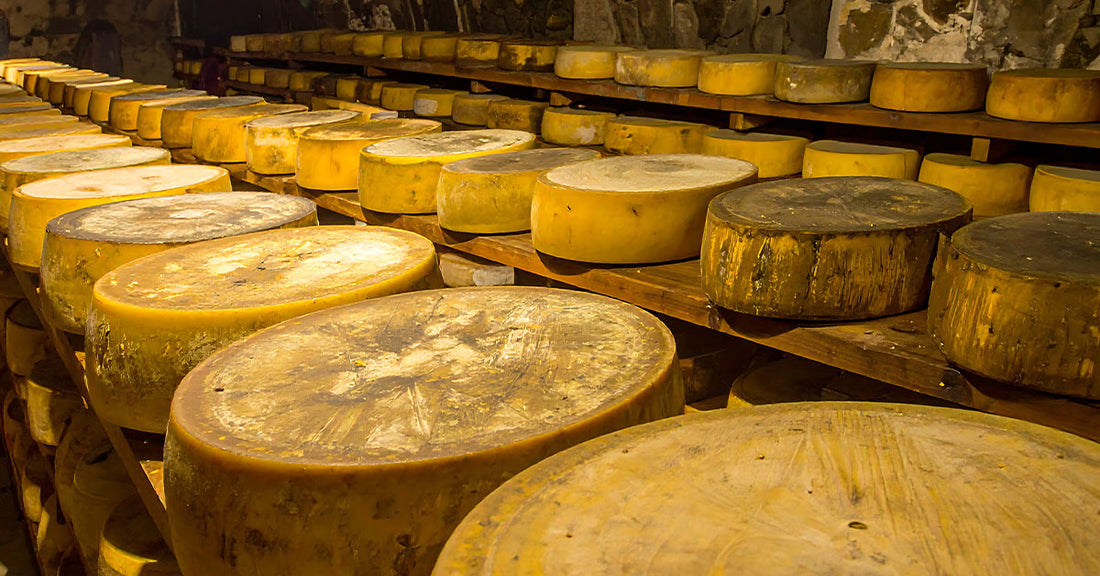
Deep beneath the surface of Missouri, in vast, cool limestone caverns, lies a surprising legacy of American agricultural policy: the so-called “cheese caves.” These subterranean storage centers, once filled with over a billion pounds of surplus dairy, are a testament to how government intervention can shape—and sometimes complicate—national food systems. While the idea of government cheese caves might sound like an urban legend, they are very much real, and their origin story is as curious as it is revealing.

The roots of this dairy surplus trace back to World War II, when concerns over food scarcity led the U.S. government to implement measures to stabilize the food supply. One of the most influential was the Agricultural Act of 1949, which guaranteed a minimum price for milk. If market prices dropped, the government would buy surplus dairy to protect farmers’ incomes. This policy kept dairy production afloat, but it also laid the groundwork for a massive accumulation of cheese and other dairy products.
In the 1970s, the situation escalated. Under President Jimmy Carter, a farmer himself, the government infused the dairy industry with $2 billion to help it weather inflation and rising costs. Farmers responded by increasing production, and the government, staying true to its policy, bought up the excess. To extend the shelf life of all this milk, it was processed into cheese, butter, and powdered milk. By the early 1980s, the government found itself with more than 500 million pounds of dairy—and no place to put it.
That’s when the idea of using underground limestone mines came into play. Missouri, with its extensive network of abandoned mines, provided a perfect solution. These mines, already dry and naturally cool due to their subterranean depth, were ideal for storing perishable goods. The Springfield Underground and SubTropolis in Kansas City became two of the most prominent storage sites. These man-made caverns offered millions of square feet of space, where barrels of cheese and sacks of dried milk were stacked high into the shadows of the cavern ceilings.
According to The New York Times, one corridor in the Springfield Underground was filled to its 17-foot ceiling with powdered milk, while another room stored frozen butter at zero degrees Fahrenheit. These government cheese caves were not only functional but also emblematic of a larger issue: the government had more dairy than it knew what to do with.
By 1981, the dairy stockpile had grown unwieldy. Agriculture Secretary John R. Block held up a moldy brick of cheese at a press conference, lamenting its deteriorating condition and the lack of a market for it. One USDA official even joked about dumping the cheese into the ocean. Eventually, the Reagan administration decided to distribute the cheese to Americans in need. This led to the creation of the Temporary Emergency Food Assistance Program (TEFAP), which sent five-pound blocks of processed cheddar to food banks, community centers, and state agencies.
President Ronald Reagan announced the release of 30 million pounds of cheese just before Christmas in 1981, framing it as a necessary response to economic hardship. For many families during the recession, these blocks of “government cheese” became a staple. More than 300 million pounds were distributed in the early 1980s, providing much-needed calories to those struggling to make ends meet.
However, government cheese was far from gourmet. It was highly processed, calorie-dense, and rich in saturated fat and sodium. While it served a practical purpose, it also became a symbol of poverty and government aid. As journalist Colleen Hamilton noted, the cheese represented the era’s social safety net: essential, yet flawed and often stigmatized. This stigma, combined with concerns about nutrition, contributed to shifting public perceptions of food assistance programs. Over time, these perceptions influenced policy changes that scaled back and privatized parts of the U.S. food aid system.
I found this detail striking: the same cheese that once stood as a solution to overproduction and hunger also became a cultural touchpoint, remembered with both nostalgia and criticism. For some, it was a lifeline; for others, a reminder of hardship. The cheese caves, too, have evolved. No longer under government control, many of these underground facilities are now leased by private companies for commercial storage, continuing to house cheese and other goods in their naturally refrigerated depths.
The story of the U.S. government’s cheese caves is more than a quirky footnote in history. It reveals the unintended consequences of well-meaning policies and the complex interplay between agriculture, economics, and public welfare. What began as an effort to stabilize dairy prices ended with millions of pounds of cheese being stored underground—and eventually, handed out to Americans in need.